 Formula 1
Verstappen Laughed Out Loud in Simulator After Silverstone’s 2026 Energy Management Demands Became Clear
Formula 1 · Jun 29

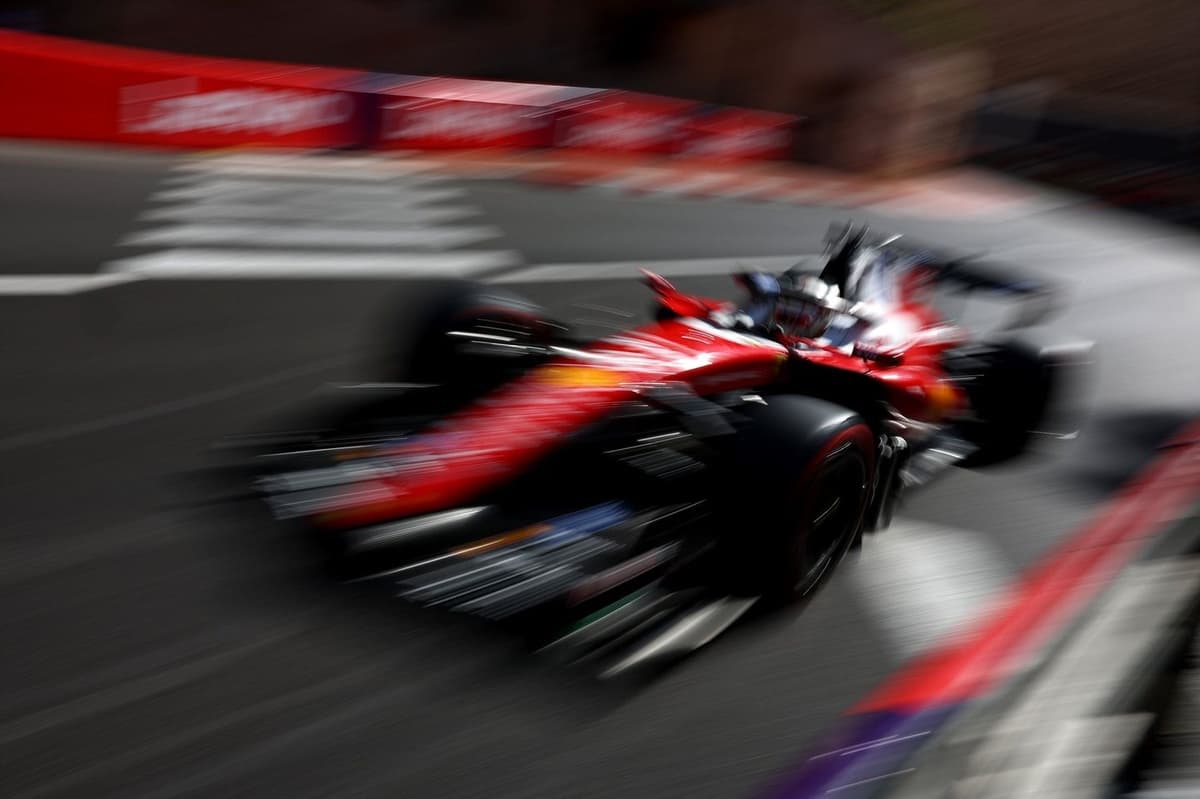
As Formula 1’s 2026 regulations continue to draw criticism from drivers including Fernando Alonso and Lando Norris, a trackside visit to Monaco during race week served as a powerful reminder of why the street circuit retains its place on the 24-race calendar.
The debate surrounding Formula 1’s 2026 technical regulations has dominated much of the season’s early narrative, but the Monaco Grand Prix offered a rare pause from that conversation — one delivered not by press releases or driver briefings, but by the raw, unfiltered experience of watching the new generation of cars navigate the Monte Carlo streets.
For all the logistical complications the principality presents — overcrowded paddock areas, a circuit that has long outgrown its surroundings in terms of modern grand prix standards, and a commercial structure that continues to attract controversy — the trackside perspective tells a different story entirely. Nowhere else on the 24-race calendar does a spectator get as physically close to Formula 1 machinery at speed as through the cramped, sun-drenched streets of Monaco.
At Mirabeau, the circuit’s elevation change forces cars onto three wheels as the inside of the track falls away beneath them. Drivers then whip their machinery around the Fairmont hairpin before using the pavement to aid rotation toward the tunnel. Walking through that tunnel during a session remains a uniquely sensory experience — despite the comparatively muted V6 power units of the current era, the confined space amplifies the engine note into something inescapable. Franco Colapinto, Carlos Sainz, Oscar Piastri, and Arvid Lindblad all threading their 1,000-horsepower cars through that blind bend in rapid succession constitutes what can only be described as a visceral, almost confronting display of mechanical force.
At the Nouvelle Chicane, where cars emerge from the tunnel’s extended shadows, the 2026 machines visibly distinguish themselves from their predecessors. The slightly smaller and lighter chassis dart around the high kerbs with a responsiveness that their predecessors lacked — a tangible on-track benefit of the regulation changes that is difficult to appreciate from television footage alone. It was also at this section that McLaren’s celebratory livery, which had received a muted reception when unveiled, revealed itself in a different light, with its metallic orange finish catching the Mediterranean sun.
The precision demanded by Monaco was underscored during qualifying, when Audi’s Gabriel Bortoleto made contact with the barriers — a reminder that even marginal errors carry severe consequences on a circuit with no meaningful run-off. Further around the lap, the swimming pool section has been progressively transformed into prominent sponsor real estate, while the flat-out kink before it continues to produce direction changes that appear to defy physical logic when viewed from trackside.
Pierre Gasly, who progressed into Q3 during qualifying, offered a candid account of what a competitive lap at Monaco genuinely demands. “It comes with adrenaline, with stress,” Gasly said. “There is a lot at stake because you’re not really playing with kerb or track limits. You’re playing with walls. You just try to break that metre later, pick up the power a bit more, take the couple of centimetres of margin you have on exit with the wall. I’m still buzzing, still full of adrenaline.”
The circuit’s ability to silence the broader regulatory conversation was notable. Throughout the practice and qualifying sessions, the ongoing discussions around super-clipping and battery management — topics that have generated significant column inches in 2026 — felt distant and secondary to what was unfolding on track. That said, the criticism of the cars has not disappeared. Pointed remarks from Fernando Alonso and Lando Norris following qualifying indicated that many of the 2026 machines’ handling idiosyncrasies remain present, even if they are not immediately apparent to trackside observers.
Monaco’s emotional weight extends beyond the present. Charles Leclerc, who grew up watching his childhood hero Michael Schumacher race through these same streets in Ferrari red, finally claimed victory at his home circuit in 2024 — a moment that generated one of the most emotionally charged post-race scenes of recent seasons. That context gives the circuit a layer of meaning that a conventional race venue rarely achieves.
Critiques of Monaco’s place on the modern Formula 1 calendar are well-documented and not without merit. Overtaking remains largely impossible, and the event’s infrastructure creates considerable difficulties for team personnel. Yet the trackside experience — accessible to general spectators and media alike given the circuit’s compact layout — continues to offer something that purpose-built venues cannot replicate: immediacy. The 2026 Monaco Grand Prix, regulatory controversies and all, demonstrated that this remains the case.
Formula 1Formula 1 · Jun 29
 Formula 1
 · Jun 28
 Formula 1
 · Jun 28
 Formula 1
 · Jun 28