 Formula 1
Verstappen Laughed Out Loud in Simulator After Silverstone’s 2026 Energy Management Demands Became Clear
Formula 1 · Jun 29


Both Ferrari drivers suffered alarming rear tyre degradation at the Red Bull Ring, with Lewis Hamilton slipping to a compromised result and Charles Leclerc tumbling to eighth place as the SF-26’s race pace raised serious questions.
Ferrari left Austria without answers after Lewis Hamilton and Charles Leclerc were undone by severe rear tyre degradation at the Formula 1 Austrian Grand Prix on June 28, 2026, with both drivers unable to sustain the pace needed to compete for a podium in sweltering conditions.
Hamilton began the race from third on the grid and initially showed intent, moving ahead of Leclerc and engaging in a competitive early battle with Red Bull’s Max Verstappen. But the high ambient temperatures exposed a fundamental weakness in the SF-26’s tyre management, forcing Hamilton onto a three-stop strategy that ultimately failed to deliver. A virtual safety car intervention after just 13 laps on hard compound rubber prompted Ferrari to fit Hamilton with soft tyres, leaving him exposed over a lengthy final stint on hards — the same compound used by McLaren’s Oscar Piastri on a two-stop strategy that placed the Australian ahead of Hamilton in fourth.
“I was on the attack, obviously I got past Charles and I thought it wasn’t looking too bad in the first few laps,” Hamilton told Sky. “With George, I was kind of holding on for a second and then the rears just dropped off on every set [of tyres]. For some reason, the balance was very difficult. We just couldn’t keep up with everyone today.”
Leclerc’s race was considerably worse. The Monégasque driver fell from second place to a distant eighth, a result that deepened concerns over a recent pattern of the Frenchman struggling to extract consistent performance from the SF-26 across both qualifying and race trim. Despite expressing satisfaction with the car during Saturday’s low-fuel qualifying session, Sunday’s high-fuel race conditions exposed a very different picture.
“It was just an incredibly difficult race,” Leclerc said. “Very, very low grip overall. Just struggled to have the car and the tyres in the right window, especially the rears — just missing a lot of rear grip. Yesterday, I was quite happy with the car. But it wasn’t in the right direction today.”
Leclerc was candid about his broader difficulties in finding a consistent setup window with the SF-26, acknowledging the challenge has persisted over recent weeks. “I’ve been working very hard in the past weeks because there was always one reason or another that made me struggle on the Sunday or on the Saturday,” he explained. “That probably means that I don’t really have a clear picture of what I want from this car. I’ve got to find that. This weekend we’ve been a lot more on the back foot, especially in the race. It’s difficult for us to understand. On Saturday with low fuel the car was quite nice. The front-end was quite strong and I like this. In the race today, the front-end stayed strong, but the rear had no [grip]. So, it’s a balance that you’ve got to find that on this car is particularly difficult.”
Ferrari team principal Fred Vasseur offered an explanation rooted in the demands placed on the tyres in the opening laps, as both drivers attempted to match the outright pace of Mercedes and Verstappen’s Red Bull. “We are all on the edge in this situation. And if you don’t have the pace, you push, you take some risk on the strategy. And when it’s not paying off, you pay the bill at the end,” Vasseur said. “That’s what happened today for us. We didn’t have the pace to fight with Mercedes and Max and we over-pushed the first couple of laps. We had to change the strategy, and everything went in the wrong direction, but it’s a good lesson.”
Compounding Ferrari’s difficulties, Hamilton’s power unit suffered overheating while he was caught in traffic, further limiting his performance options. Vasseur drew a contrast with the Spanish Grand Prix in Barcelona, where Hamilton spent approximately 80% of the race in clean air and avoided the thermal management issues that resurfaced in Austria. “The target was to be in clean air,” Vasseur noted. “It paid off for Lewis in Barcelona because we were able to do 80% of the race in clean air. And this weekend, it was not the case at all.”
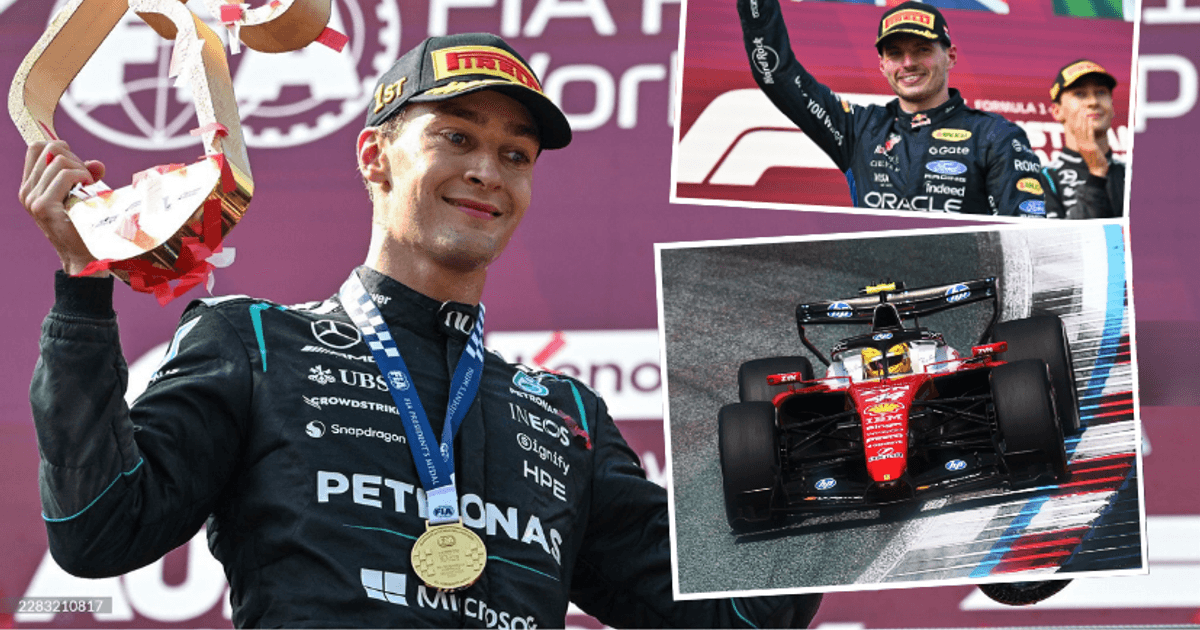
George Russell claimed victory for Mercedes at the Red Bull Ring, holding off Verstappen to win and reduce championship leader Kimi Antonelli’s points advantage at the top of the standings. Ferrari, by contrast, will head into the next round of the 2026 season needing to understand why a car that showed promise in qualifying conditions collapsed so dramatically over race distance — a recurring question that both drivers and the Maranello engineering team have yet to fully resolve. According to Autosport, the Austrian result continues a troubling recent trend of Leclerc struggling more than Hamilton to get a consistent tune out of the SF-26.
Formula 1Formula 1 · Jun 29
 Formula 1
 · Jun 28
 Formula 1
 · Jun 28
 Formula 1
 · Jun 27