 Formula 1
Verstappen Laughed Out Loud in Simulator After Silverstone’s 2026 Energy Management Demands Became Clear
Formula 1 · Jun 29

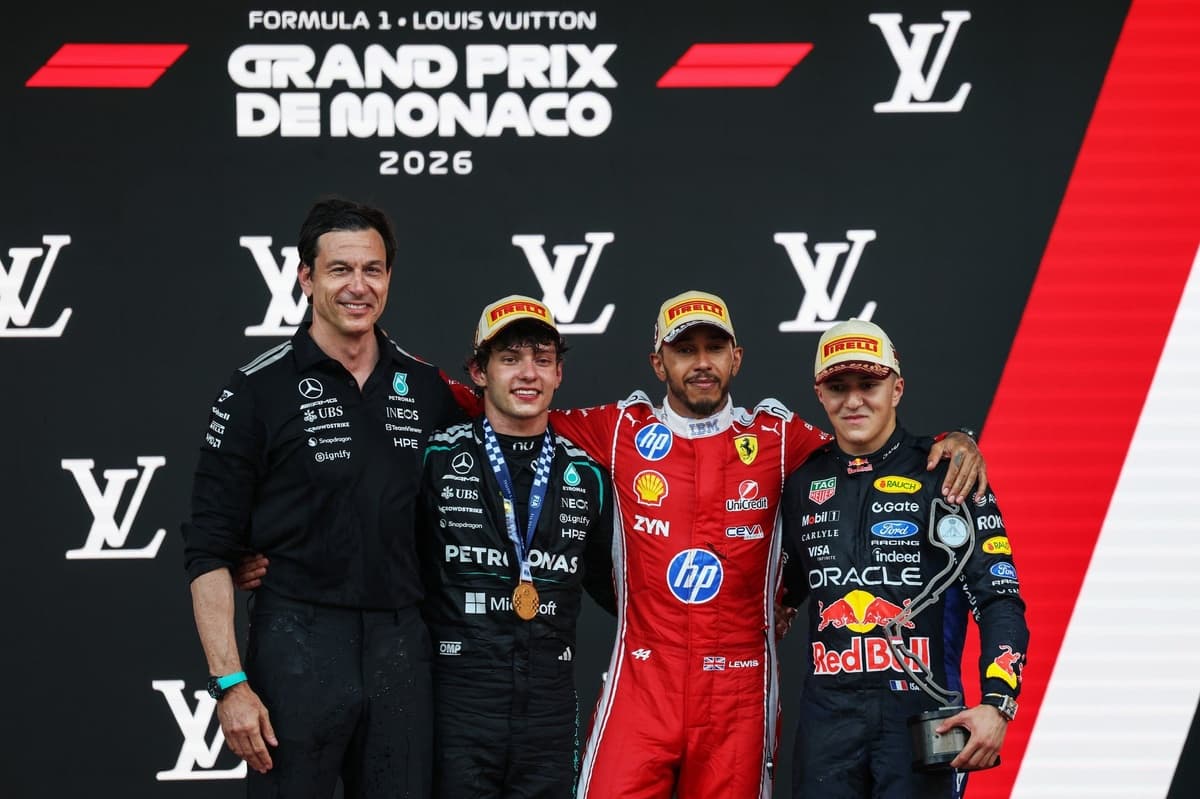
Formula 1’s Monaco Grand Prix result remains in dispute after a faulty pitlane speed measurement system triggered a cascade of penalties, with Red Bull, McLaren and Mercedes now pursuing further appeals following Pierre Gasly’s podium reinstatement.
Formula 1 finds itself in an increasingly complex situation following the Monaco Grand Prix, after the sport’s official timing supplier, Formula One Management, admitted that the pitlane speed measurement system had been operating inaccurately during the race. The admission formed the basis of Alpine’s successful right of review, which resulted in Pierre Gasly’s two penalties being cancelled and his third-place finish being reinstated — a decision that has since prompted further legal challenges from rival teams.
Red Bull, McLaren and Mercedes are all reportedly exploring avenues to seek redress, with McLaren and Red Bull filing appeals against Gasly’s podium reinstatement and Mercedes seeking a right of review over George Russell‘s penalty. The teams’ drivers — Oscar Piastri, Russell and Isack Hadjar — are considered among the principal casualties of the disputed classification.
In the provisionally final Monaco Grand Prix classification, Gasly sits third with an overall race time of 2h23m51.612s, 20.369 seconds behind race winner Kimi Antonelli. Hadjar is classified fourth, 3.025s behind the Alpine driver, with Piastri a further 0.867s back. Russell sits 12th, 43.353s adrift of Antonelli and — critically — 19.959s behind Hadjar.
Those positions reflect where each driver finished on the road. However, because Gasly’s original 10-second penalty had been applied as a time addition to his post-race classification rather than served during the race, it could be reversed by the stewards once the faulty data was established. The situations facing Piastri and Russell are considerably more complicated: Piastri served his penalty during the race itself, while Russell attempted to do so, failed, and subsequently received a further penalty.
In their verdict on Alpine’s case, the Monaco stewards acknowledged the difficulty directly, stating: “The Stewards note that in relation to other cars that were penalised, some served their penalty and this regrettably, impacted their race strategies and therefore their race result. There will undoubtedly remain questions as to whether those breaches were genuine. There is no regulation that gives the Stewards the power to ‘undo’ a served penalty. In any case, it is impossible to imagine how such power could be applied. Notably, no other party petitioned for a Right of Review within the allowable time frame.”
A key distinction underpins the legal complexity: the stewards in Alpine’s case were only empowered to revisit Gasly’s penalties, because Alpine was the sole team to request a review within the permitted timeframe. As a result, the timing supplier’s admission of error provided grounds to cancel Gasly’s sanctions specifically — but did not automatically invalidate the penalties issued to other drivers. Formally, it has not yet been established that Piastri’s or Russell’s penalties were unjustified.
The logical tension at the heart of the dispute is significant. If the pitlane speed measurement system was producing inaccurate readings, and Gasly was penalised on the basis of that faulty data, the same system would have generated the readings used to penalise Piastri and Russell. Yet neither McLaren nor Mercedes challenged those penalties at the time they were issued.
One theoretical remedy being discussed, according to reports, involves reducing the overall race times of affected drivers by an amount equivalent to the time lost as a direct consequence of incorrectly issued penalties. However, quantifying that figure precisely — particularly for Piastri, whose penalty was served during the race and influenced his on-track strategy and positioning — presents significant methodological challenges.
The situation represents an unusual governance problem for Formula 1. The sport operates a formal appeals and review structure through the FIA, but the regulations do not currently provide a clear mechanism for retroactively adjusting the result of drivers who served penalties that may later be found to have been issued in error. With the Spanish Grand Prix at Barcelona-Catalunya now underway, the final classification of the Monaco Grand Prix — and its associated championship points implications for Antonelli, Hadjar, Piastri, Gasly and Russell — remains unresolved.
Formula 1Formula 1 · Jun 29
 Formula 1
 · Jun 28
 Formula 1
 · Jun 28
 Formula 1
 · Jun 28