 Formula 1
Verstappen Laughed Out Loud in Simulator After Silverstone’s 2026 Energy Management Demands Became Clear
Formula 1 · Jun 29

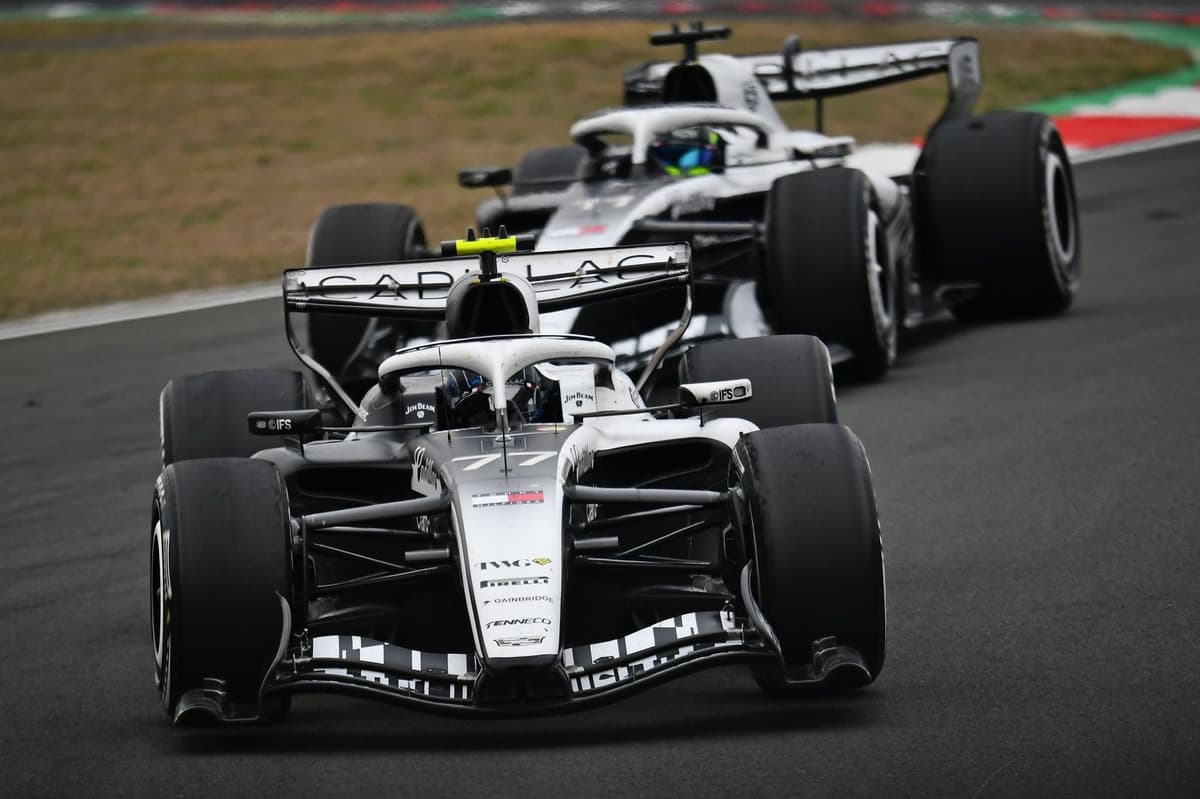
Cadillac’s debut in Formula 1 under the sweeping 2026 technical regulations was made possible in large part by the engineering infrastructure and resources of parent company General Motors. From simulator facilities in North Carolina to cross-series technical expertise, GM’s involvement extended well beyond branding.
When Cadillac F1 Team took to the grid at the start of the 2026 Formula 1 season in Australia in March, it completed one of the most compressed team-building exercises in the sport’s modern history. Establishing a competitive operation from the ground up, under the most technically complex regulations the sport has introduced in years, and doing so across multiple continents, is a challenge that few organisations would have been positioned to meet. According to those involved, General Motors’ existing infrastructure was the decisive factor.
GM holds a minority equity stake in the team, which is majority-owned by TWG Global. The squad competes under the Cadillac name and is currently powered by Ferrari customer engines while a proprietary GM power unit remains under development. But as Autosport reports, it is GM’s broader motorsport ecosystem — spanning NASCAR, IndyCar and sportscar racing — that provided the operational backbone Cadillac needed to meet its debut deadline.
“Obviously, GM’s an equity shareholder in the team, so we have vested interest in it,” Eric Warren, General Motors’ Vice President of Global Motorsports Competition, told Autosport. “Not only is the chassis named Cadillac, and it’s called Cadillac Formula 1 team, but we see it as our team. From the very beginning when we decided to get involved, we wanted to really be an integral part of it as much as we could.”
Warren, who described GM’s technical role using a medical analogy, noted that the company functions as an engineering service provider across its various racing programmes rather than a passive stakeholder. “I compare it to a hospital,” he said. “If you have a problem or an illness, then you go to hospital and you say: ‘Hey, I’m having this issue.’ You have an expertise that can look at it, come with a solution and a treatment plan, and then you go off. Technically, we are an engineering service provider with a vested interest in it being successful.”
A central element of that support has been the GM Charlotte Technical Centre, a 130,000-square-foot, two-floor facility opened in 2022 on the campus of Hendrick Motorsports in Concorde, North Carolina. The centre houses four full dynamic driver-in-the-loop (DIL) simulators and a range of aerodynamic and suspension testing tools. With Cadillac’s permanent headquarters in Fishers, Indiana — where a bespoke F1 simulator is currently under construction — not yet fully operational, the North Carolina facility served as the team’s primary simulation base ahead of the season opener.
“We have four full dynamic simulators that we run full time. We’re getting ready to go to seven across different series,” Warren explained. “On the DIL side, nothing really had to be built a bespoke cockpit for, because we actually used the IndyCar cockpit for a long time. Obviously, you’re trying to create the right pedals, steering columns, steering wheels; the driver interface has to be correct. But all the other systems, most of the software and all the models, of course, are a combination of what they contract us for and things they’re doing. And then we’re working with Ferrari on the engine model.”
Simulator duties were carried out by a group of experienced drivers including Indy 500 winner Simon Pagenaud, two-time Formula 1 grand prix starter Pietro Fittipaldi, and factory Corvette driver Charlie Eastwood. Their work formed a core component of Cadillac’s “Race Ready” programme — a structured preparation plan that involved simulating 2025 Formula 1 grands prix in real-time, with Cadillac modelled as a virtual eleventh team on the grid.
Warren reflected on the scale of the task during the team’s formative period. “For the first year or two, let’s be honest, we were proving to the FIA and to F1 management that this wasn’t just a small start-up team or an IndyCar team coming over here. This was truly GM being partners with TWG,” he said. “So a lot of the early technical work was really building up the foundation that the team needed to be able to operate at the pace of Formula 1.”
The team’s path to the grid was far from straightforward. What began as a Michael Andretti-led project underwent a significant transformation before emerging as a de facto works effort under GM, with the FIA’s approval process drawing out over several years. That uncertainty meant many of the staff hired during the build-up phase did so without any guarantee that the team would ultimately be granted entry to the championship. The fact that Cadillac met every regulatory and logistical deadline ahead of its 2026 debut — and established itself as a credible presence on the grid from the outset — represents a notable organisational achievement, one its leadership attributes directly to the depth of GM’s cross-series resources.
Formula 1Formula 1 · Jun 29
 Formula 1
 · Jun 28
 Formula 1
 · Jun 28
 Formula 1
 · Jun 28