 Formula 1
Verstappen Laughed Out Loud in Simulator After Silverstone’s 2026 Energy Management Demands Became Clear
Formula 1 · Jun 29

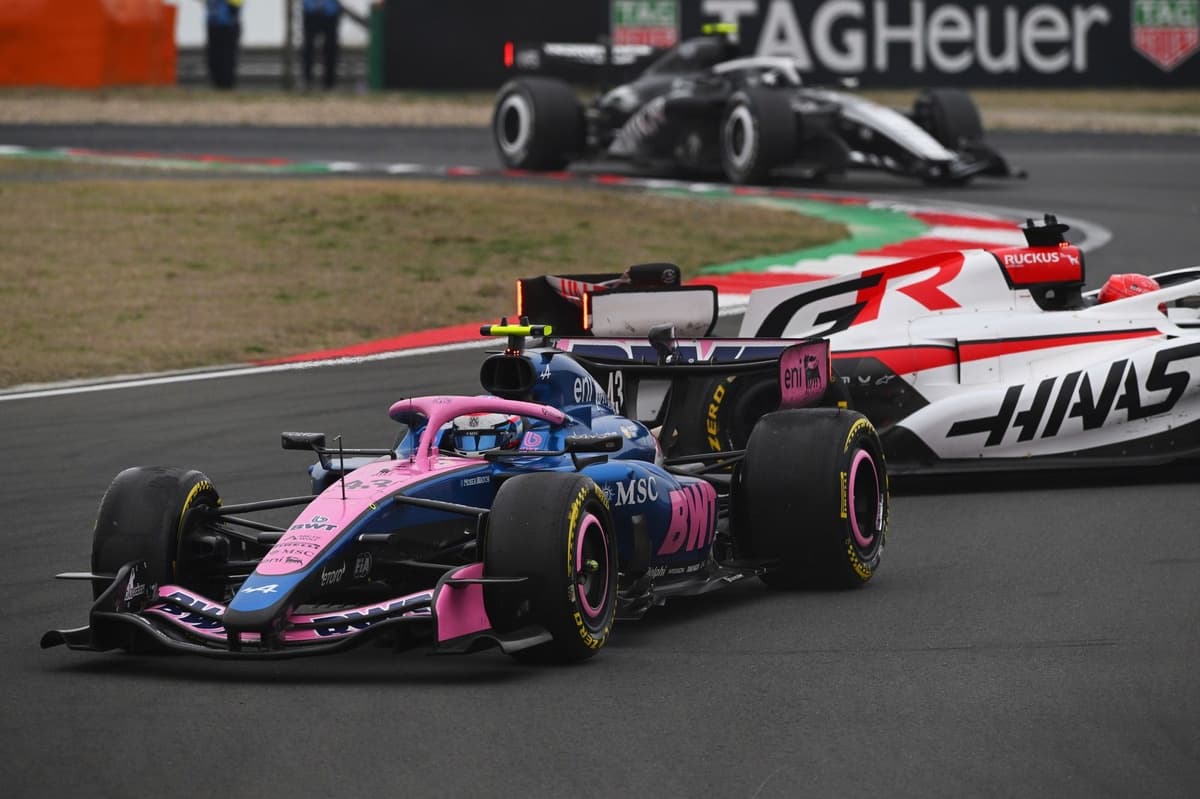
Alpine’s targeted aerodynamic upgrades at the Miami Grand Prix appear to have eliminated a key high-speed weakness, leaving Haas five points adrift in the constructors’ standings and facing pressure ahead of the Canadian Grand Prix.
Haas entered the Miami Grand Prix weekend sitting fourth in the Formula 1 constructors’ championship, holding a two-point advantage over Alpine following the Japanese Grand Prix. By the end of the Florida double-header, that margin had been reversed — the American outfit now trails the Anglo-French team by five points, with Pierre Gasly’s sprint race point and Franco Colapinto’s seventh-place finish in the grand prix shifting the balance.
The divergence in fortunes owes much to the contrasting upgrade philosophies the two teams brought to Miami. Alpine arrived with a substantial overhaul of its aerodynamic package, targeting a high-speed handling deficiency that had limited its competitiveness at certain circuits. Haas, by contrast, registered only a single modification — a minor addition to the diffuser winglet — leaving Oliver Bearman and Esteban Ocon to manage with largely the same specification that had served them through the opening rounds.
“They had an issue in high-speed, and then it looks like they’ve sorted that, and they’ve brought a huge amount of upgrades for this event,” Bearman said in Miami. “We brought zero, so we were anticipating a tough weekend — that turned out to be the case.”
The high-speed fragility that Bearman referenced had been a recurring theme for Alpine earlier in the season. The A526 had shown well-rounded behaviour in low-to-medium speed environments — its strong showing in China, a circuit with few genuine high-speed corners, reflected that — but the front-end struggled to generate adequate load through faster sections. Pierre Gasly had largely managed the limitation through setup choices and driving style adaptation, while Colapinto, still building experience at the top level, found the workaround more elusive, widening the gap between the two Alpine drivers at circuits such as Suzuka.
In Miami, those issues appeared resolved. Both Alpine drivers progressed to Q3, with Colapinto ahead of Gasly across all three qualifying segments. Haas was misled by Alpine’s conservative Q1 strategy — Bearman sat three tenths clear of Colapinto in the opening phase, with Ocon a tenth ahead of Gasly — but Alpine had used only one tyre set in Q1, preserving rubber for the critical second segment.
“I think the true pace came out,” Bearman said of qualifying. “It was good at the start of Q1, but actually we were on quite a different run plan with others. I felt like we’d actually caught up a bit of a gap to Alpine, for example. But they only did one set of tyres and they showed their true pace in Q2 — and we were not in the battle with them.”
Bearman ended Q2 half a second behind Gasly. The deficit carried into race day, where the Briton finished 36 seconds behind Colapinto — a margin compounded by operational issues. Both Haas drivers lost time in the pitlane, with Bearman indicating the delays likely cost him the undercut opportunity on Williams’ Alex Albon that could have secured tenth position. On pace alone, Haas had tracked close to the updated Williams FW48, which had also received significant development attention in Miami.
Looking ahead, Haas is expected to introduce a more comprehensive update package at the Canadian Grand Prix in Montreal. Unlike Alpine’s A526, the VF-26 does not carry an identifiable singular weakness — its primary deficit is overall downforce, estimated at three to four tenths short of the threshold needed to reliably reach Q3. Cooler ambient temperatures in Montreal are also expected to suit the car better than the heat that hampered Haas during Friday and Saturday running in Miami, conditions that eased only when cloud cover arrived on race day Sunday.
Alpine, meanwhile, enters the mid-season phase with growing momentum. The team’s decision to move away from its 2025 concept early in that campaign and commit fully to the A526 development direction is showing returns. With Williams, Racing Bulls, and Audi also competing for positions in the upper midfield, the constructors’ battle between fifth and eighth in the standings remains closely contested. Haas’ update timeline and execution in Montreal will be a key indicator of whether it can reclaim the ground conceded in Florida.
Formula 1Formula 1 · Jun 29
 Formula 1
 · Jun 28
 Formula 1
 · Jun 28
 Formula 1
 · Jun 28