 Formula 1
Verstappen Laughed Out Loud in Simulator After Silverstone’s 2026 Energy Management Demands Became Clear
Formula 1 · Jun 29

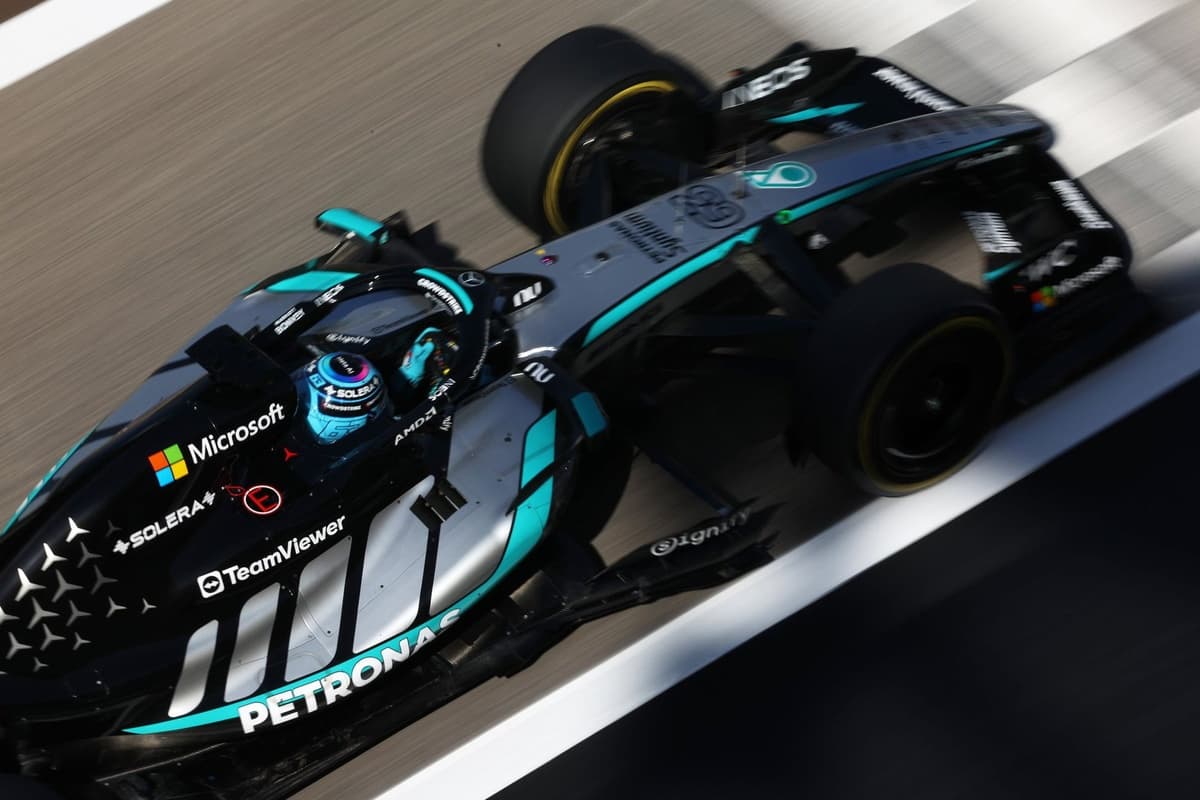
The FIA is deploying two distinct safety interventions at the 2026 Monaco Grand Prix — disabling active aerodynamics across the entire lap and enforcing a dedicated engine map that curtails MGU-K power delivery at significantly lower speeds than standard circuits.
The 2026 Monaco Grand Prix will serve as the first occasion this season where active aerodynamics are disabled throughout an entire lap, but that measure represents only one component of a broader set of safety interventions introduced by the FIA for the street circuit. A second, equally significant restriction involves a bespoke engine mapping configuration known as Rev1, which directly limits the power output of the new 350kW MGU-K electric motor at speeds well below the thresholds applied at conventional circuits.
Under the technical regulations governing the 2026 Formula 1 season, the FIA typically designates activation zones for moveable aerodynamic components only in sections of the track where tyres are not under maximum lateral or traction loads. A further prerequisite requires any such zone to last at least three seconds, a threshold designed to prevent fleeting deployments that would add to driver workload without delivering meaningful performance or efficiency gains.
Monaco’s pit straight did not satisfy these criteria. During the 2025 race weekend, drivers activated DRS on that section for just over five seconds, reaching speeds in the region of 290km/h. With the more powerful 2026-specification electric motor now capable of propelling cars to high speeds more rapidly, the FIA determined that deploying the active aerodynamic system in the same location would elevate risk unacceptably, particularly approaching the Turn 1 braking zone — a bumpy section that demands maximum downforce to prevent wheel lock-ups. On that basis, ‘straight mode’ has been disabled entirely for the Monaco event, as reported by Autosport.
The Rev1 engine map addresses a separate but related concern: the capacity of the MGU-K to generate excessive velocity through high-risk sections including the pit straight, the tunnel, and the uphill approach towards Massenet. Crucially, the intervention does not reduce the motor’s peak power output. Instead, it advances the onset of the derating phase — the point at which available power begins to taper — to a much lower speed.
In the standard power map used at most circuits, the MGU-K delivers its full 350kW up to 290km/h. Power then decreases progressively, falling to 250kW at 310km/h and reaching zero at 345km/h, unless a team elects to curtail deployment earlier for energy conservation purposes. Under the Monaco-specific Rev1 map, the same 350kW ceiling applies only up to 200km/h. From that point the derating curve engages, with output dropping to approximately 100kW at 270km/h and falling to zero entirely by 300km/h.
A separate configuration, described as ‘overtake mode’, will also operate under modified parameters in Monaco. Because the circuit features numerous braking zones that allow efficient regeneration of battery energy, energy management is less demanding there than at higher-speed venues. In overtake mode, maximum MGU-K deployment ceases at 200km/h rather than the standard 335km/h, though the gradient of the derating curve is shallower than under Rev1. At 260km/h, the standard map would provide approximately 150kW from the electric motor; in overtake mode at Monaco, drivers can access nearly 100kW beyond that figure at the same speed.
The twin measures reflect the particular sensitivity of Monaco’s urban layout, where barriers are positioned closer to the racing surface than at any other venue on the calendar and opportunities for drivers to manage unexpected situations are severely limited. The 2026 regulatory cycle introduced active aerodynamics as a central performance concept across the season, but Monaco represents the first circuit where the risks associated with that technology have prompted a complete deactivation. The downstream effect on competitive order — particularly for teams that have optimised their car concepts around aerodynamic deployment — is expected to be considerable, with the traditional Monaco pecking order potentially disrupted further by the constraints imposed on electric power delivery.
Formula 1Formula 1 · Jun 29
 Formula 1
 · Jun 28
 Formula 1
 · Jun 28
 Formula 1
 · Jun 28