 Formula 1
Verstappen Laughed Out Loud in Simulator After Silverstone’s 2026 Energy Management Demands Became Clear
Formula 1 · Jun 29

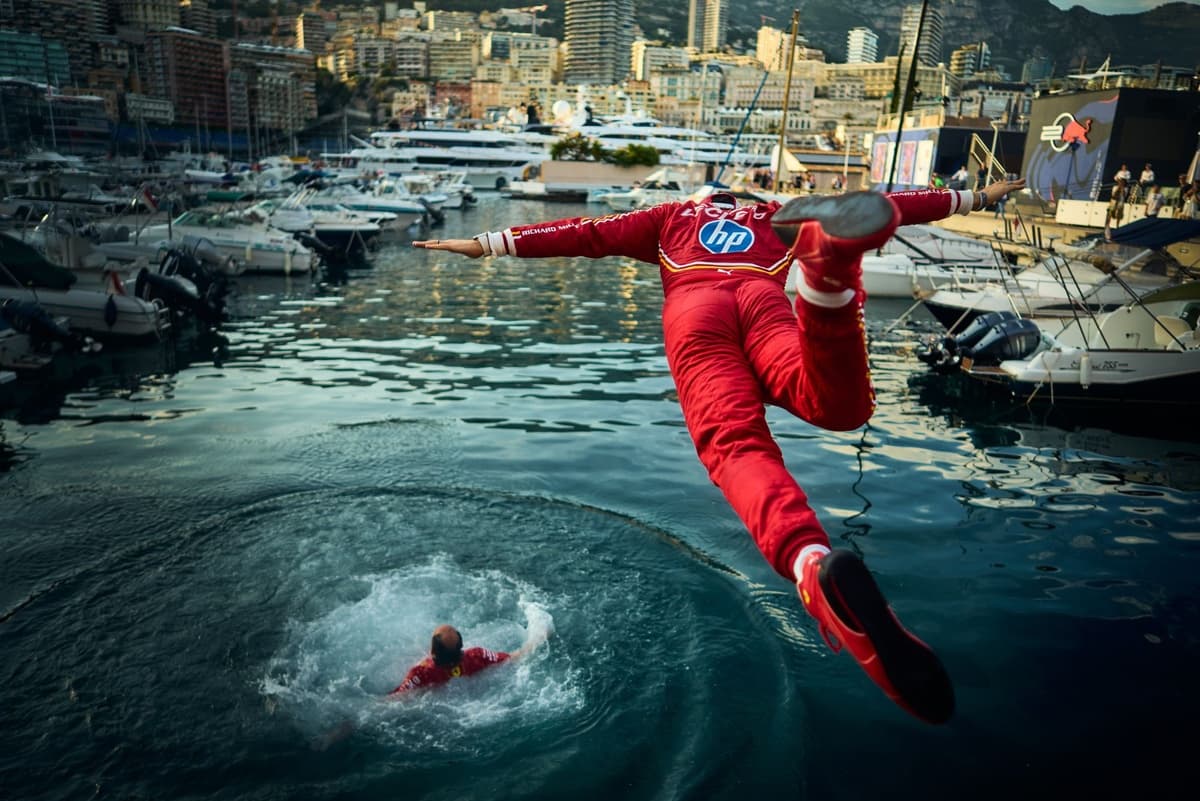
Ferrari announced a multi-year contract extension with Charles Leclerc on Wednesday, binding the Monegasque driver to the Scuderia well beyond his existing deal through 2027. The decision raises legitimate questions about whether loyalty to Maranello serves Leclerc’s championship ambitions.
Ferrari confirmed on Wednesday that Charles Leclerc has signed a multi-year contract extension with the Scuderia, keeping him at Maranello for what is understood to be at least three additional seasons beyond 2026. The announcement came with Leclerc’s previous deal still having more than a year to run, making the timing notable in a sport where drivers rarely commit so far in advance without clear leverage.
The extension secures Ferrari’s long-standing relationship with Leclerc, who joined the team’s driver academy ahead of the 2016 season — a partnership now spanning more than a decade. His F1 career with the Scuderia, which began in 2019, has produced 27 pole positions and eight grand prix victories, including a landmark win at his home race in Monaco. Yet a World Championship has remained elusive, and that absence defines the central tension in evaluating this decision.
Since Leclerc joined Ferrari, three separate constructors have built title-winning machinery: Mercedes, Red Bull, and McLaren. That statistical reality underpins the argument that committing to Ferrari carries genuine risk. Across those same years, the Scuderia has frequently been competitive without ever consolidating that pace into a sustained championship challenge — a pattern involving mechanical failures, strategic errors, and missed opportunities at critical moments.
The comparison to Lando Norris and McLaren is instructive. Norris remained with McLaren through what many considered the team’s most difficult period in its history, weathering years of underperformance before the operation transformed into the benchmark of the 2024 and 2025 seasons. Norris reportedly entertained interest from Red Bull on more than one occasion during that period but ultimately held his position — a decision that has since appeared well-founded. Whether Ferrari’s current trajectory mirrors McLaren’s resurgence remains the open question for Leclerc.
Under team principal Fred Vasseur, Ferrari has demonstrated greater willingness to innovate and take calculated risks, and the team’s early adaptation to the 2026 regulatory cycle has been encouraging. However, McLaren and Red Bull have both shown stronger historical capacity for mid-cycle development, which could prove decisive over the length of Leclerc’s new deal.
The realistic alternative destinations are limited. A move to Mercedes, the one team that might have represented a clear step forward, appears to have been off the table. Potential driver market movement at McLaren or Red Bull beyond 2027 remains speculative, and changing teams always introduces uncertainty — particularly when a team like Red Bull already has Max Verstappen anchoring one side of the garage.
Leclerc’s connection to Ferrari predates his professional career entirely. He has described watching the Monaco Grand Prix as a three-year-old from an apartment at Sainte-Devote corner, specifically looking for the red cars. His relationship with the late Jules Bianchi, who served as something of a godfather figure, and a childhood meeting with Michael Schumacher deepened that attachment further. Sky Italia commentator Carlo Vanzini dubbed him “Il Predestinato” — “the predestined one” or “the chosen one” — early in his career, a label that has followed him since.
Having joined Ferrari’s academy before the 2016 season, Leclerc claimed back-to-back titles in GP3 and Formula 2 before making his F1 debut. The relationship has carried genuine weight throughout, even as title success has remained out of reach.
The most uncomfortable scenario for Leclerc is not failing to win a championship with Ferrari. It is Ferrari winning one without him, with the Monegasque watching from a rival team — a possibility that appears to have factored into his decision to extend rather than wait for his existing deal to expire and explore the open market. Fernando Alonso’s career offers a cautionary parallel from the other direction: a driver of exceptional ability who found himself at the wrong team at critical moments in the championship cycle.
Leclerc’s extension is, at its core, an act of belief — in Ferrari’s project, in Vasseur’s direction, and in the Scuderia’s capacity to finally deliver the machinery a driver of his calibre requires. Whether that belief proves well-placed will depend on factors that neither party can fully control.
Formula 1Formula 1 · Jun 29
 Formula 1
 · Jun 28
 Formula 1
 · Jun 28
 Formula 1
 · Jun 28