 Formula 1
Verstappen Laughed Out Loud in Simulator After Silverstone’s 2026 Energy Management Demands Became Clear
Formula 1 · Jun 29

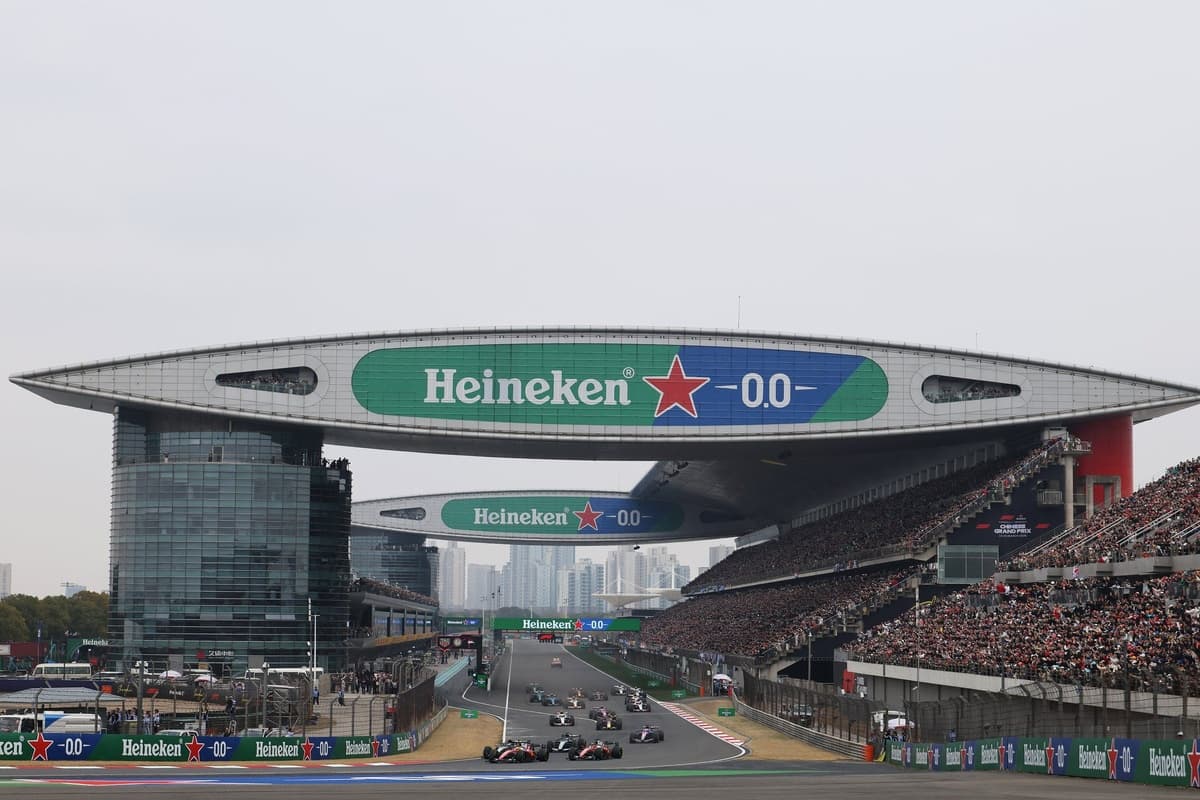
Chinese electric vehicle giant BYD is exploring a Formula 1 entry, but record team valuations, logistical constraints, and the complexity of launching a 12th team present significant obstacles. Christian Horner’s potential involvement has added intrigue to a situation that remains, according to insiders, far from any concrete decision.
Chinese electric vehicle manufacturer BYD has made no secret of its interest in Formula 1, but any serious bid to join the grid — whether through a team acquisition or as a new 12th constructor — would face a series of substantial structural and financial barriers, according to Autosport.
Stella Li, BYD’s Executive Vice President and CEO for the Americas, Europe, and the Middle East, has been open about her belief that Formula 1 represents an ideal platform to raise the company’s global brand profile. Following exploratory conversations around the Chinese Grand Prix earlier this year, Li is reportedly set to attend the Monaco Grand Prix and hold meetings with F1 executives ahead of the race weekend. However, sources indicate those discussions remain at a preliminary, fact-finding stage and are far removed from any formal commitments.
Three potential routes into the championship have been identified: a title sponsorship arrangement similar to Gucci’s co-naming rights deal with Alpine from 2027, a complete brand takeover in the mould of Alfa Romeo’s temporary rebadging of the Sauber operation, the acquisition of an existing team, or the creation of an entirely new 12th entry from scratch. Of these, the sponsorship path is considered by far the most straightforward to execute.
The acquisition route, however, has proven difficult in practice. According to reports, several investment funds and at least one major automotive group have approached current F1 teams with offers exceeding two billion dollars in recent months, only to be turned away. Team owners appear confident that valuations will continue rising and are unwilling to sell before what they consider a strategically optimal moment, even when presented with figures that would have exceeded the worth of a top-tier operation just three or four years ago.
The prospect of launching a 12th team is regarded as even more complex. Formula 1 only recently completed the protracted process of admitting the Cadillac-GM project as its 11th constructor, and the full commercial and logistical implications of that expansion have yet to be assessed. Physical constraints at circuits such as Monaco and Montreal — where paddock space is already at a premium — present practical challenges, and any new entrant would also be required to pay an anti-dilution fee that insiders suggest would likely be set higher than the figure agreed with Cadillac-GM.
While BYD reportedly has the financial capacity to absorb such costs and could in theory partner with an established original equipment manufacturer for initial technical support, sources in the Montreal paddock indicate that the timing for a 12th team is not considered right at present — even though F1’s current governance framework technically permits expansion to that number.
Adding another dimension to the story is former Red Bull team principal Christian Horner, who became a free agent following his departure from the Milton Keynes-based outfit and is now technically eligible to return to the sport. Horner was photographed alongside Li at the Cannes Film Festival, a pairing that was widely interpreted as a deliberate public relations exercise — either to lend credibility to BYD’s F1 ambitions or to maintain Horner’s visibility as he navigates discussions with multiple teams and investors. Horner is also reported to be part of a consortium seeking to acquire Otro Capital’s 24% stake in Alpine, where his group is understood to be competing against Mercedes for the shareholding.
Reports also suggest other automotive brands are waiting in the wings with their own F1 entry ambitions, meaning BYD is not the only party eyeing a potential opportunity. As it stands, there is insufficient evidence that BYD’s interest will translate into a serious formal bid, beyond what analysts describe as carefully managed speculation that has generated considerable publicity for all parties involved.
Nevertheless, the continued interest from one of the world’s largest electric vehicle manufacturers underscores F1’s status as a seller’s market. Both F1 CEO Stefano Domenicali and FIA president Mohammed Ben Sulayem have expressed a desire to deepen the championship’s engagement with the Chinese market, making BYD’s courtship — however uncertain its ultimate direction — a strategically significant development to monitor as the season progresses.
Formula 1Formula 1 · Jun 29
 Formula 1
 · Jun 28
 Formula 1
 · Jun 28
 Formula 1
 · Jun 28