 Formula 1
Verstappen Laughed Out Loud in Simulator After Silverstone’s 2026 Energy Management Demands Became Clear
Formula 1 · Jun 29

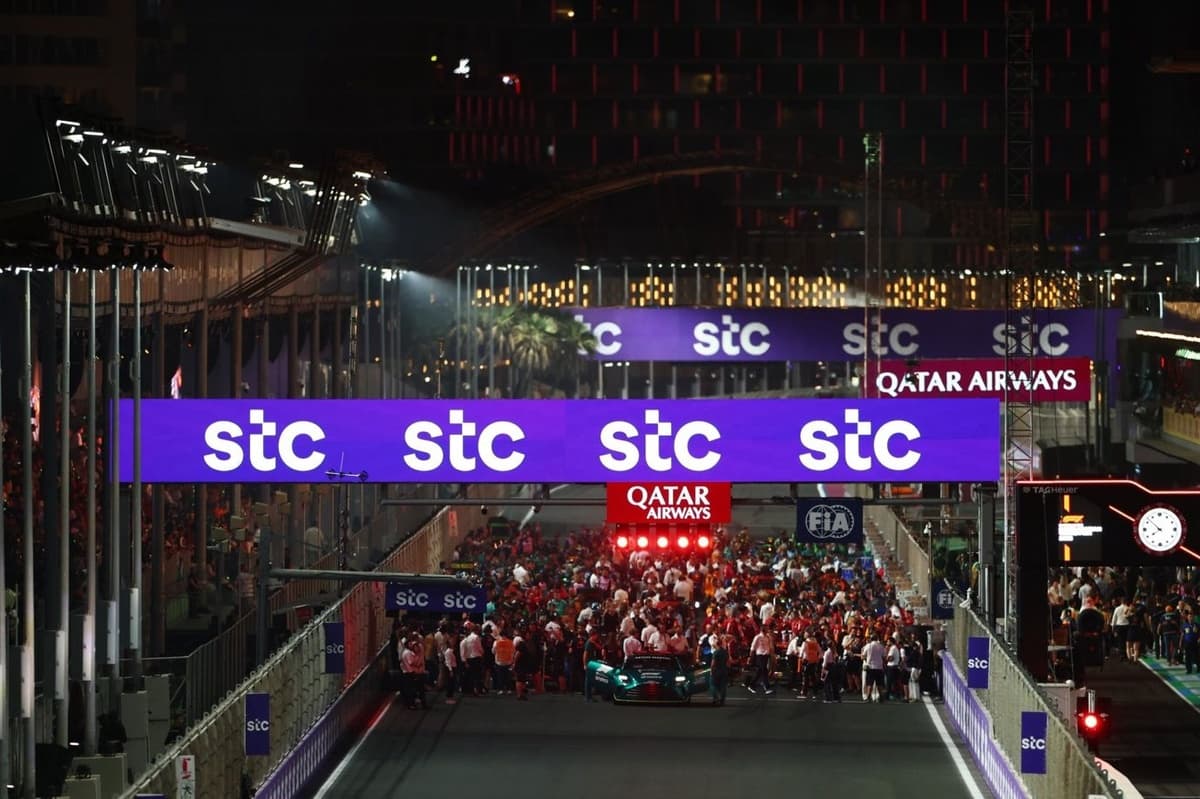
With both the Bahrain and Saudi Arabian grands prix removed from the April 2026 calendar due to the Middle East conflict, Formula 1 is navigating a complex web of scheduling, logistical, and financial challenges as it attempts to salvage at least one of the postponed events.
Formula 1’s 2026 season calendar was significantly disrupted when the Bahrain and Saudi Arabian grands prix — originally scheduled for April — could not go ahead due to the ongoing conflict in the Middle East. The back-to-back withdrawals left a month-long void in the championship schedule and triggered a series of downstream complications for teams, promoters, and the sport’s commercial leadership.
Crucially, neither event has been formally cancelled. F1’s official position is that the races will not take place in April, leaving the door open for rescheduling. Both Bahrain and Saudi Arabia’s promoters are reportedly keen to recover their races, and that commercial motivation is shaping the sport’s approach to the remainder of the season.
Liberty Media CEO Derek Chang confirmed during a recent shareholders’ meeting, held to present financial results, that F1 leadership is “working day and night” to reinstate at least one of the postponed events. “We will be thoughtful in our approach, and we will continuously evaluate the calendar this year. It might be possible to reschedule one race toward the end of the season,” Chang said.
The most viable window identified so far is the gap between the Baku and Singapore rounds in September. Slotting one race into this free space would require minimal restructuring of the existing calendar, though it would create three consecutive triple-header stretches in the closing months of the season — placing additional strain on personnel and logistics at an already demanding stage of the year.
Recovering both races is considerably more difficult. From late October onwards, the championship moves to the Americas, leaving no viable space for a Middle East event in November. The only realistic alternative would be to append a race at the very end of the season, when F1 already returns to the Gulf region for the Qatar and Abu Dhabi rounds. However, contractual obligations require Abu Dhabi to remain the season finale, meaning any additional race would push the Yas Marina event back by a week, compressing the calendar further toward the Christmas period.
An additional complication involves a Pirelli tyre testing session scheduled to take place in the Middle East in the days following the Abu Dhabi Grand Prix, aimed at gathering data for the 2027 season. Adding another race to that final stretch would also produce an unprecedented run of four consecutive rounds alongside Las Vegas and Qatar — a prospect that would test team resources significantly, particularly for staff members not covered by rotation policies.
F1 CEO Stefano Domenicali acknowledged the broader contingency planning underway, including scenarios in which the Qatar and Abu Dhabi races themselves could be affected if the regional situation remains unresolved. “We have plans, of course,” Domenicali said. “The lead time or the cutoff is different between the fact that we can eventually recover what has not been run in April versus what could eventually happen or not happen at the end of November, beginning of December. We are, of course, aligning with the teams, with the promoters, because that’s something that has a big chain reaction. In due time we will keep everyone informed.”
Beyond scheduling, the logistical consequences of the cancelled races remain acute. Equipment belonging to multiple teams — along with Pirelli, which was conducting a test session when the conflict escalated — is still stranded in Bahrain, where pre-season testing took place earlier in the year. The Middle East, specifically Dubai and Doha, functions as a critical freight hub for Asian flyaway races, partly due to existing partnership agreements with F1. Teams were already forced to find alternative routing solutions ahead of the Japanese Grand Prix, and the uncertainty surrounding the conflict’s trajectory could require a wholesale reorganisation of travel and freight logistics for the second half of the season.
Singapore has been identified as the most logistically challenging round in the second half of the calendar under current circumstances, given its reliance on Middle East routing for both equipment and personnel movements.
A further financial dimension adds complexity to the situation. Under F1’s cost cap regulations, freight transport costs — unlike flights, hotels, and staff travel — count toward the teams’ spending limits. Any additional races or alternative freight routing required as a result of the disruption could therefore have direct implications for how teams manage their budgets across the remainder of the 2026 season, as reported by Autosport.
Formula 1Formula 1 · Jun 29
 Formula 1
 · Jun 28
 Formula 1
 · Jun 28
 Formula 1
 · Jun 28