 Formula 1
Verstappen Laughed Out Loud in Simulator After Silverstone’s 2026 Energy Management Demands Became Clear
Formula 1 · Jun 29

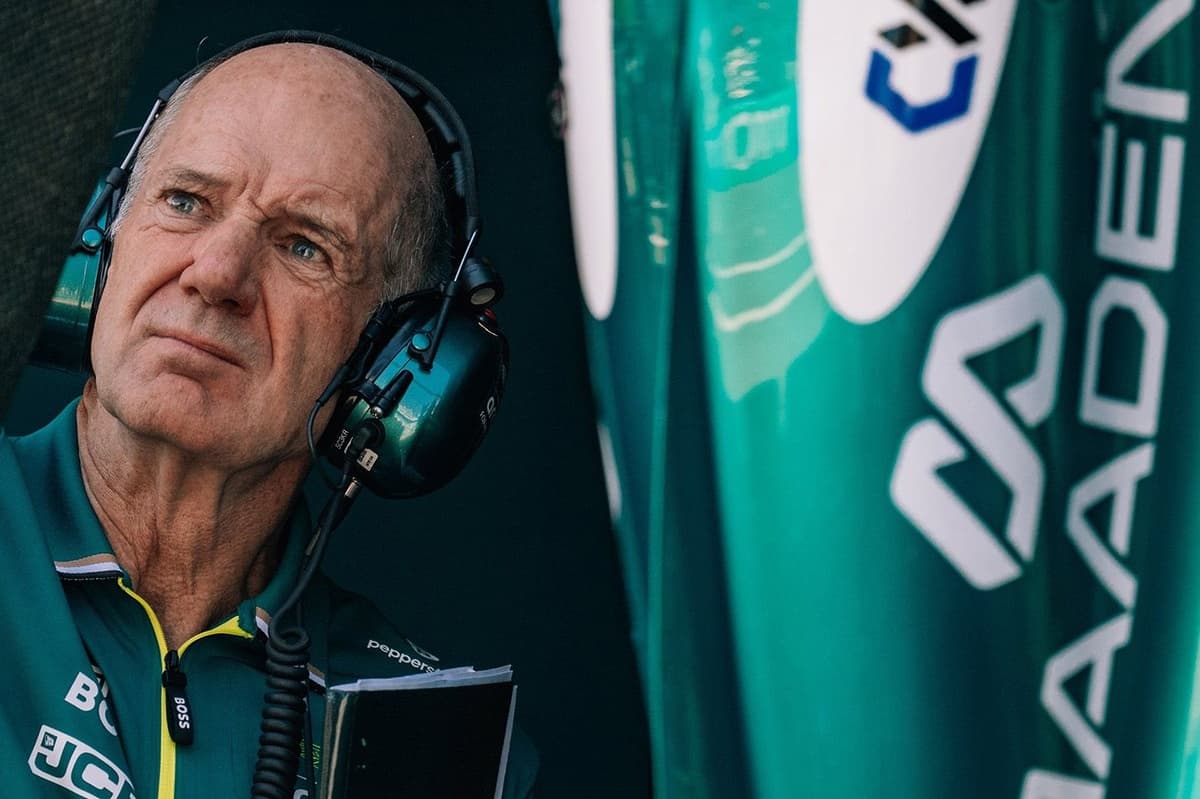
Aston Martin sit second-from-last in the 2026 constructors’ championship with just one point after seven rounds, yet team ambassador Pedro de la Rosa insists Adrian Newey’s core engineering qualities remain fully intact.
Aston Martin entered the 2026 Formula 1 season carrying considerable expectation. New facilities at Silverstone, a string of high-profile signings, and — most significantly — the arrival of Adrian Newey last spring had positioned the team as one of the most watched projects on the grid. Seven rounds into the season, the reality has been starkly different.
The team currently sits second-from-last in the constructors’ championship, having accumulated just a single point. Only Cadillac, the entirely new entry that was widely expected to struggle in its debut campaign, sits below them. Lead driver Fernando Alonso underlined the scale of the problem after qualifying last in Barcelona, stating that Aston Martin has “the worst car and the worst engine” in the field. The engine reference points to Honda, whose power unit has faced significant scrutiny throughout the opening phase of the season, though it remains difficult to apportion responsibility between the power unit and the AMR26 chassis itself.
Despite the difficult results, team ambassador Pedro de la Rosa has offered a firm defence of Newey’s contribution and character. The former Spanish driver, who raced Newey-designed machinery during the engineer’s time at McLaren in the mid-2000s, says he has observed no diminishing of the qualities that underpinned championship success at Williams, McLaren, and Red Bull across multiple decades.
“The only difference really is that I’m not driving his cars anymore, unfortunately,” de la Rosa said. “But I see no difference whatsoever in Adrian. He’s working flat out. His work ethic is outstanding.”
For de la Rosa, what separates Newey from other engineers is a specific and increasingly rare trait — the willingness to prioritise driver feedback over raw data. He illustrated the point with a detailed anecdote from the 2005 Australian Grand Prix, when he drove a third car in free practice.
“I did a few laps and he asked me one only question,” de la Rosa recalled. “He said, ‘Why can’t you go any faster into Turn 1?’ And I said, ‘Well, I go into Turn 1, I turn the wheel and the car just understeers off, so I cannot go any faster.’ And he said, ‘Show me how much you steer in that corner, in the apex.’ And I did like this with the hands, more or less. And he said, ‘OK, that’s six degrees.’ And he said, ‘In the wind tunnel, we cannot go over six degrees, because if we go over six degrees, we cannot turn the car and generate that yaw and steer.’ So, he said, ‘But I have some ideas.'”
The outcome, according to de la Rosa, was telling. “He wrote down, left hand, and then came back to the next race, he had made some changes in the front wing and the car was a lot less steer-sensitive. And that’s Adrian, just listening to the driver. And what makes him special is that actually he delivers.”
De la Rosa also spoke to Newey’s broader influence within the team structure. “He’s a great leader and someone that is truly inspirational for all of us and for so many young engineers that have joined Aston Martin,” he added.
Unlike several of their rivals, who have adopted a high-frequency upgrade strategy across the 2026 season, Aston Martin are concentrating their development resources on delivering a substantial new package at Spa-Francorchamps. Honda, meanwhile, continues to work on performance improvements to its power unit in parallel.
Alonso, speaking in Barcelona, acknowledged the current situation while pointing toward the second half of the calendar. “We’re working on all of it,” he said, “and hopefully in the second half of the season we can give people something to cheer about.”
The Spa upgrade will represent a significant test of whether the Newey-led technical group can translate their work into measurable on-track gains. Newey, who formally joined Aston Martin in the spring of 2025, has had relatively limited time to influence the AMR26’s fundamental concept, given the long lead times involved in Formula 1 car development. The 2027 regulations cycle is widely considered a more realistic horizon for judging the full impact of his involvement.
Formula 1Formula 1 · Jun 29
 Formula 1
 · Jun 28
 Formula 1
 · Jun 28
 Formula 1
 · Jun 28