 Football
Frank Onyeka Signs Permanent Coventry City Deal After Helping Club Win Championship Title and Promotion
Football · Jun 30

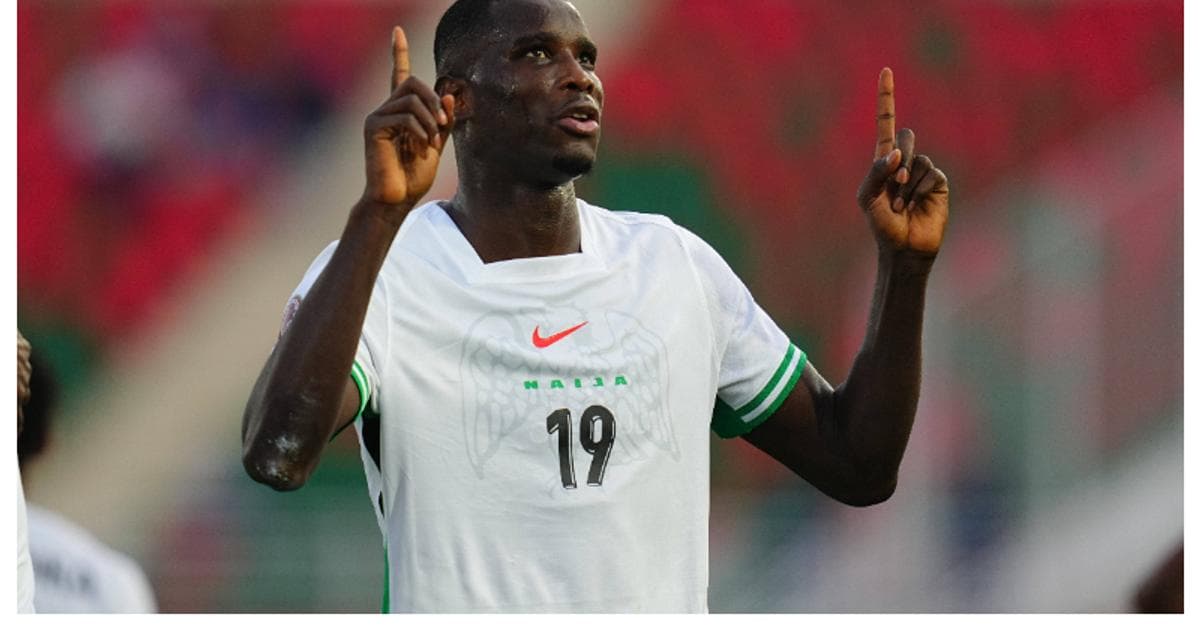
A 2-0 opening defeat to Australia has reignited debate over Turkey’s lack of a reliable centre-forward, with one football analyst pointing to Trabzonspor’s Nigerian striker Paul Onuachu as the profile the national side desperately needs.
Turkey’s 2026 FIFA World Cup campaign began with a 2-0 loss to Australia on 14 June 2026, a result that has sharpened scrutiny on the national team’s longstanding inability to field a natural, dominant centre-forward.
Throughout the match, Turkey’s attacking approach leaned heavily on wing play and delivering crosses into the box. Against an Australian defensive unit that was both physically imposing and well-organised, that strategy yielded little. The absence of a commanding target man left Turkey’s smaller forwards at a clear disadvantage when competing against Australia’s tall, disciplined backline.
Trabzonspor correspondent Birol Sancak addressed the issue directly in his column for Taka Gazete, arguing that Turkey’s tactical setup exposed a structural problem that has persisted for years. In his assessment, the team’s reliance on crosses was rendered futile by the profile of the forwards deployed to receive them.
“It was even more striking that these crosses were made to Kerem Aktürkoğlu, who was fighting hard at the forefront and proving ineffective,” Sancak wrote. “The national team, which has been feeling the lack of a clear number 9 for years, desperately needed a striker in the style of Trabzonspor’s Nigerian star Paul Onuachu against Australia.”
Onuachu, the Nigerian international who plays for Trabzonspor, has built his reputation on exactly the attributes Sancak believes Turkey lacked: the ability to hold up play under pressure, win aerial duels consistently, and convert crosses inside the penalty area. His physical presence and finishing ability in tight spaces make him the archetype of the traditional number nine — a profile increasingly rare in modern football but one that can be decisive against defensively compact opponents.
Sancak’s column raises a broader tactical question about Turkey’s squad construction and their capacity to adapt when a cross-heavy approach is neutralised. Australia’s defensive resilience in the opener demonstrated that teams with aerial discipline can effectively nullify a side that lacks a dominant aerial threat up front.
The debate over Turkey’s striker options is not new. The national team has cycled through various forward configurations in recent years without settling on a consistent solution to the centre-forward problem Sancak describes. The 2-0 defeat to Australia has brought that conversation back to the forefront at the worst possible time — at the start of a World Cup campaign where every result carries elimination stakes.
Turkey will need to reassess their approach ahead of their remaining group stage fixtures if they are to recover from the opening setback and advance in the tournament. Whether their coaching staff will adjust personnel or tactical shape in response to the Australia defeat remains to be seen.
FootballFootball · Jun 30
 Football
 · Jun 30
 Football
 · Jun 30
 Football
 · Jun 30