 Football
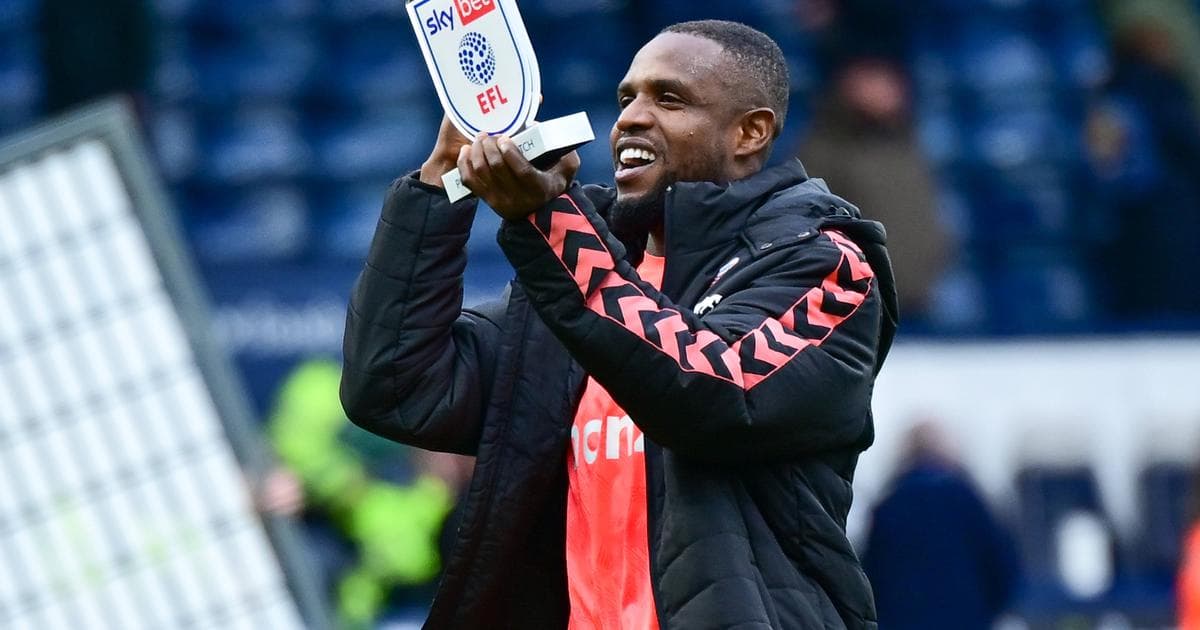
Frank Onyeka Signs Permanent Coventry City Deal After Helping Club Win Championship Title and Promotion
Football · Jun 30


Super Eagles legend Sunday Oliseh’s thunderous half-volley against Spain at the 1998 FIFA World Cup has been ranked among the ten most iconic goals in the tournament’s history. The list spans decades of World Cup football and features strikes from Zinedine Zidane, Cristiano Ronaldo, and James Rodríguez.
With the 2026 FIFA World Cup scheduled to kick off in June, attention has turned to the moments that have defined the tournament across generations. A ranking of the ten most unforgettable goals in World Cup history places a Super Eagles legend firmly in the company of global football icons.
Sunday Oliseh’s strike against Spain during the 1998 group-stage match in France comes in at number six on the list. Positioned nearly thirty yards from goal, Oliseh met a bouncing defensive clearance from the Spanish defence and unleashed a thunderous right-footed half-volley. The ball swerved away from goalkeeper Andoni Zubizarreta and crashed into the net, helping Nigeria to a 3-2 victory — a result that remains one of the defining moments of the country’s footballing history. Nigeria are currently ranked 26th in the world.
The goal has long been regarded as a symbol of Nigerian football’s golden era, with the technical difficulty of striking a bouncing ball cleanly at such power and distance cited as what sets it apart. Oliseh’s finish required both composure and precision under match pressure, qualities that have kept the goal in the conversation decades later.
Opening the top ten is Benjamin Pavard’s stunning effort for France against Argentina in the round of 16 at the 2018 World Cup in Russia. Pavard connected with a cross using the outside of his right boot, generating extraordinary swerve that sent the ball curling into the top corner. France went on to win that tournament, and the goal is widely considered one of the finest technical strikes in recent World Cup history.
At number nine, Siphiwe Tshabalala’s left-footed rising shot for South Africa against Mexico in the opening match of the 2010 tournament carries historical weight as the first goal scored at a World Cup held on African soil. The effort, struck powerfully into the far top corner after a counter-attack, sparked celebrations across the continent.
James Rodríguez’s chest-and-volley against Uruguay at the 2014 World Cup in Brazil occupies eighth place. Receiving the ball with his back to goal, Rodríguez controlled it on his chest, swivelled, and struck a left-footed volley from outside the area that clipped the underside of the crossbar before going in. The goal effectively announced him as one of the tournament’s breakout stars.
Robin van Persie’s diving header for the Netherlands against Spain, also from the 2014 tournament, comes in at seven. Reacting to a long diagonal pass from Daley Blind, Van Persie launched himself horizontally and looped the ball over Iker Casillas with his head. The image of him suspended in mid-air became one of the most reproduced photographs of that World Cup.
Andrés Iniesta’s winning goal in the 2010 final against the Netherlands takes fifth place. In extra time, Cesc Fàbregas played the ball into Iniesta, who controlled a bouncing pass and fired a half-volley into the far corner. It was the only goal of the match and gave Spain their first-ever World Cup title.
Cristiano Ronaldo’s free-kick against Spain at the 2018 World Cup in Russia is ranked fourth. With Portugal trailing late in the group-stage contest, Ronaldo curled the ball over the wall and into the top corner to complete a hat-trick and secure a 3-3 draw — a performance widely cited as one of the most complete individual displays in World Cup group-stage history.
The list also includes Zinedine Zidane’s brace in the 1998 final against Brazil, though the full rankings beyond position six were not available in the source material at the time of publication. The 2026 FIFA World Cup, co-hosted by the United States, Canada, and Mexico, will provide an opportunity for a new generation of players to produce moments that may one day feature on lists such as this.
FootballFootball · Jun 30
 Football
 · Jun 30
 Football
 · Jun 30
 Football
 · Jun 30