 Football
Frank Onyeka Signs Permanent Coventry City Deal After Helping Club Win Championship Title and Promotion
Football · Jun 30

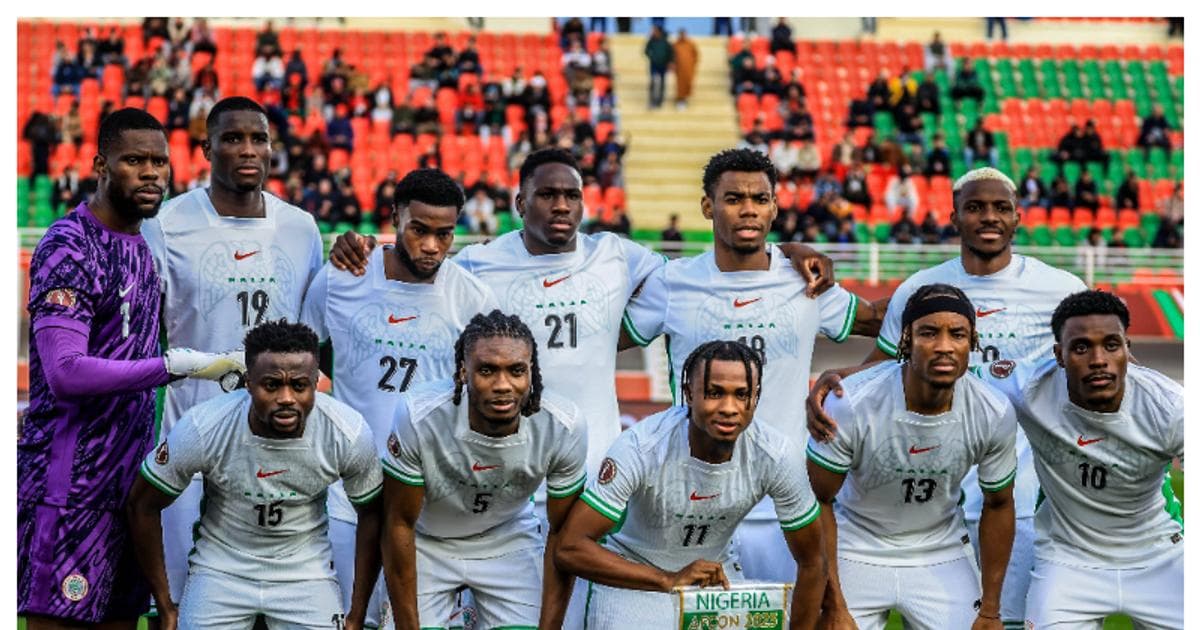
Former Nigeria international Segun Odegbami has declared that the Super Eagles would have been among the teams to beat at the 2026 FIFA World Cup, had they navigated a qualifying campaign that ultimately denied them a place in the expanded 48-team tournament.
The absence of Nigeria at the 2026 FIFA World Cup continues to draw reaction from figures within Nigerian football, with former Super Eagles star Segun Odegbami among those expressing what might have been. Writing in his Vanguard column, Odegbami stated his conviction that the Super Eagles, under head coach Eric Chelle, possessed the quality to compete with the very best at this tournament.
“I am missing Nigeria at the ongoing World Cup,” Odegbami wrote. “If Nigeria had managed, somehow, to qualify and to be participating, the Super Eagles, under Eric Chelle, and with the increasing number of gifted Nigerian players caught in Eric’s scouting web around Europe these past few months, would have been one of the teams to beat in this World Cup.”
Nigeria’s failure to reach the United States, Canada, and Mexico came after a difficult qualifying campaign. The Super Eagles were unable to secure an automatic berth, finishing behind South Africa in their group, and also missed out on a playoff place, which was claimed by DR Congo instead.
The sense of missed opportunity has been sharpened by the performances of both South Africa and DR Congo at the tournament itself, with the pair joining five other African nations — Morocco, Egypt, Ghana, Senegal, Côte d’Ivoire, and Cabo Verde — in reaching the knockout stage. The seven-nation haul represents an unprecedented achievement for African football at a single World Cup, with the continent sending ten representatives to the expanded 48-team competition.
For many Nigerian supporters, the sight of continental rivals progressing to the last 32 has prompted reflection on what a squad featuring the likes of Victor Osimhen, Ademola Lookman, and Calvin Bassey might have produced on the global stage. Odegbami’s assessment adds a prominent voice to that sentiment, specifically citing Chelle’s scouting activity across Europe in recent months as evidence that the coach was building something capable of competing at the highest level.
The 2026 World Cup marks the first edition of the expanded 48-team format, a change that created additional berths for confederation members, including Africa, which received ten spots — up from five at previous tournaments. Despite the wider field, Nigeria’s qualifying campaign left them unable to take advantage of the increased allocation.
Chelle, the Mali-born former midfielder who took charge of the Super Eagles, has been focused on identifying Nigerian-eligible players active in European leagues, a process Odegbami referenced in his column as a sign of tactical intent. Whether that groundwork translates into qualification for the 2030 FIFA World Cup — set to be hosted across Spain, Portugal, Morocco, Argentina, Uruguay, and Paraguay — will be the next significant test for the coach and the Nigerian Football Federation.
Odegbami, a member of Nigeria’s 1980 Africa Cup of Nations-winning squad and one of the country’s most recognisable football figures, did not temper his assessment, suggesting the Super Eagles’ current generation represents a genuinely competitive force in world football. With African teams collectively making history at this edition, the debate around Nigeria’s absence is unlikely to fade quickly as the 2026 tournament progresses.
FootballFootball · Jun 30
 Football
 · Jun 30
 Football
 · Jun 30
 Football
 · Jun 30