 Football
Frank Onyeka Signs Permanent Coventry City Deal After Helping Club Win Championship Title and Promotion
Football · Jun 30

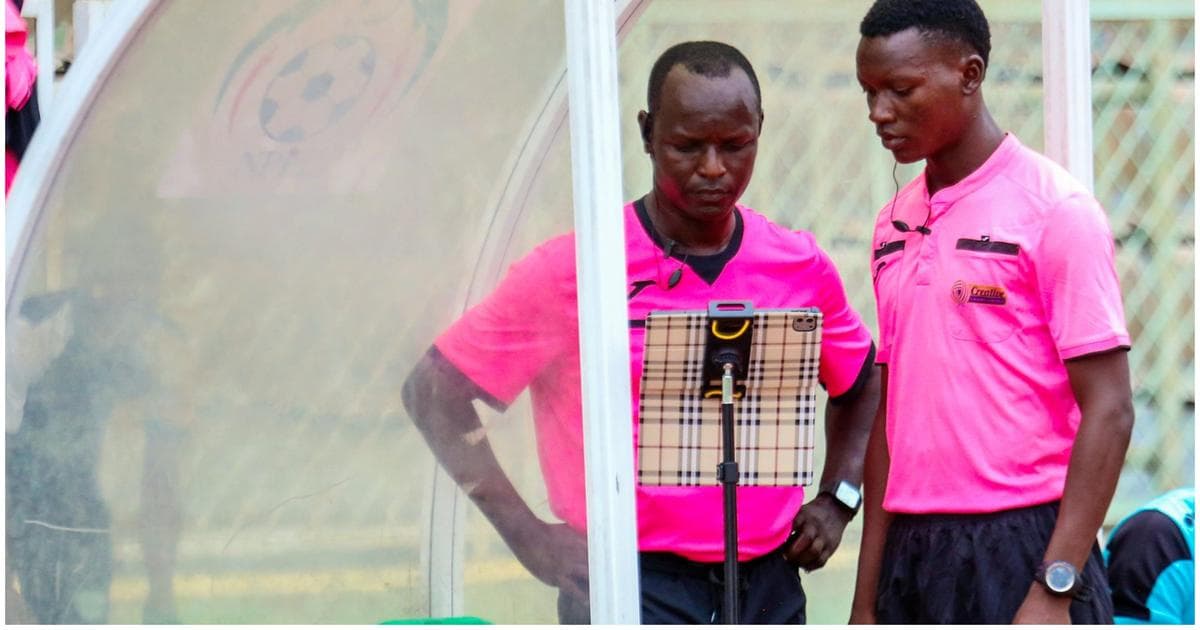
The National Sports Commission has ratified a sweeping infrastructure package that includes the adoption of Video Assistant Referee technology and a comprehensive redevelopment of the Moshood Abiola National Stadium in Abuja.
Nigeria is set to become one of the latest African nations to adopt Video Assistant Referee (VAR) technology, following a landmark decision by the National Sports Commission (NSC) to approve a multi-billion naira sports infrastructure overhaul across the country.
The announcement, made following a decisive NSC Tenders Board Meeting, centres on the complete redevelopment of the Moshood Abiola National Stadium in Abuja — a facility that has long fallen below FIFA standards and forced the Super Eagles to relocate matches away from the federal capital. The VAR implementation forms part of a broader effort to bring the stadium in line with the technical requirements for hosting high-profile international fixtures.
Planned upgrades to the Abuja stadium extend well beyond pitch-level improvements. According to the NSC, the redevelopment will include a full revamp of the main pitch and tartan tracks, high-tech upgrades to dressing rooms, the media centre, VIP corporate suites, public address systems, and security infrastructure. The facility will also receive internationally compliant floodlights, electronic advertising boards, and a specialised pitch cover designed to accommodate large-scale entertainment concerts as a revenue stream. A new High-Performance Centre, a state-of-the-art Anti-Doping Laboratory, and the conversion of an abandoned 200-bed athletes’ hostel into a commercial hotel complex are also included in the blueprint.
NSC Chairman Mallam Shehu Dikko confirmed that President Bola Ahmed Tinubu has approved the establishment of a National Sports Infrastructure Development Bond to provide long-term, sustainable funding and maintenance for the projects. “These projects represent a bold step towards restoring Nigeria’s sporting glory and creating sustainable opportunities for future generations,” Dikko said. “Mr. President is deliberately repositioning sports as a catalyst for youth empowerment, infrastructure development and economic growth… History will definitely be kind to Mr. President for the ongoing bold and evidently successful reforms and reset.”
Director-General of the Commission, Hon. Bukola Olopade, framed the initiative in broader terms, stating: “This is beyond infrastructure renewal, it is about building a complete sports ecosystem that supports talent discovery, athlete development, job creation, and global competitiveness.”
The plan is not confined to Abuja. The NSC has outlined a nationwide expansion covering all geopolitical zones, including the construction of 20 mini-stadiums and the development of 15 tertiary institution sports hubs. The Federal Government has also approved direct infrastructural support for the next three host states of the National Sports Festival, with Enugu State — scheduled to host the games later in 2026 — first in line to receive assistance, including the construction of an Olympic-size swimming pool.
The development carries significant weight in the context of Nigeria’s current stadium landscape. According to available data, Nigeria currently has only two CAF-accredited stadiums: the Godswill Akpabio International Stadium in Uyo, Akwa Ibom State, and the Moshood Abiola National Stadium in Abuja. The planned upgrades to the Abuja facility are therefore critical not only to domestic competitions but also to Nigeria’s ability to host CAF and FIFA-sanctioned tournaments.
VAR technology has been gradually expanding across African football in recent years, with the Confederation of African Football (CAF) having introduced it at the Africa Cup of Nations and in the CAF Champions League. Nigeria’s adoption of the technology at national stadium level would mark a notable step in aligning the country’s domestic infrastructure with continental and global standards. The NSC’s announcement comes as Nigeria continues to harbour ambitions of co-hosting the 2030 FIFA World Cup, though NSC Chairman Dikko has previously acknowledged that FIFA has yet to deliver a final verdict on the Super Eagles’ World Cup qualification prospects.
FootballFootball · Jun 30
 Football
 · Jun 30
 Football
 · Jun 30
 Football
 · Jun 30