 Football
Frank Onyeka Signs Permanent Coventry City Deal After Helping Club Win Championship Title and Promotion
Football · Jun 30


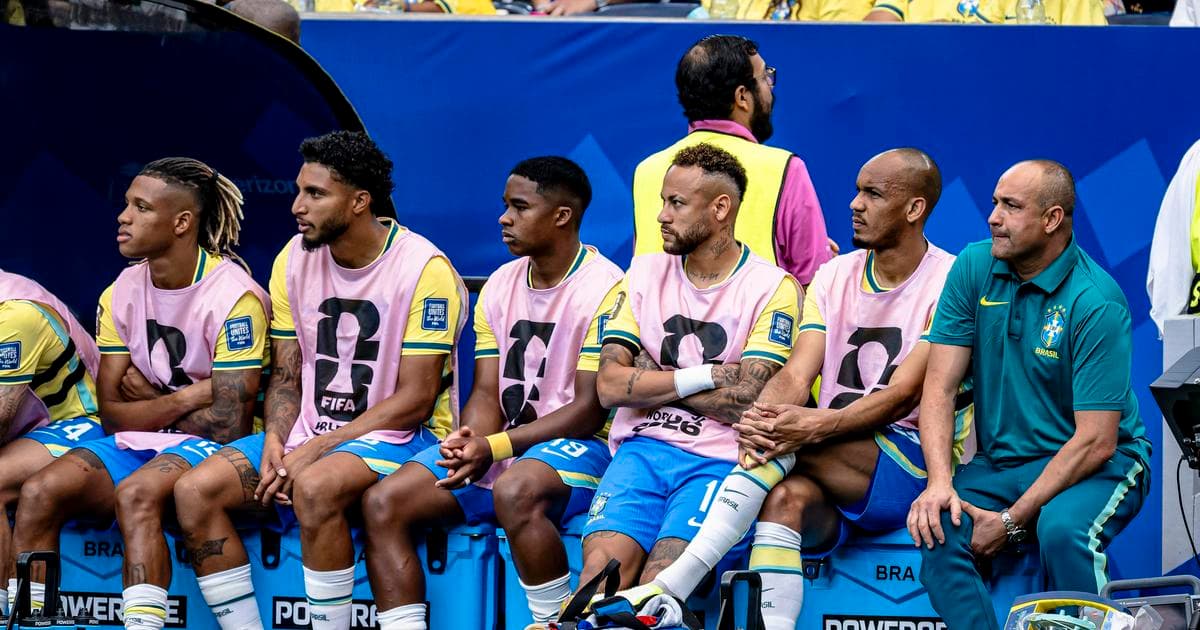
Former CAF Player of the Year Mustapha Hadji has stated that Brazil, not Morocco, should enter their Group F encounter with caution, arguing that the Atlas Lions represent a genuine threat to the South American side’s World Cup ambitions.
Morocco legend Mustapha Hadji has issued a direct warning to Brazil and coach Carlo Ancelotti ahead of their highly anticipated 2026 FIFA World Cup Group F meeting, insisting that the current generation of Atlas Lions players commands serious respect from all opponents in the group.
Speaking on the Remontada show on Medi1TV, Hadji — who won the CAF Player of the Year award in 1998 — delivered a confident assessment of where the balance of power now stands between the two nations. “It’s Brazil who should be wary of Morocco. Brazil is not the same as in 1998 or 2002, Scotland isn’t the same either… and in this group, they’ll all have to watch out for Morocco,” the former Atlas Lions star declared.
Hadji’s remarks centre on what he describes as a significant shift in the global football landscape since Brazil’s dominant era in the late 1990s and early 2000s. The Seleção claimed their fifth World Cup title in 2002 and reached the final four in 1998, periods widely regarded as high watermarks of Brazilian football. Hadji’s position is that those standards no longer define the current Brazilian squad, leaving room for Africa’s strongest side to compete on equal footing.
The two nations are scheduled to meet on June 14, 2026, at the MetLife Stadium in what shapes up as the standout fixture of the group stage’s opening round. Morocco, managed by Mohamed Ouahbi, will subsequently face Scotland before concluding their group assignments against Haiti.
Group F’s composition places three continental representatives — from South America, Africa, and Europe — on a collision course early in the tournament, with the group already generating significant attention from analysts and supporters alike. For Morocco, the fixture list offers both a formidable challenge and a platform to demonstrate the progress African football has made on the world stage.
Hadji’s confidence is not without foundation. Morocco made history at the 2022 FIFA World Cup in Qatar, becoming the first African nation to reach the semi-finals of the tournament. That run included victories over Belgium, Spain, and Portugal, eliminating three former world champions before falling to France. The achievement established Morocco as a legitimate contender rather than a romantic underdog, and the core of that squad remains largely intact heading into the 2026 edition.
Brazil, meanwhile, arrive at the tournament having endured a difficult qualification campaign in South America’s CONMEBOL standings, a period that has prompted broader questions about the team’s current identity and depth. Ancelotti, who took charge of the national side, faces the task of restoring the Seleção’s traditional standing as one of the tournament’s foremost contenders.
With the 2026 World Cup set to be co-hosted across the United States, Canada, and Mexico — making it the largest edition of the tournament in history with 48 participating nations — Morocco’s potential path through the knockout rounds will depend heavily on how they navigate Group F. A strong opening result against Brazil would significantly bolster their prospects of advancing deep into the competition once again.
FootballFootball · Jun 30
 Football
 · Jun 30
 Football
 · Jun 30
 Football
 · Jun 30