 Football
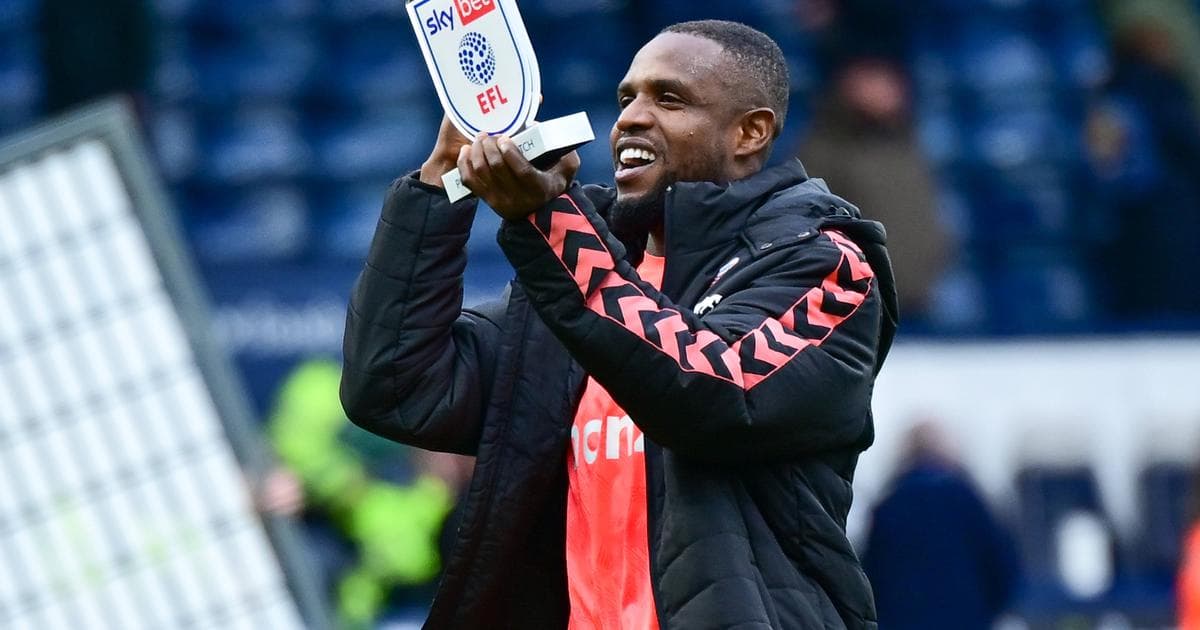
Frank Onyeka Signs Permanent Coventry City Deal After Helping Club Win Championship Title and Promotion
Football · Jun 30

With the 2026 FIFA World Cup set to be hosted across the United States, Canada and Mexico, the race for the tournament’s top goalscorer award is already generating significant interest in sports betting markets. Here is a look at the frontrunners and the history behind one of football’s most coveted individual prizes.
The Golden Boot — awarded to the top scorer at each FIFA World Cup — has historically been one of the most closely followed individual accolades in international football, and the 2026 edition is expected to be no different. According to sports betting firm Spreadex, France forward Kylian Mbappe is currently the bookmakers’ favourite to finish as the tournament’s leading scorer.
Mbappe arrives at the 2026 tournament as the reigning Golden Boot holder, having netted eight goals at Qatar 2022 — the highest tally at a single World Cup since Ronaldo scored eight for Brazil at the 2002 Korea/Japan tournament. His most remarkable contribution came in the final against Argentina, where he scored a hat-trick to level the match before the game was ultimately decided on penalties, with Argentina lifting the trophy for a third time. Mbappe’s eight-goal haul placed him ahead of Lionel Messi, who finished with seven goals in seven appearances after a standout individual tournament of his own.
England’s Harry Kane, who claimed the Golden Boot at Russia 2018 with six goals, is another prominent name in the market. Kane’s tally in Russia included a hat-trick against Panama in the group stage and three penalty conversions — the most spot-kick goals scored by any player at a single World Cup. His performances helped England advance to the semi-finals, where they were eliminated following a defeat to Croatia, a match in which Kane failed to score. Now plying his trade at Bayern Munich, Kane will again be central to England’s attacking ambitions in North America.
Lionel Messi, despite an illustrious club career, arrived at Qatar 2022 with a relatively modest World Cup record of six goals in 19 appearances for Argentina. He comprehensively addressed that statistic in Qatar, scoring seven times across seven matches and providing a series of decisive performances as Argentina were crowned world champions. Messi is expected to feature prominently in Argentina’s attack once again and remains a credible contender for the top scorer award at what could be his final World Cup.
Perhaps the most intriguing newcomer to the Golden Boot conversation is Norway’s Erling Braut Haaland, who will make his first appearance at a major international tournament in 2026. The Manchester City striker led Norway through qualification, scoring 16 goals in eight matches, and has accumulated 55 goals in 49 international appearances — a record that makes him his country’s all-time leading scorer. Norway’s group stage draw includes fixtures against Iraq and Senegal before a more testing encounter with France, a schedule that presents Haaland with an early opportunity to establish himself in the scoring charts. Should Norway navigate a favourable path through the knockout rounds, the 25-year-old could represent strong value in the Golden Boot market.
The history of the award reflects how difficult it is to predict an outright winner. Just Fontaine’s record of 13 goals for France at the 1958 World Cup in Sweden remains unmatched, while Sandor Kocsis of Hungary scored 11 at the 1954 tournament in Switzerland. In more recent editions, shared winners have also occurred — most notably at the United States 1994 tournament, where Russia’s Oleg Salenko and Bulgaria’s Hristo Stoichkov both finished level on six goals.
The full list of Golden Boot winners since the tournament’s inception in 1930 illustrates the breadth of nations and players who have claimed the honour: Guillermo Stabile (Argentina, 8 goals, 1930), Oldrich Nejedly (Czechoslovakia, 5 goals, 1934), Leonidas (Brazil, 7 goals, 1938), Ademir (Brazil, 8 goals, 1950), Sandor Kocsis (Hungary, 11 goals, 1954), Just Fontaine (France, 13 goals, 1958), multiple players on 4 goals in 1962, Eusebio (Portugal, 9 goals, 1966), Gerd Muller (West Germany, 10 goals, 1970), Grzegorz Lato (Poland, 7 goals, 1974), Mario Kempes (Argentina, 6 goals, 1978), Paolo Rossi (Italy, 6 goals, 1982), Gary Lineker (England, 6 goals, 1986), Salvatore Schillaci (Italy, 6 goals, 1990), Salenko and Stoichkov (6 goals each, 1994), Davor Suker (Croatia, 6 goals, 1998), Ronaldo (Brazil, 8 goals, 2002), Miroslav Klose (Germany, 5 goals, 2006), Thomas Muller (Germany, 5 goals, 2010), James Rodriguez (Colombia, 6 goals, 2014), Harry Kane (England, 6 goals, 2018), and Kylian Mbappe (France, 8 goals, 2022).
The 2026 FIFA World Cup will be the first edition to feature 48 teams, expanding from the 32-team format used since 1998. The additional matches across the expanded tournament could influence scoring volumes and create more opportunities for frontline strikers to accumulate goals. With Mbappe, Kane, Messi and Haaland all expected to lead their respective attacks, the Golden Boot race is set to be one of the defining storylines of the tournament.
FootballFootball · Jun 30
 Football
 · Jun 30
 Football
 · Jun 30
 Football
 · Jun 30