 Football
Frank Onyeka Signs Permanent Coventry City Deal After Helping Club Win Championship Title and Promotion
Football · Jun 30

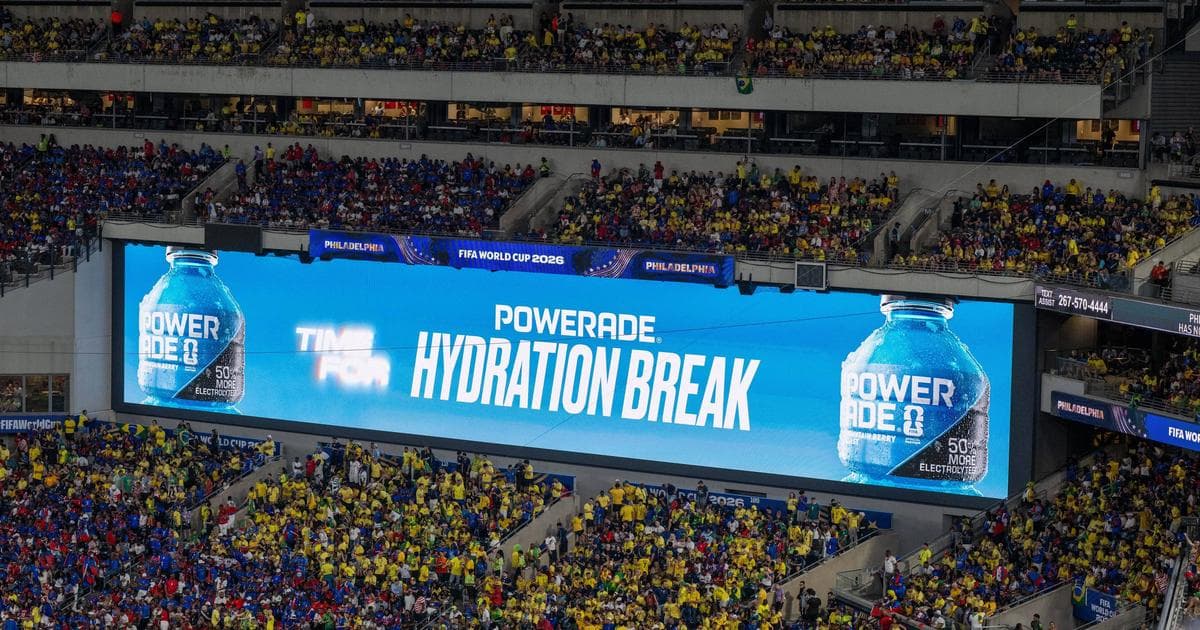
Uruguay head coach Marcelo Bielsa has criticised FIFA’s mandatory mid-half hydration breaks at the 2026 World Cup, arguing the three-minute stoppages fundamentally undermine football’s cultural identity. His comments come as La Celeste look to bounce back after a 1-1 opening draw against Saudi Arabia.
Uruguay manager Marcelo Bielsa has directed sharp criticism at FIFA’s decision to introduce mandatory hydration breaks at the 2026 World Cup, stating the stoppages strip the sport of characteristics that have defined it for generations.
The breaks — lasting three minutes and occurring midway through each half — were introduced to address the extreme summer heat experienced across host nation North America. In practice, they divide each match into four distinct segments, a structural shift that Bielsa, the former Leeds United head coach, views as deeply problematic.
“Playing four times instead of two alters the conception of what had been culturally built to interpret football,” Bielsa told reporters. “This change of culture does not add anything and takes away a lot. I will just say that before this decision, football had a characteristic, now it has another. People fall in love with the game because of its characteristics.”
Bielsa’s remarks reflect a broader discontent among coaches and observers at the tournament. A recurring criticism levelled at the breaks is that they function primarily as additional commercial inventory for broadcast partners, creating opportunistic advertising windows rather than serving a purely welfare-driven purpose. Bielsa’s comments align with that school of thought, though he framed his objections in cultural rather than commercial terms.
Uruguay’s immediate focus shifts to Group H, where they face debutants Cape Verde on Sunday following a difficult tournament opener. La Celeste were held to a 1-1 draw by Saudi Arabia, a result that exposed their difficulty in breaking down well-organised, defensive opposition.
Central to the post-match scrutiny has been Liverpool striker Darwin Nunez, whose performance against Saudi Arabia drew significant attention for the wrong reasons. The forward managed only one shot before being substituted at halftime, adding to an international goal drought that has now stretched to 14 consecutive appearances for Uruguay.
Despite the mounting pressure on his frontman, Bielsa downplayed concerns over Nunez’s confidence and form in his press conference remarks. He did, however, signal that tactical adjustments are forthcoming, indicating a preference for more dynamic and fluid possession-based play to expose Cape Verde’s defensive structure.
Cape Verde, appearing at their first-ever FIFA World Cup, represent a historic milestone for African football. Their presence in Group H adds significant context to what is already a must-improve fixture for Uruguay, who cannot afford to drop further points if they are to advance from the group stage comfortably.
The hydration break debate is unlikely to subside as the tournament progresses into the knockout rounds, particularly if temperatures across venues in the United States, Canada, and Mexico remain elevated. FIFA has not indicated any intention to review the policy mid-tournament.
FootballFootball · Jun 30
 Football
 · Jun 30
 Football
 · Jun 30
 Football
 · Jun 30