 Football
Frank Onyeka Signs Permanent Coventry City Deal After Helping Club Win Championship Title and Promotion
Football · Jun 30

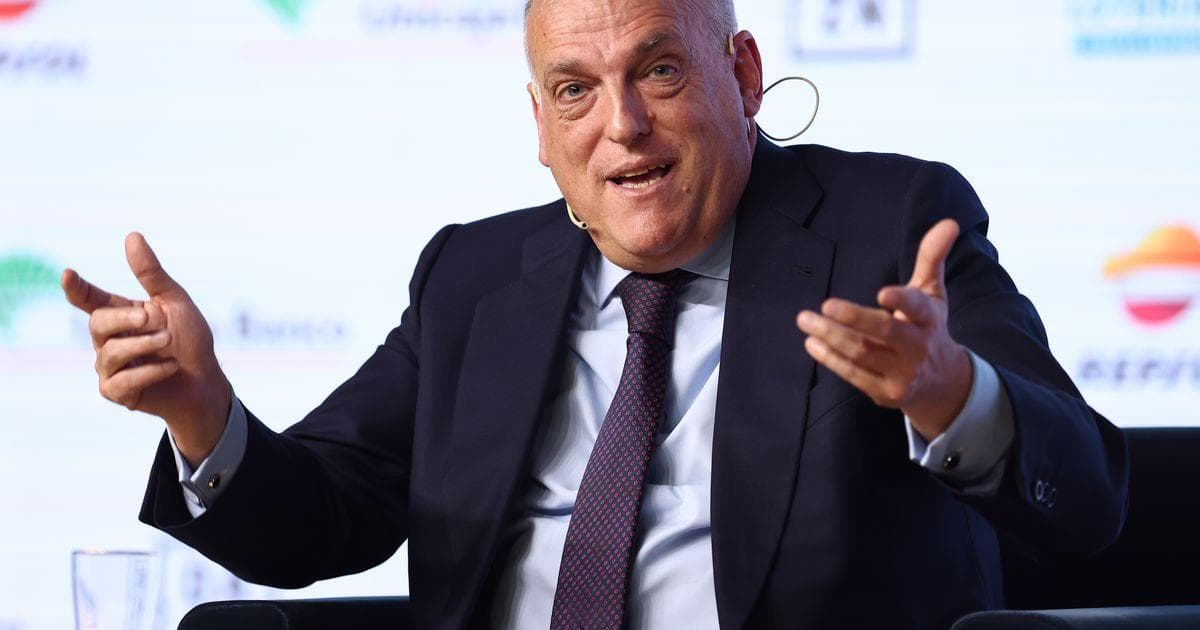
LaLiga president Javier Tebas has formalised a deepened partnership with Google to automatically detect and suppress illegal streaming links across the tech giant’s platforms, with the Spanish league reporting measurable results during the 2025/26 season.
Spanish football’s top division has taken a significant step in its ongoing battle against digital piracy, officially consolidating a collaboration with Google that deploys automated reporting tools to eliminate illegal streams in real time. The partnership, announced on June 17, 2026, via a joint press release from LaLiga Corporativo, marks a structural deepening of a relationship that had been developing throughout the 2025/26 season.
Rather than relying on reactive copyright takedown notices — a method widely criticised for being too slow to be effective during live broadcasts — LaLiga has embedded itself into Google’s backend infrastructure. Through advanced, automated reporting channels spanning Google’s range of products and services, the league now has the capability to flag and suppress streaming indicators before they surface in search results or video feeds.
The outcome, according to LaLiga, has been a “very significant reduction” in streaming incidents over the course of the recently concluded season. While the league has not published specific figures, the claim suggests the integrated system is producing measurable enforcement results at scale.
Lino Cattaruzzi, President of Google Iberia, outlined the company’s position on the arrangement: “For Google, respect for intellectual property rights and the provision of a safe digital environment are fundamental pillars. That is why we have multiple mechanisms in place to prevent the misuse of our tools by third parties, and we maintain ongoing investment in technology to actively combat piracy.”
Cattaruzzi further stated that the partnership demonstrates how technology platforms can offer content rights holders “highly effective, agile, and transparent technical solutions that bring security to the entertainment sector.”
LaLiga president Javier Tebas, who has consistently made anti-piracy enforcement a central pillar of his tenure, framed the Google collaboration as a continuation of a broader strategic commitment. “LaLiga remains firmly committed to the fight against piracy. Collaboration is essential to putting an end to this scourge, and being able to count on major players such as Google strengthens us in our purpose. Now, together with Google, we are becoming increasingly effective in defending football, intellectual property, the entertainment sector, and the integrity of fans,” Tebas said.
Tebas has long pursued legal and technological avenues to curtail piracy, previously engaging with internet service providers and pursuing court injunctions in multiple jurisdictions to block streams during live match windows. The Google alliance represents a shift toward upstream suppression — targeting discoverability rather than access alone.
The agreement carries implications beyond Spain. LaLiga is one of the most-watched football leagues globally, with a particularly significant audience across Africa, Latin America, and Southeast Asia — regions where affordable official broadcast subscriptions are not always accessible. The crackdown on free streams may, therefore, have a disproportionate impact on fans in these markets who have historically relied on informal digital platforms to follow the competition.
From a broadcast rights perspective, LaLiga’s domestic and international rights are currently distributed across multiple commercial partners. The league has an ongoing interest in protecting the commercial value of those rights, particularly as it navigates future rights cycles in which streaming platform valuations will be a key variable.
The partnership also sets a precedent for other major sports organisations monitoring the effectiveness of direct integrations with large technology platforms as an enforcement mechanism. Whether governing bodies in other sports — or indeed other football leagues — adopt a similar model is likely to depend, in part, on the detailed metrics LaLiga publishes from its 2025/26 enforcement data in the months ahead.
FootballFootball · Jun 30
 Football
 · Jun 30
 Football
 · Jun 30
 Football
 · Jun 30