 Football
Frank Onyeka Signs Permanent Coventry City Deal After Helping Club Win Championship Title and Promotion
Football · Jun 30

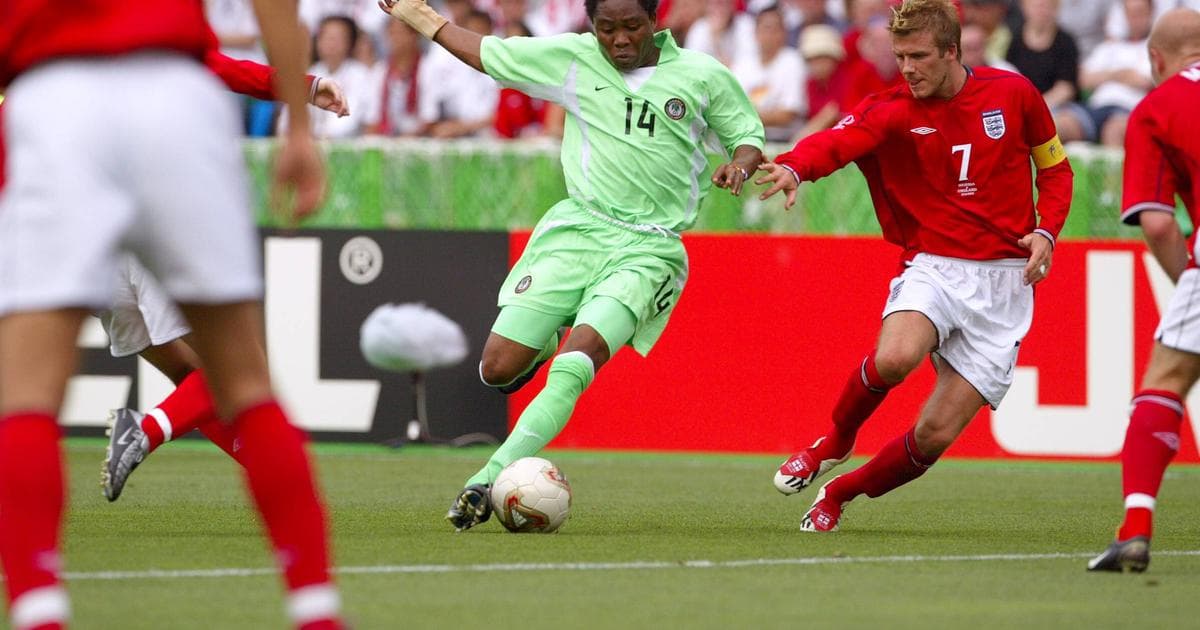
Former Nigeria left-back Ifeanyi Udeze has detailed the financial penalties and administrative deception he endured at PAOK FC for honouring Super Eagles call-ups, including having a lucrative per-minute performance clause withheld for an entire season.
Ifeanyi Udeze, the former Nigeria left-back who earned 35 international caps during the Super Eagles’ golden generation, has spoken candidly about the institutional obstacles he faced at club level for prioritising his international commitments — including having his wages frozen and being falsely reported to the Nigeria Football Federation (NFF) as having refused a national team invitation.
Speaking on the 5th House Podcast, Udeze described the conflict as a three-way battle between himself, PAOK FC, and the NFF. The friction, he revealed, began immediately after his transfer to the Greek club ahead of the Sydney 2000 Olympic Games, when his manager warned him that travelling for international duty would cost him his starting position and require him to “start fresh” upon returning.
The situation deteriorated further in 2001, ahead of a FIFA World Cup qualifying match against Ghana in Accra. According to Udeze, PAOK went as far as intercepting NFF communications and misrepresenting his position to football administrators. “NFF will send a fax to my club, my club will send back to NFF that I refuse to honour the invitation. Whereas, they are the ones who told me not to go,” he explained.
Udeze chose to defy the club’s ultimatum regardless. “My club said, ‘if you go see what will happen’ and I told them, ‘whatever wants to happen, let it happen,'” he recalled. He travelled, featured in the match, and was named Man of the Match in a 1-1 draw against Ghana — but the financial repercussions followed swiftly upon his return.
PAOK responded by withholding a performance-related clause in his contract that entitled him to €25 for every minute he spent on the pitch. The club blocked those payments entirely for a full season, representing a significant financial loss given the volume of playing time involved at club level.
Despite the sustained financial pressure and the threat of being blacklisted within the squad, Udeze continued to honour Super Eagles call-ups throughout his career. He went on to represent Nigeria at the 2002 FIFA World Cup in South Korea and Japan — the tournament at which Nigeria were eliminated in the group stage — and accumulated 35 caps in total for the national side. He later played for West Bromwich Albion in the English Premier League before retiring.
Udeze’s account adds to a broader and well-documented pattern of tension between African international players and their European clubs over international release windows. The issue has persisted across decades, with players from across the continent routinely navigating pressure from clubs reluctant to release them for Africa Cup of Nations qualifiers, World Cup qualifiers, and tournament squads — particularly during periods when those competitions fall outside FIFA international windows, which offer clubs limited legal protection against releasing players.
For the current generation of Super Eagles players, many of whom are based at top European clubs, the administrative and contractual dynamics Udeze described remain relevant as Nigeria prepare for the 2026 FIFA World Cup, which will be co-hosted by the United States, Canada, and Mexico.
FootballFootball · Jun 30
 Football
 · Jun 30
 Football
 · Jun 30
 Football
 · Jun 30