 Football
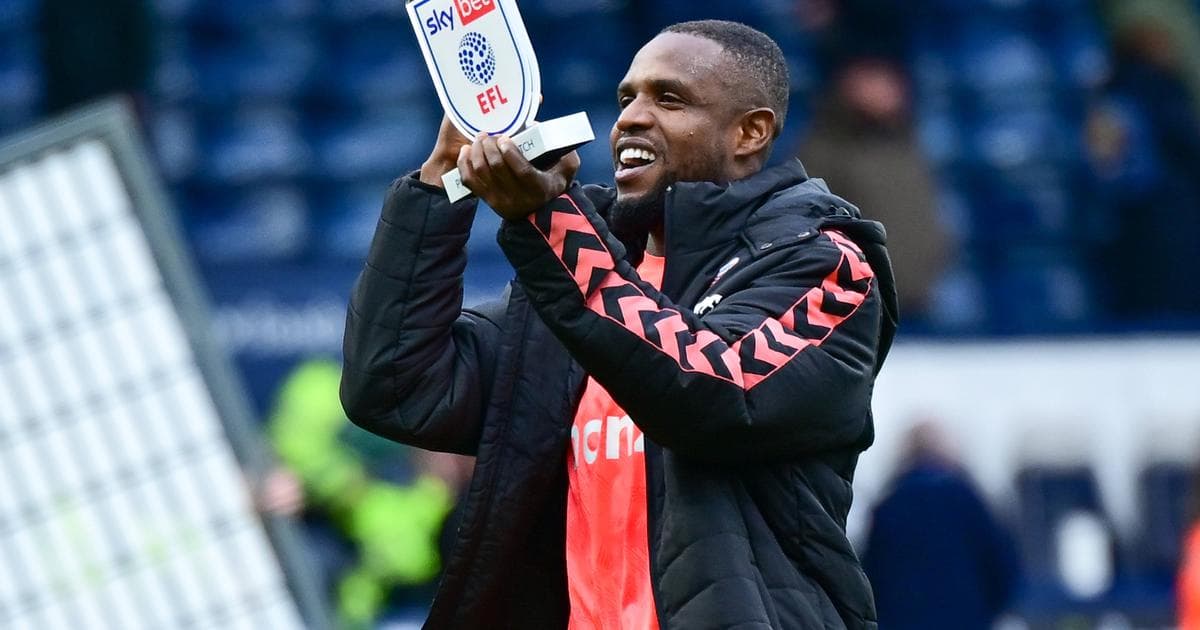
Frank Onyeka Signs Permanent Coventry City Deal After Helping Club Win Championship Title and Promotion
Football · Jun 30


Football’s lawmaking body has unanimously passed a new regulation allowing red cards for players who cover their mouths during confrontations, with the rule set to be enforced at the 2026 FIFA World Cup.
The International Football Association Board (IFAB) has approved a significant rule change that could result in red cards for players who cover their mouths during on-field confrontations, a decision that comes amid heightened scrutiny of verbal abuse in professional football.
The regulation was passed unanimously at an IFAB meeting held in Vancouver on Tuesday. As football’s lawmaking authority, IFAB’s decisions carry binding weight across the global game. According to an official IFAB statement, the rule states: “At the discretion of the competition organizer, any player covering their mouth in a confrontational situation with an opponent may be sanctioned with a red card.”
The decision grants competition organisers the authority to apply the sanction, meaning its enforcement at the 2026 FIFA World Cup — co-hosted by the United States, Canada, and Mexico — will depend on FIFA’s directive to match officials. With the tournament on the horizon, referees are expected to apply these updated guidelines rigorously, with zero tolerance for unsporting behaviour forming the basis of the approach.
The backdrop to this rule change is a high-profile incident during a UEFA Champions League fixture between Real Madrid and Benfica in February. Brazilian forward Vinicius Junior alleged he was subjected to verbal abuse by Argentine winger Gianluca Prestianni during the match. UEFA subsequently confirmed that Prestianni received a six-match ban for discriminatory conduct. The young forward, while denying accusations of racism, admitted to using language that was offensive in nature.
The Vinicius-Prestianni incident drew widespread attention to the difficulty referees and broadcast cameras face in identifying abusive language when players deliberately obscure their mouths. The controversy intensified calls for a regulatory mechanism to address the practice, which critics argue is used specifically to evade accountability during confrontations.
Vinicius Junior has been at the centre of multiple high-profile racism controversies throughout his career in Spain. He has previously spoken out forcefully on the subject, and the incident against Benfica added further momentum to campaigns pushing for stronger institutional responses from football’s governing bodies.
The new IFAB rule is widely regarded as a direct response to that pressure. By targeting mouth-covering behaviour in confrontational situations, the regulation aims to improve transparency during on-field altercations and reinforce accountability for what is said between players. The measure is intended to function both as a deterrent and as an additional tool for officials to maintain conduct standards during matches.
IFAB, whose membership includes FIFA and the four British football associations — England, Scotland, Wales, and Northern Ireland — holds sole authority over the Laws of the Game. Any amendment passed by the board applies across all affiliated competitions globally, though the application of the red card sanction remains subject to individual competition organisers opting in.
As the 2026 FIFA World Cup draws closer, the enforcement posture of match officials will be closely watched, particularly given the tournament’s scale and global visibility. The new regulation represents one of the more notable conduct-related rule changes ahead of the competition.
FootballFootball · Jun 30
 Football
 · Jun 30
 Football
 · Jun 30
 Football
 · Jun 30