 Football
Frank Onyeka Signs Permanent Coventry City Deal After Helping Club Win Championship Title and Promotion
Football · Jun 30

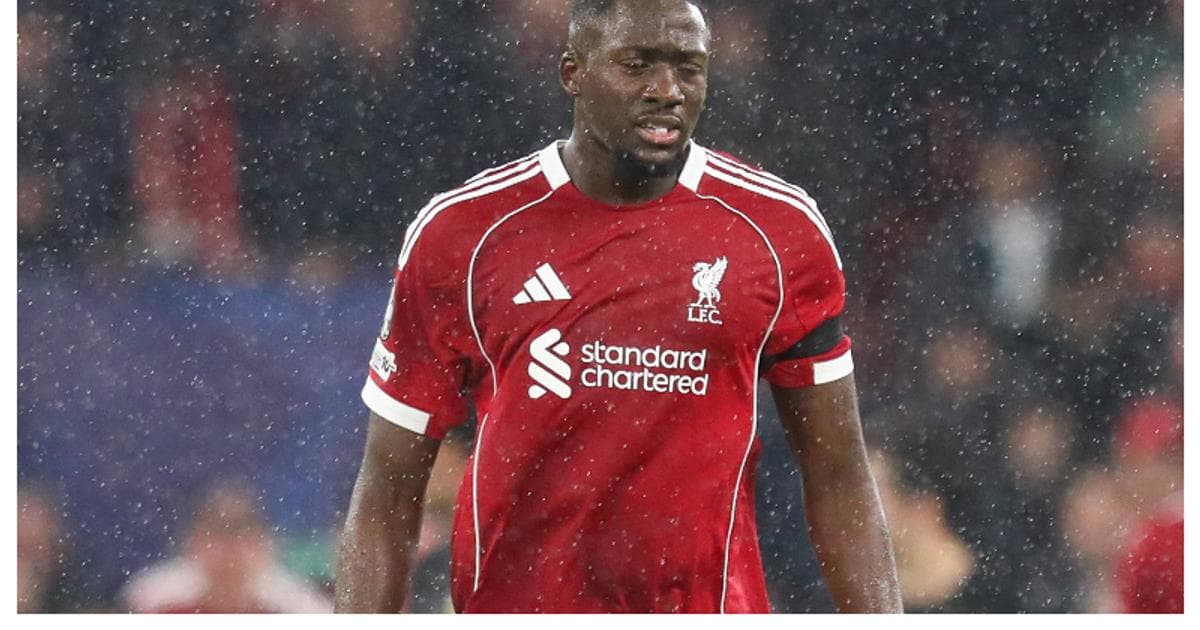
Liverpool defender Ibrahima Konate has spoken publicly about suffering from depression during his final season at Anfield, following the deaths of teammate Diogo Jota and his father Hamady. The French international opened up in a candid radio interview, urging others to seek help rather than suffer in silence.
Ibrahima Konate has broken his silence on a deeply difficult personal period, revealing that he battled depression during his final campaign with Liverpool after losing both his teammate Diogo Jota and his father within months of each other.
Speaking to France Inter radio, the French centre-back described how grief took a profound toll on his mental and physical wellbeing. “There are low points, there’s depression. You can suffer from depression in football too; there’s no need to be ashamed to say so,” Konate said. “It’s true that I’ve often heard players say they were suffering from depression and that fans or people on the outside didn’t understand because they were earning a lot of money. But no, that’s rubbish and you shouldn’t say that.”
The sequence of losses Konate endured was severe. In July 2025, Portuguese forward Diogo Jota and his brother André Silva were killed in a car crash — a tragedy that sent shockwaves through the football world. Months later, in January 2026, Konate’s father, Hamady, passed away following a prolonged illness, compounding the grief the defender was already carrying.
“It devastated me. I didn’t have any interest in anything else at that point,” Konate said. “You go back to football because you have no choice. We’re employees at a club that pays us every month, so we have duties. We had no choice but to go back on the field and play for him and his family — as well as ourselves. There’s no way of getting over it, but you learn to live with it.”
Konate described how his father’s declining health left him paralysed by uncertainty. “I didn’t know what to do. I didn’t know whether I should go home and stop playing, because the team needed me too,” he recalled. “I didn’t know who to talk to about it, so I kept it all to myself. And this is the advice I’d give to everyone: when you’re feeling down or something’s going on, you need to talk to those around you.”
He added: “It can help you and do you good. I didn’t talk about it and kept it to myself. The doctors then told us he didn’t have long to live, but we didn’t know it would happen so quickly.”
Despite being granted compassionate leave following his father’s death, Konate cut short his absence to return to Liverpool during an injury crisis at the club — a decision that underscored both his professional commitment and the impossible position in which he found himself.
On the broader subject of mental health in football, the 26-year-old was unequivocal in challenging the assumption that high earnings shield athletes from psychological suffering. “Depression is personal; it’s deep inside you. When you’re depressed, it starts in the heart, goes up to the brain and takes over your whole body. For me, that’s what’s hard, and we need to talk about it,” he said.
Konate’s comments arrive at a significant juncture in his career. Having departed Liverpool on a free transfer at the end of the 2025-26 season, he is reportedly close to completing a move to Real Madrid. His time at Anfield spanned four seasons after joining from RB Leipzig in 2021, during which he established himself as one of the Premier League’s most reliable central defenders.
Konate’s willingness to speak openly about depression adds his voice to a growing number of professional footballers who have addressed mental health publicly in recent years. His account is particularly notable given the circumstances — navigating bereavement, an injury crisis, and a high-stakes final season simultaneously — and serves as a reminder that elite sport offers no immunity from grief.
FootballFootball · Jun 30
 Football
 · Jun 30
 Football
 · Jun 30
 Football
 · Jun 30