 Football
Frank Onyeka Signs Permanent Coventry City Deal After Helping Club Win Championship Title and Promotion
Football · Jun 30

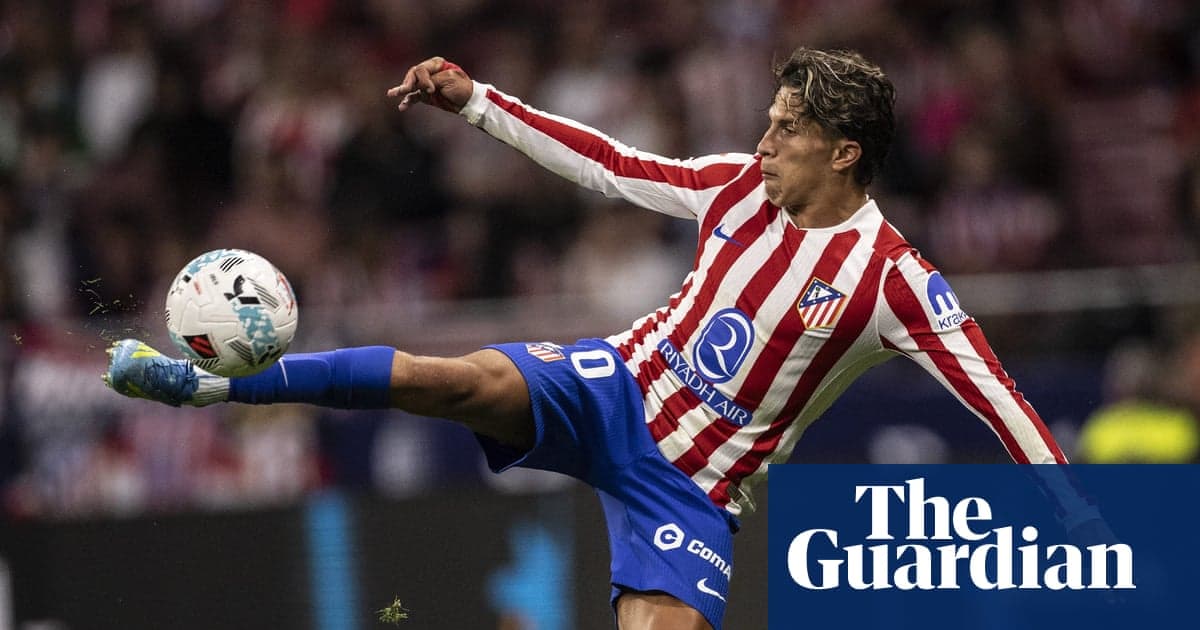
The youngest son of Diego Simeone has silenced doubters and carved out a legitimate role at Atlético Madrid, with the pair now set to share the same dugout and pitch in a Champions League semi-final.
When Diego Simeone turned 56 on Tuesday, he celebrated his birthday surrounded by his three sons, two daughters, his mother, wife, and lifelong friends. “I have no birthday wish,” he said ahead of Atlético Madrid‘s Champions League semi-final, “just pure gratitude to be able to be with my three sons on my birthday, with my two daughters, my mum, my wife, my lifelong friends.” One of those sons was somewhere in the crowd at the Metropolitano, joining teammates in the traditional gauntlet run that preceded the club’s final training session before their most significant fixture in a decade.
That son was Giuliano Simeone — born in Italy in December 2002, raised in Argentina alongside elder brothers Giovanni and Gianluca, and now a winger at the club his father has managed for over 14 years. The story of how he arrived there spans more than two decades of family history tied closely to Atlético Madrid’s own remarkable trajectory.
On the day Diego Simeone said goodbye to the Vicente Calderón as a player in December 2004, he carried two-year-old Giuliano in his arms. When he contemplated returning as head coach in December 2011, he first stopped at a café in Mar del Plata, where over a croissant and a glass of milk, he asked eight-year-old Giuliano for his thoughts. The boy’s response mixed excitement with pragmatism: “You’re going to coach Falcao?! But… if it goes well, you won’t come back.”
The family stayed connected across continents. On matchday mornings, the Simeones would eat together via iPad. Glasses were arranged in tactical formations on dining tables, and scraps of paper with his father’s tactical scribblings turned up throughout the house, according to elder brother Gio. During Atlético’s 2012 Europa League title celebrations, Diego Simeone was filmed on the phone, excitedly asking: “And did you see Falcao’s goal?!” — the person on the other end was Giuliano. The night Atlético won the Copa del Rey in 2013, the brothers watched from home on a school night, scarves draped around the room. By January 2015, a small ballboy with long hair was sprinting along the touchline after a derby win to leap into the coach’s arms — that was Giuliano too.
As a ballboy stationed near the bench at Cerro del Espino, he would occasionally be told by his father to slow down if Atlético were ahead. Watching training sessions up close shaped his ambitions. “I always thought: ‘Imagine being out there; that would be mad,'” he has said. His idol at the time was Falcao; it later became Antoine Griezmann, who is now his teammate.
The path to the first team was not straightforward. Giuliano left River Plate’s academy at 16 to join Atlético’s youth system, moving in with his father and observing his daily obsession with tactics. At 18, Diego Simeone sent him out to live independently — it was, in his father’s view, time to stand on his own. The pressure of his surname followed him throughout. In a recent interview, Giuliano told Jorge Valdano: “At times, it can feel strange to me, wondering what others might think.” Speaking to Cadena Ser, he reflected further: “When I was 12 people said I was playing because I was my father’s son. I try to isolate myself from that. I know I won’t be gifted anything.”
Diego Simeone had previously stated — in reference to elder son Gio — that fielding a son in the dressing room would be “very difficult for him, for the relationship, for everyone.” Atlético’s decision to integrate Giuliano into the senior squad was not, according to reports, part of a deliberate long-term plan by the club or its manager. Nevertheless, the situation has materialised, and Giuliano has responded.
The semi-final against Arsenal represents Atlético’s fourth European Cup last-four appearance under Diego Simeone and the club’s seventh overall — their first since 2017. For Giuliano, it is also the highest-stakes fixture of his young career, arriving at a club where his father has become the longest-serving manager in Spanish football history. The weight of that name, it appears, has become less a burden than a benchmark he is actively working to surpass.
FootballFootball · Jun 30
 Football
 · Jun 30
 Football
 · Jun 30
 Football
 · Jun 30