 Football
Frank Onyeka Signs Permanent Coventry City Deal After Helping Club Win Championship Title and Promotion
Football · Jun 30

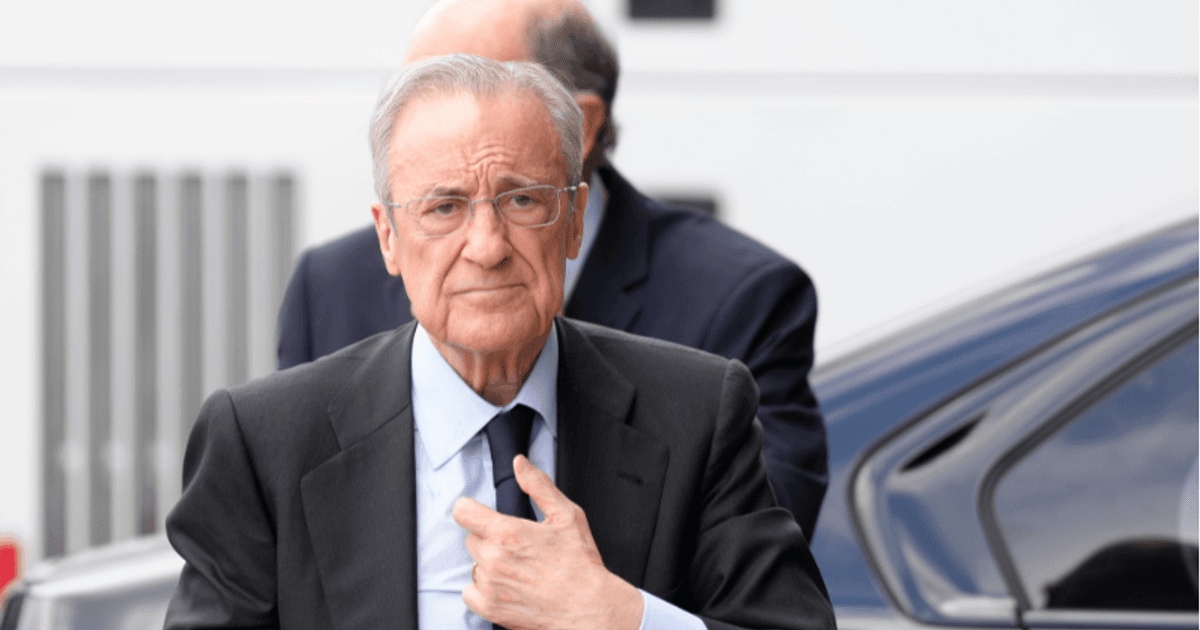
Real Madrid president Florentino Pérez has attributed his years-long legal battle to establish the European Super League to the welfare of children in Africa, a claim that directly contradicts the competition’s founding objectives and later revised marketing strategy.
Real Madrid president Florentino Pérez stirred fresh controversy on May 12, 2026, when he offered a striking justification for his sustained campaign to establish the European Super League — asserting the initiative was pursued so that children in Africa could watch football for free.
Speaking during a media address in which he also directed sharp criticism at his opponents, Pérez stated: “We WON the Super League case. We won; that’s how we were able to negotiate with UEFA. What we did is for the GOOD of football. So that children in Africa can watch football for free.”
The European Super League was originally announced in April 2021, immediately drawing overwhelming opposition from football federations, domestic leagues, and supporters across the globe. Real Madrid, under Pérez’s leadership, remained the most persistent backer of the breakaway competition, pursuing its legal legitimacy all the way to the European Court of Justice, which delivered a landmark ruling on UEFA’s monopoly in December 2023.
Despite that legal outcome providing leverage for negotiations, the Super League project is now completely defunct. All founding clubs, including Real Madrid, have officially withdrawn, with Los Blancos eventually reaching a definitive settlement with UEFA to conclude the institutional dispute.
Pérez’s reference to African children relates to a revised marketing position adopted by A22 Sports, the commercial vehicle behind the Super League’s later iterations, which proposed a free broadcast platform as part of efforts to build public support for the competition.
However, the claim sits uneasily alongside the project’s origins. At its inception in 2021, the Super League was structured as a closed-shop tournament designed to concentrate European football’s elite clubs and revenues within a self-selecting group of the continent’s wealthiest institutions. Pérez himself, in earlier statements from that period, framed the initiative largely as a financial safeguard — a mechanism by which traditional giants could counter the economic advantages held by state-backed clubs such as Manchester City and Paris Saint-Germain.
The free-broadcast proposal emerged considerably later, as part of A22’s attempt to rehabilitate the competition’s public image following years of sustained backlash. Presenting it now as the primary motivation for a multi-year legal battle that reached Europe’s highest court requires a significant reframing of the historical record.
Invoking the welfare of African children — particularly within a framing that draws on poverty narratives — as a retroactive moral rationale for a project whose defining characteristics were exclusivity and financial consolidation is a notable rhetorical shift from Pérez, one that is likely to draw further scrutiny from football governance bodies, supporter groups, and commentators across the continent.
The Super League’s collapse marks the end of what became one of the most divisive episodes in modern football administration, spanning five years of legal proceedings, institutional conflict, and repeated attempts to restructure and relaunch the original proposal.
FootballFootball · Jun 30
 Football
 · Jun 30
 Football
 · Jun 30
 Football
 · Jun 30