 Football
Frank Onyeka Signs Permanent Coventry City Deal After Helping Club Win Championship Title and Promotion
Football · Jun 30

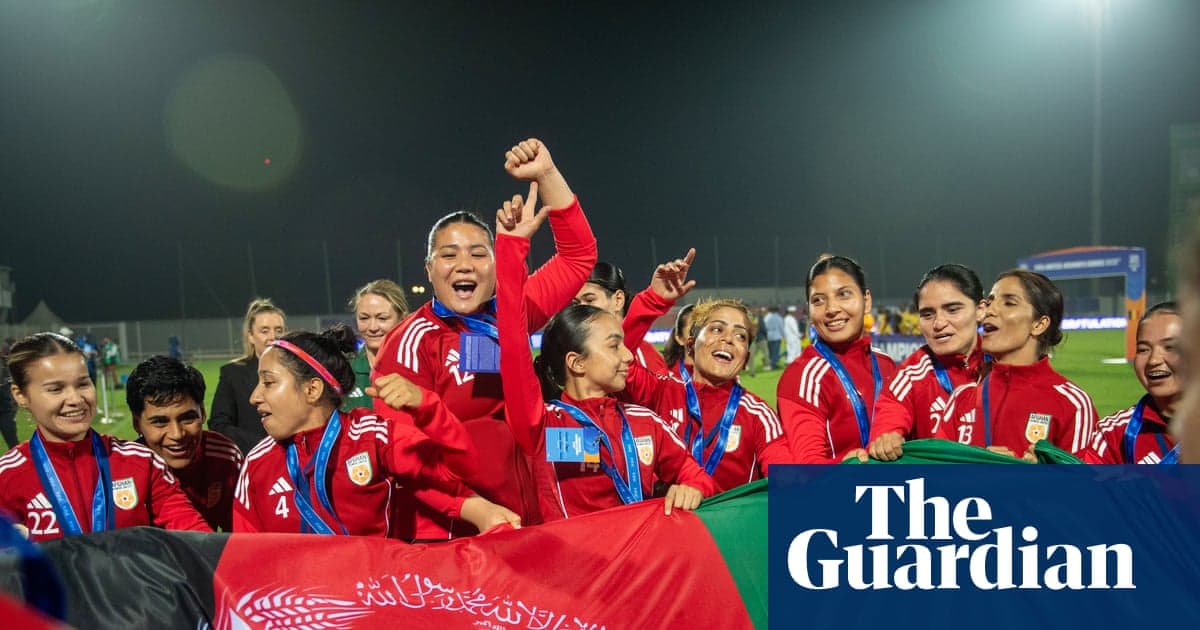
In a landmark regulatory change, FIFA has authorised Afghan Women United — a squad of refugees spread across Australia, the Middle East, and Europe — to compete as Afghanistan’s official women’s national team, bypassing the Taliban-controlled football federation entirely.
FIFA has approved a significant rule change that allows Afghan Women United to represent Afghanistan as an official national team in international competition, without requiring endorsement from the Taliban-controlled Afghanistan Football Federation. The decision, set to be ratified by the FIFA Council, marks the first time the refugee squad will carry official national team status.
The change directly circumvents a long-standing regulatory requirement that had previously compelled the team to obtain recognition from Afghanistan’s domestic football authority. Under Taliban governance, that recognition has never been forthcoming. The Taliban imposed a blanket ban on women’s sports following their return to power in August 2021, effectively dissolving Afghanistan’s official women’s national team, which had existed since 2007.
Afghan Women United was established in the aftermath of the 2021 Taliban takeover, drawing together former players and new recruits who had since sought asylum in countries including Australia, Italy, and several nations across the Middle East and Europe. For over three years, the players and their advocates campaigned for FIFA to intervene with both formal recognition and the financial support that official status carries.
The squad’s path to this moment has not been without obstacles. FIFA organised a landmark fixture series last year — the inaugural FIFA Unites: Women’s Series — originally scheduled for the United Arab Emirates. However, the Afghan players were denied visas, forcing the tournament to be relocated to Morocco, where the team ultimately participated.
FIFA’s support for the team forms part of a three-pillar strategy the governing body introduced to address the situation of women and girls in Afghanistan. Beyond organising competitive opportunities, the strategy includes diplomatic engagement to advocate for women’s right to participate in sport at the international level.
Captain Fatima Haidari, who is based in Italy, spoke to the Guardian about what football means to her and the broader community the team represents. “When I step on to the pitch everything else is automatically erased from my mind,” she said. “I train, I play, and a fire inside me is lit, not just because of the power that I feel at that moment as a player, but because I feel I have many other girls with me. It’s like I’m taking their hands. Like I’m playing with them. It’s not just for me, and I feel powerful.”
The regulatory amendment approved by the FIFA Council sets a notable precedent for how the sport’s governing body can respond when a national federation is unwilling or unable to fulfil its obligations to a section of the population it is meant to serve. It raises broader questions about FIFA’s frameworks for stateless or refugee athletes and whether similar mechanisms could be applied in future cases.
With official national team status now confirmed, Afghan Women United will gain access to FIFA’s standard support structures for member associations, including funding and structured competition pathways — resources that had previously been inaccessible due to the team’s unrecognised status.
FootballFootball · Jun 30
 Football
 · Jun 30
 Football
 · Jun 30
 Football
 · Jun 30