 Football
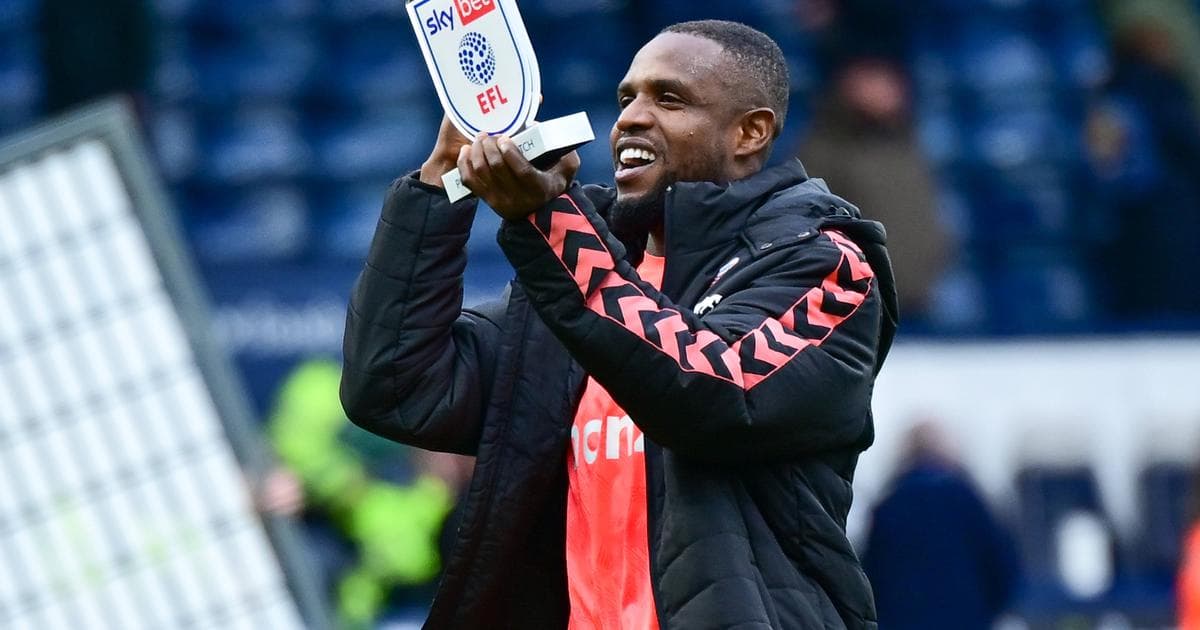
Frank Onyeka Signs Permanent Coventry City Deal After Helping Club Win Championship Title and Promotion
Football · Jun 30


Former Nigerian international Chikelue Iloenyosi has laid the blame for the Super Eagles’ failure to qualify for the 2026 FIFA World Cup firmly at the feet of the players, dismissing coaching instability as the root cause of the campaign’s collapse.
Nigeria will not feature at the 2026 FIFA World Cup — a tournament co-hosted by the United States, Canada, and Mexico — marking a significant absence for a nation that has historically been one of Africa’s most prominent footballing nations. The absence is made more painful by the fact that Africa will be represented by a record ten nations at the expanded tournament.
Former Nigerian international Chikelue Iloenyosi has spoken candidly about the qualifying failure, directing his criticism at the players rather than at the technical staff. Iloenyosi, who earned four caps for Nigeria and previously played for Al-Ittihad as a defender, made his position clear in a recent interview with Pulse Sports.
“Why we did not qualify for the World Cup is the players. It’s the fault of the players because you can see the games, they are even blaming themselves. They are not happy,” the 47-year-old said.
The Super Eagles cycled through three different coaches during the qualifying campaign, a period of significant instability that many observers had pointed to as a key factor in the team’s underwhelming performances. Iloenyosi, however, did not accept that explanation, arguing that the players themselves failed to deliver at critical moments regardless of who was in charge.
He also acknowledged the personal cost to individual players, some of whom may never have another opportunity to appear at a World Cup. “How can I be happy? Players are feeling very, very bad, of course. If they have a chance to be in the World Cup, they will be in the World Cup to prove themselves,” he said. “Some people in the national team might not see the World Cup again because of their age.”
Despite his frustration, Iloenyosi offered a degree of cautious optimism about the team’s trajectory under the current coaching setup. “I’m not happy we did not qualify… we’ve gotten a coach that came to stabilise the team. If you see the standard of the games we are playing now, you can know the coach wants the team to improve,” he added.
With World Cup qualification no longer a possibility, attention within the Nigerian football community has turned to the 2027 Africa Cup of Nations (AFCON). The Super Eagles are scheduled to begin their qualifying campaign in September and have been drawn in Group L alongside Guinea-Bissau, Madagascar, and Tanzania — a group that presents a realistic path to the continental tournament.
Nigeria’s record at recent AFCONs provides some context for the team’s current standing. The Super Eagles reached the final of the 2023 AFCON in Côte d’Ivoire before losing to the host nation, a result that underlined both the team’s potential and its tendency to fall short at decisive moments. Whether the current squad can convert that potential into consistent results — beginning with the AFCON qualifiers — remains to be seen.
FootballFootball · Jun 30
 Football
 · Jun 30
 Football
 · Jun 30
 Football
 · Jun 30