 Football
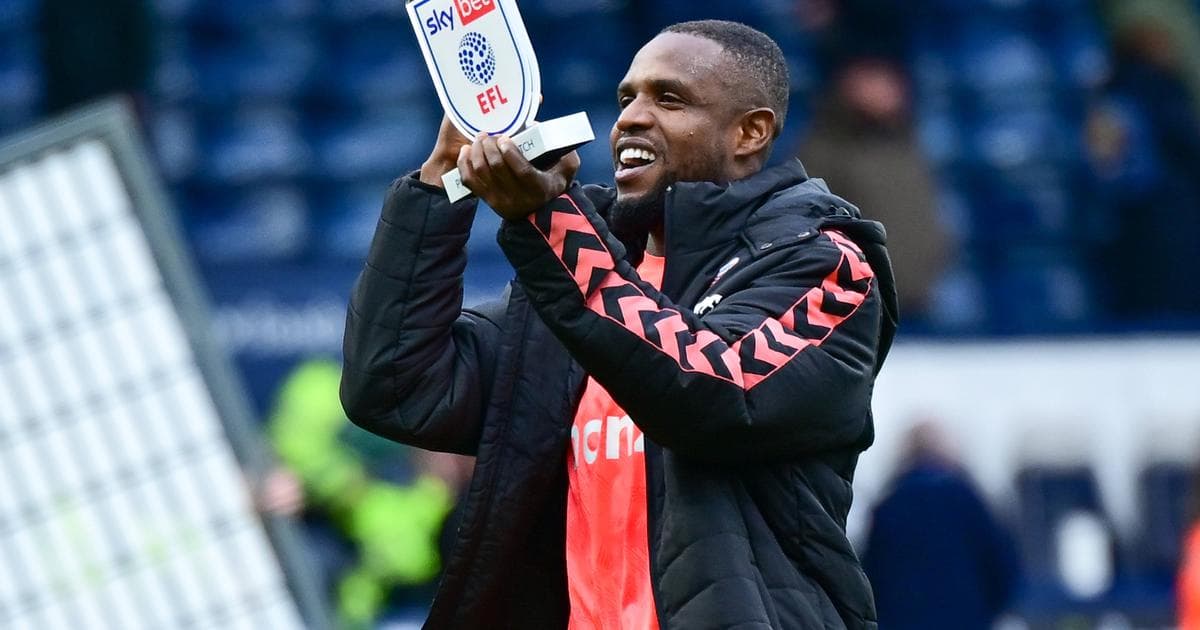
Frank Onyeka Signs Permanent Coventry City Deal After Helping Club Win Championship Title and Promotion
Football · Jun 30


Former Manchester United midfielder Éric Djemba-Djemba has reflected on the life and legacy of Cameroonian international Marc-Vivien Foé, who collapsed and died during a 2003 FIFA Confederations Cup semifinal, describing him as a leader of extraordinary human values whose influence extended far beyond the football pitch.
More than two decades after one of football’s most tragic moments, the memory of Marc-Vivien Foé continues to resonate deeply among those who shared a dressing room with him. Former Manchester United midfielder Éric Djemba-Djemba has spoken openly about the loss of his former Cameroonian international teammate, recalling the profound impact Foé had on everyone around him.
Foé collapsed and died during Cameroon’s 2003 FIFA Confederations Cup semifinal against Colombia at the Stade de Gerland in Lyon — a moment that sent shockwaves through the global football community and united fans and players across rival nations in shared mourning.
Speaking in an interview with Get French Football News, Djemba-Djemba offered a vivid portrait of what made Foé so uniquely respected within the Cameroon squad. “Marc-Vivien Foé was the captain who did not wear an armband. That basically sums up the man,” he said, acknowledging that while Rigobert Song held the official captaincy, it was Foé’s voice that carried the greatest weight in the dressing room.
Djemba-Djemba drew a clear contrast between Foé’s composed presence and more vocal personalities in the squad such as Samuel Eto’o and Geremi. He described Foé as someone capable of sitting in a room for an hour without uttering a word — yet when he did speak, the response was immediate. “But when he said something, everyone followed. He was someone who had extraordinary human values, a very good and endearing person,” Djemba-Djemba recalled.
The grief that followed Foé’s death was not confined to Cameroon or the African continent. Djemba-Djemba recounted witnessing French superstar Thierry Henry in tears during the tournament, underscoring the cross-cultural reach of the tragedy. “His death touched all of us — all of Cameroon, all of Africa and even in Europe, too, people were affected,” he stated.
For Djemba-Djemba, speaking publicly about Foé is itself an act of tribute. He expressed significant pride in having played alongside a figure he regards as a national hero — one who, in his words, fought and fell for his country. He emphasised that keeping Foé’s name in public discourse is essential to preserving the midfielder’s legacy and the values he embodied.
Foé’s career credentials matched his stature within the game. A ten-year international veteran, he won two Africa Cup of Nations titles with Cameroon and represented his country at two FIFA World Cups. At club level, he made appearances for clubs including Lens, West Ham United, Manchester City — where he was on loan from Lyon at the time of his death — and the French club itself. He was 28 years old when he died.
The Confederations Cup tournament pressed on following the tragedy, with Foé posthumously awarded the Golden Ball as the tournament’s best player — a gesture that reflected the esteem in which he was held by the global football community. Cameroon ultimately finished third in that edition of the competition.
Djemba-Djemba himself joined Manchester United from Nantes in the summer of 2003, just weeks after Foé’s death, making his reflections on that period particularly poignant. His comments serve as a reminder that behind the statistics and silverware, Foé’s most enduring legacy may well be the human qualities that those closest to him remember most vividly.
FootballFootball · Jun 30
 Football
 · Jun 30
 Football
 · Jun 30
 Football
 · Jun 30