 Football
Frank Onyeka Signs Permanent Coventry City Deal After Helping Club Win Championship Title and Promotion
Football · Jun 30

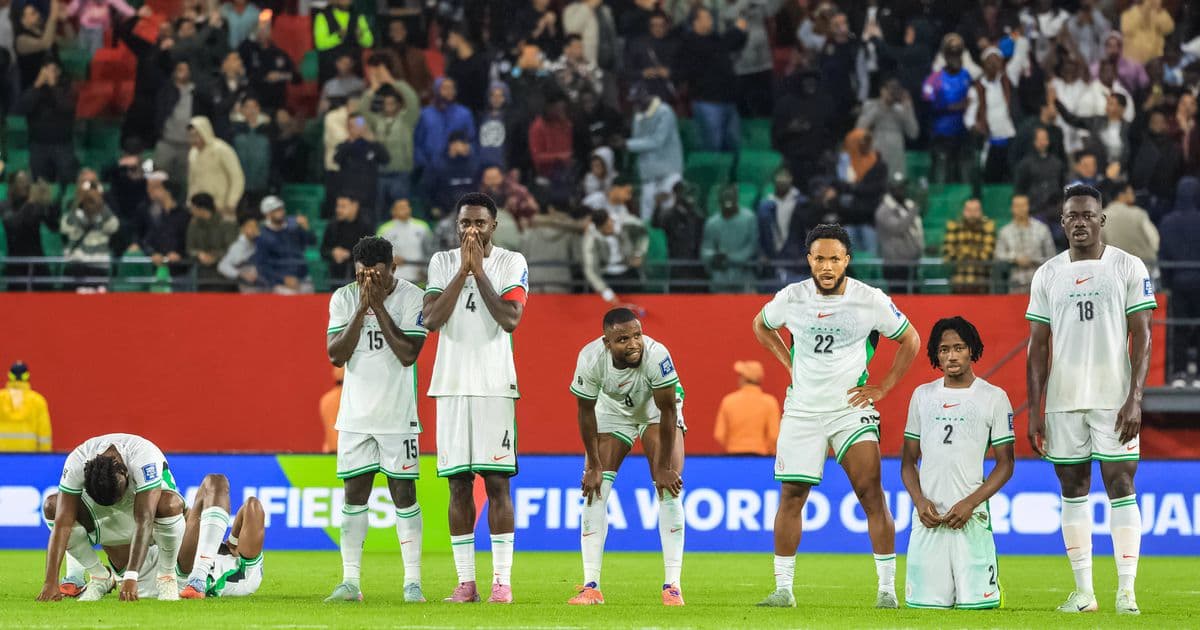
Former Chelsea Women’s and England international Eniola Aluko has attributed Nigeria’s failure to qualify for the 2026 FIFA World Cup solely to poor performance against the Democratic Republic of Congo, dismissing the pre-tournament player strike as a reason for the elimination.
Nigeria will not be at the 2026 FIFA World Cup after the Super Eagles were eliminated in the African playoff final by the Democratic Republic of Congo on penalties — and former England international Eniola Aluko believes the blame lies squarely with the players’ performance, not the controversy that preceded the tournament.
Speaking on ThePlayzone podcast, the Lagos-born forward was unequivocal in her assessment. “We are not going to the FIFA World Cup because we lost to DR Congo. They were not good enough on the day,” Aluko said.
The Super Eagles’ qualifying campaign had been overshadowed by a dispute between the squad and the Nigeria Football Federation (NFF) over unpaid bonuses. Just two days before their African playoff semi-final against Gabon in Morocco, Nigerian players and team officials boycotted a training session in protest over unresolved payment issues. The standoff was resolved before kick-off, and Nigeria ultimately defeated Gabon in extra time to advance to the playoff final.
However, the Super Eagles could not carry that momentum into the decisive match, falling to DR Congo in a penalty shootout. It is the latest chapter in Nigeria’s inconsistent World Cup qualifying record — a nation that has appeared at the tournament six times but has now missed out on consecutive editions following their absence from Qatar 2022.
Aluko acknowledged that the timing of the strike was poorly judged, but was firm that it does not account for the final result. “I agree we should have won, but going on strike is not the reason we lost the game,” she said. “But I think the timing was wrong. I agree if they agree to do that, they are not focusing one hundred percent on what they need to do.”
Rather than placing responsibility on the players alone, Aluko directed her sharpest criticism at the federation’s administration, calling on the NFF to eliminate the conditions that create such disputes in the first place. “My point is eliminate the chance for any player to do that, and when I say that I’m talking about the Federation and management,” she urged. “That’s an easy thing. Just pay people on time so they don’t have an excuse to say when they lose.”
Aluko, who represented England internationally and played for Chelsea Women’s during her club career, has a personal connection to Nigerian football through her brother Sone Aluko, who represented England at youth level before switching his international allegiance to Nigeria.
The NFF has faced recurring criticism over the management of player payments ahead of major international fixtures, and the bonus dispute in Morocco is not an isolated incident. The federation has yet to issue a formal public response to the specific grievances raised by players during the qualifying campaign.
With Nigeria absent from the 2026 World Cup — co-hosted by the United States, Canada, and Mexico — attention will now turn to the appointment of a new technical direction and a broader review of the Super Eagles’ qualifying strategy ahead of the 2027 Africa Cup of Nations and the next World Cup cycle.
FootballFootball · Jun 30
 Football
 · Jun 30
 Football
 · Jun 30
 Football
 · Jun 30