 Football
Frank Onyeka Signs Permanent Coventry City Deal After Helping Club Win Championship Title and Promotion
Football · Jun 30

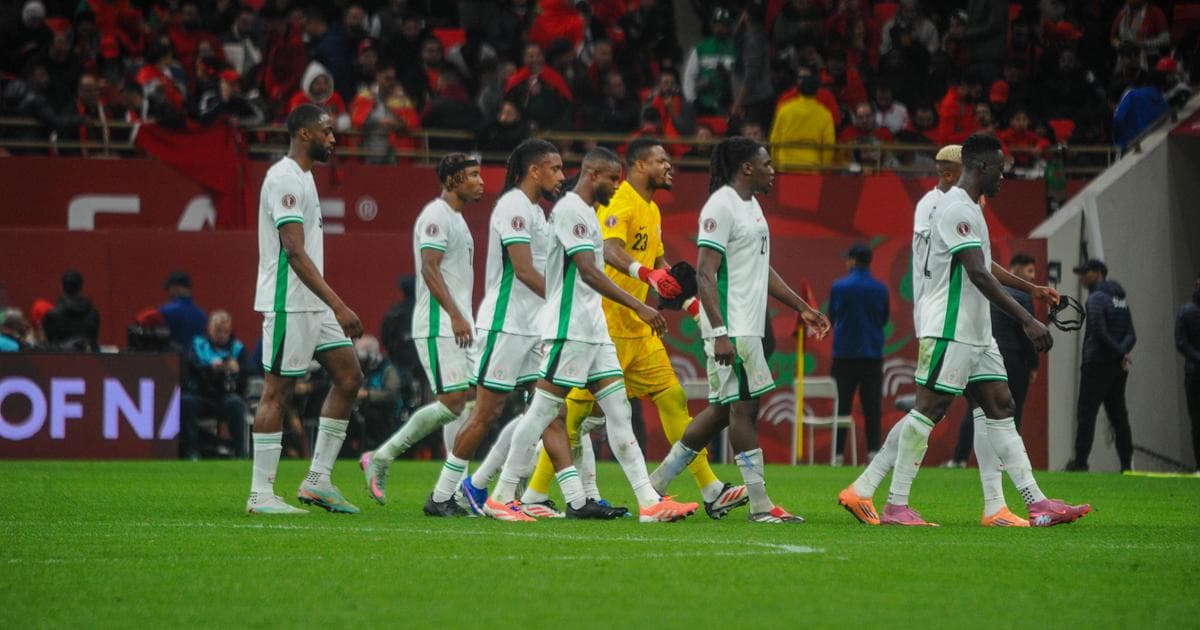
Nigerian football icon Emmanuel Okala has spoken out about the Super Eagles’ failure to qualify for the 2026 FIFA World Cup, describing the nation’s second consecutive absence from the tournament as deeply troubling.
Emmanuel Okala, one of the most celebrated goalkeepers in African football history, has publicly expressed his grief over Nigeria’s failure to qualify for the 2026 FIFA World Cup — a setback he says extends beyond the sport and reflects poorly on the country as a whole.
“I am a Nigerian, and I am sad the Super Eagles failed to qualify for two consecutive World Cup championships. In a few weeks from now, the 2026 FIFA World Cup qualifiers will begin, and our Super Eagles won’t be there. It is not good for us as a nation,” Okala said.
The Super Eagles were eliminated from World Cup contention by the Democratic Republic of Congo in the African playoff final. The tie ended 1-1 on aggregate before Nigeria lost 4-3 on penalties, confirming their second successive absence from football’s biggest international stage — having also missed the 2022 FIFA World Cup in Qatar.
Okala, affectionately known as the “Man Mountain” for his imposing physical presence, remains a towering figure in Nigerian football for reasons that go far beyond his nickname. In 1978, he became the first Nigerian player to win the African Footballer of the Year award, an honour presented by the African Sports Journalists Union (ASJU). Two years later, he played a pivotal role in the Green Eagles’ historic triumph at the 1980 Africa Cup of Nations in Lagos, where Nigeria claimed their first-ever continental title.
Given that legacy, Okala’s concern carries significant weight. His comments reflect a growing anxiety within Nigerian football circles about the trajectory of the Super Eagles under current management. The back-to-back World Cup absences represent a stark decline for a nation that has appeared at the tournament six times, with their most recent participation coming at the 2018 FIFA World Cup in Russia, where they were eliminated in the group stage.
The 2026 FIFA World Cup, co-hosted by the United States, Canada, and Mexico, will be the first edition to feature 48 nations — an expansion that was widely expected to benefit African nations given the continent’s increased allocation of qualification spots. Africa was granted eight and a half berths, up from five, making Nigeria’s failure to secure a place all the more significant. Despite the broader pathway to qualification, the Super Eagles could not navigate the playoff round.
For context, the CAF World Cup playoff format required Nigeria to face the DRC across two legs after both nations progressed through their respective qualifying groups. The first leg ended in a draw, and the return fixture also finished level, forcing a penalty shootout that ultimately ended Nigeria’s campaign.
Looking ahead, the Super Eagles will now turn their attention to the 2027 Africa Cup of Nations qualifiers and the early stages of 2030 FIFA World Cup qualification, with the Nigerian Football Federation (NFF) under increasing pressure to address the structural and technical issues that have contributed to the national team’s recent underperformance at the global level.
FootballFootball · Jun 30
 Football
 · Jun 30
 Football
 · Jun 30
 Football
 · Jun 30