 Football
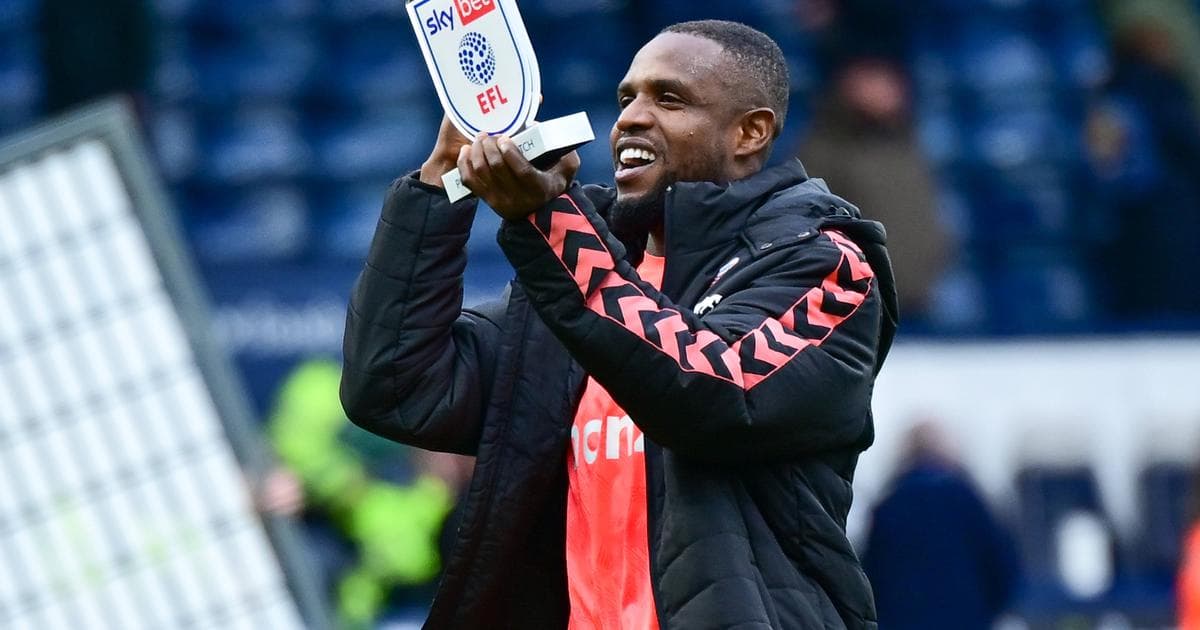
Frank Onyeka Signs Permanent Coventry City Deal After Helping Club Win Championship Title and Promotion
Football · Jun 30

Advanced radar charts are reshaping how clubs evaluate midfield talent. Understanding what the numbers actually measure — rather than who scores highest — is the key to smarter football analysis.
Football debates have long been shaped by a fundamentally flawed premise: that any two players can be meaningfully ranked against each other on a single scale. Modern data analytics has exposed the limitations of that approach, and the evidence is visible in how top sporting directors now assess transfer targets.
Rather than relying on generalised ratings or reputation, elite clubs are increasingly turning to advanced radar charts — visual tools that map a player’s individual statistical profile across multiple performance dimensions. These charts do not determine whether a player is “good” or “bad.” Instead, they reflect tactical identity: what a player does habitually, and how those habits serve a specific system.
Three midfielders currently attracting significant attention ahead of the summer transfer window — Ederson (Atalanta), Sandro Tonali (Newcastle United), and Mateus Fernandes (West Ham United) — offer a useful case study in how differently midfielder profiles can read on a data radar, even when all three operate in broadly the same area of the pitch.
Ederson, the Brazilian midfielder at Atalanta, presents what analysts describe as a deep-lying playmaker profile. His radar data shows a forward pass rate of 86.9%, a forward pass accuracy of 85.3%, and a progressive pass percentage of 80.1%. A key pass rate of 69.9% completes a picture of a midfielder who organises possession from deep positions and consistently advances the ball through precise distribution. For a team struggling to break down low defensive blocks, his passing metrics point to a specific and measurable solution.
Sandro Tonali at Newcastle United offers a contrasting archetype. His data profile leans into physical progression and transitional play. A progressive carry rate of 67.2% and a duel win percentage of 74.3% indicate a midfielder built for box-to-box work — capable of winning physical challenges and then driving forward with the ball. His forward pass rate of 72.9% is solid but secondary to his carrying and duelling output. Former Manchester United midfielder Paul Scholes offered a pointed comparison in March 2026, stating: “I think he’s better than Rice. I like Rice but I prefer Tonali.”
Mateus Fernandes of West Ham presents the most defensively specialised profile of the three. His duel win percentage stands at 81.4% and his possession-won rate at 82.8% — metrics that place him among the most effective ball-recovery midfielders in the Premier League this season. His forward passing figures trail those of Ederson and Tonali, but that reflects function rather than deficiency. His profile is built around shielding a backline, executing tactical fouls, and recovering loose possession.
The broader analytical point these three profiles illustrate is a practical one. A club undertaking a midfield rebuild — the article uses Manchester United as a hypothetical example — cannot identify the “best” option from this group without first defining the tactical problem they need to solve. A possession-dominant side that lacks a creative distributor has a different requirement to a high-press team that needs a physical ball-carrier, or a defensively vulnerable side that requires a midfield shield.
Brighton’s Carlos Baleba is cited as a further illustration of this principle. His radar would not challenge Ederson’s passing figures, but his defensive metrics would give a manager precise information about the level of ball-recovery security he would add to a system. The chart does not rank Baleba below Ederson — it describes a different player with a different function.
As radar-based visualisations become more widely shared on social media, analysts and supporters alike are being encouraged to read them as tactical blueprints rather than scorecards. The question a data radar is equipped to answer is not who the better player is, but which player fits the specific demands of a given system at a given time.
FootballFootball · Jun 30
 Football
 · Jun 30
 Football
 · Jun 30
 Football
 · Jun 30