 Football
Frank Onyeka Signs Permanent Coventry City Deal After Helping Club Win Championship Title and Promotion
Football · Jun 30

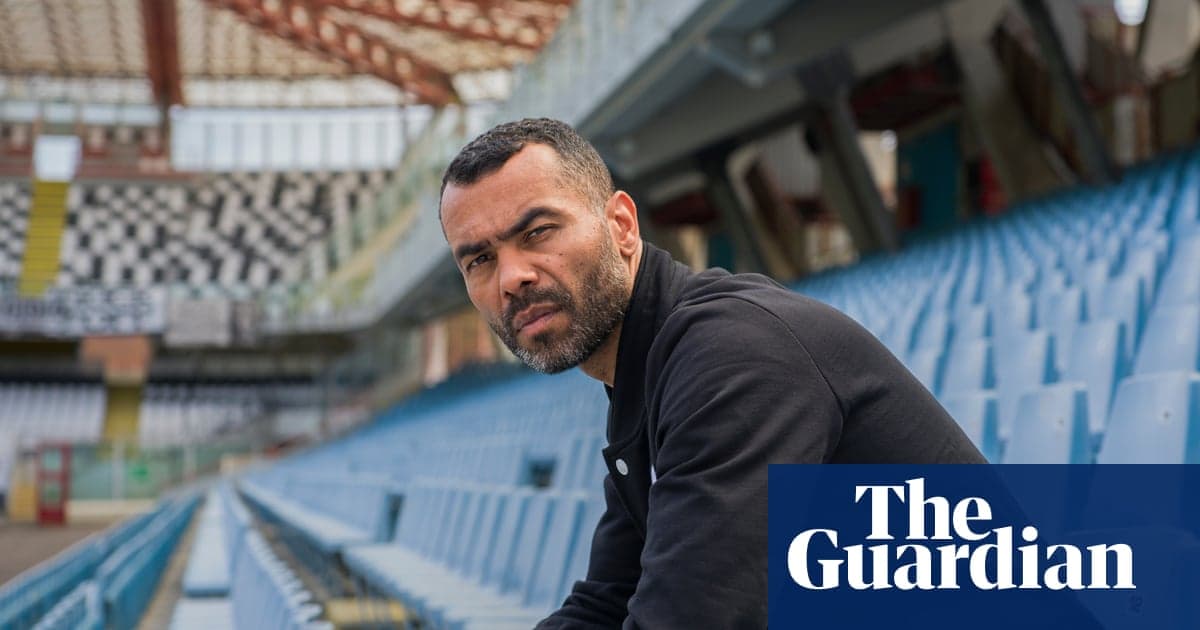
Former Arsenal, Chelsea, and England left-back Ashley Cole has taken charge of Serie B side Cesena in his first senior managerial appointment, targeting a playoff push in Italy’s second division. The 45-year-old speaks candidly about his coaching philosophy, language barriers, and the seven-year journey to the dugout.
Seven years after hanging up his boots, Ashley Cole has finally stepped into senior management — and he has done so in the country where he found love. The Guardian sat down with the former England left-back to discuss his appointment as head coach of Cesena, a Serie B club currently ninth in Italy’s second division and battling for a playoff berth.
Cole, who won Premier League and Champions League honours with Chelsea, was appointed in mid-March following the dismissal of Michele Mignani. The approach came from Mike Melby, one of the club’s American co-owners. “They knew I was looking for a head coach role,” Cole said. “The fans weren’t happy with the style of play and the owners wanted something different: an exciting, energetic team that plays on the front foot. They made the decision to sack the manager, and I came in to continue the project.”
The move to Cesena also has a personal dimension. Cole met his wife, Sharon Canu — an Italian national — during his time at Roma, where he played in the 2014-15 Serie A season, a campaign in which he faced Cesena as an opponent. The couple had long planned to settle in Italy. “It was always in our plans to live in Italy because we love the food and the calmness of the country,” Cole said. “She told me the fans here are passionate about their team and their city. I had to embrace that, understand what makes them tick, so we can represent them properly.”
Cole also acknowledged his wife’s patience during his long path to coaching. “I bored her a lot,” he said with a smile, referencing years of tactical conversations at the dinner table involving salt and pepper shakers as makeshift players.
Despite this being his first head coaching role, Cole was firm in asserting his readiness. “While it is true this is my first head coaching role, the body of work I’ve done over my seven years on the grass means there is nothing more I could do to prepare,” he said. “The hours I’ve put in, the experiences I’ve had, and the managers and coaches I’ve worked under have guided me to a place where I feel ready and that I should be a head coach.”
Cesena is a working-class city of fewer than 100,000 people located in the Emilia-Romagna region of northern Italy. The club enjoyed its peak era in the mid-1970s, qualifying for the Uefa Cup, and has accumulated 13 seasons in Serie A across its history. Notable alumni include Emanuele Giaccherini, Massimo Ambrosini, Sebastiano Rossi, and Vincenzo Iaquinta.
Cole’s early results at the club have been inconsistent. He lost his opening game in charge, but shortly after secured a 3-1 victory over playoff rivals Catanzaro, a result that lifted the mood considerably. “When I arrived the team hadn’t won in six or seven games. Confidence was low,” he said. The win over Catanzaro was a significant marker, given both clubs are competing for the same postseason positions.
On his footballing philosophy, Cole was direct. “To win games,” he said. “To do that, we’re implementing a tactical shift. Possession-based, but attacking. Playing between the lines, playing fast. I want intensity without the ball, staying in the opposition’s half, sustaining attacks. I don’t want wingers defending; that’s not their job. I want them on the ball in front of the goal.”
He also addressed the practical realities of managing in Serie B, where defensive setups are common. “We play against a lot of teams with low blocks, 10 players behind the ball, you need patience,” Cole said. “But control of the ball gives us more opportunities to attack. If you just play long, it’s 50-50 in the air, the team gets stretched, and you can’t press effectively.”
Communication has been another adjustment. Cole conducts sessions in a mixture of English and Italian, aided by staff member Nicola Capellini, a former player promoted from the club’s Primavera setup. “He is the bridge between English and Italian, going between the two languages to keep the message clear,” Cole said. Some players have reportedly requested Cole speak English during sessions as a way of learning the language — an experience he said mirrored his time at Roma. “Football is an easy language because you can show things with passion,” he added.
With the Serie B season approaching its conclusion, Cesena’s playoff prospects will hinge on results over the coming weeks. Cole’s ability to instil his attacking principles quickly in a defensively minded division will be the defining test of his managerial debut.
FootballFootball · Jun 30
 Football
 · Jun 30
 Football
 · Jun 30
 Football
 · Jun 30