 Football
Frank Onyeka Signs Permanent Coventry City Deal After Helping Club Win Championship Title and Promotion
Football · Jun 30

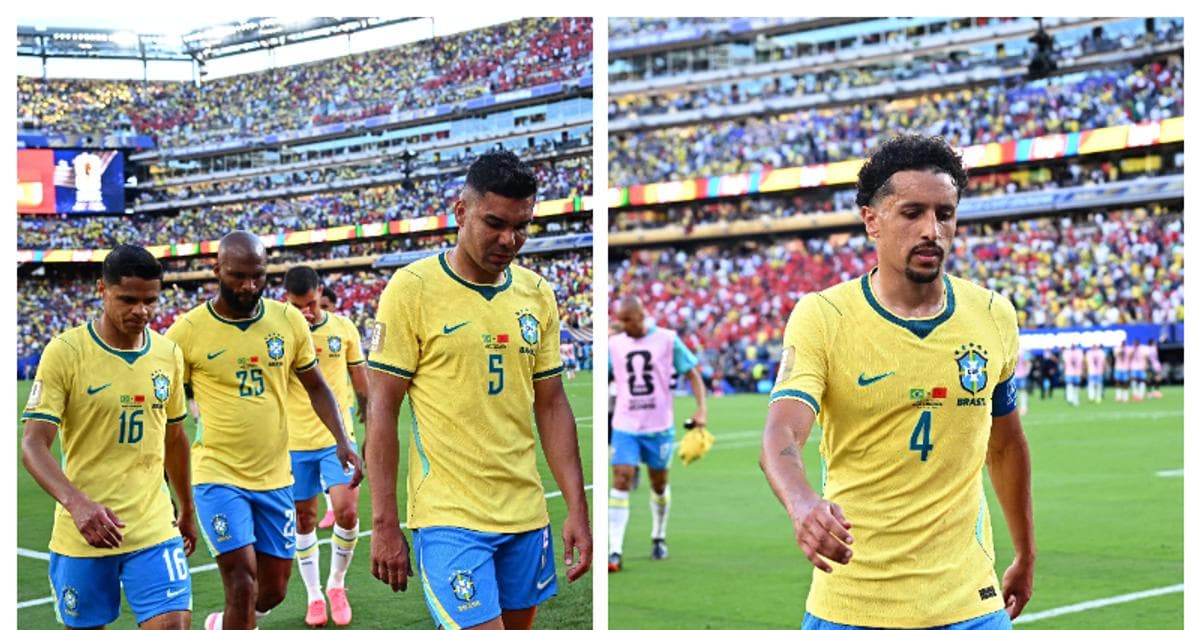
Brazil’s opening Group match at the 2026 FIFA World Cup ended in a 1-1 stalemate against Morocco, prompting sharp criticism from England icon Alan Shearer and former Brazilian midfielder Lucas Leiva over the Selecao’s disjointed display.
Brazil were held to a 1-1 draw by Morocco in their opening fixture of the 2026 FIFA World Cup at the New York-New Jersey Stadium on 14 June 2026, a result that drew widespread criticism of the South American giants’ performance across multiple phases of the game.
Morocco broke the deadlock in the 21st minute when Ismael Saibari exploited a breakdown in communication within Brazil’s defensive line, lifting a deft finish into the net from outside the area to give the Atlas Lions an early advantage. Brazil were forced to respond from a position of weakness and ultimately salvaged a point, though the manner of the performance left little room for optimism among their supporters.
Former England captain and Newcastle United legend Alan Shearer was particularly forthright in his assessment of Brazil’s backline during BBC’s live coverage of the match. Shearer directed pointed criticism at central defender Gabriel, highlighting the defender’s hesitancy and poor positioning throughout the contest.
“He’s looked shaky, Gabriel, today,” Shearer said. “On two or three occasions, the ball has gone out and I thought he could’ve attacked it and he didn’t. He’s been slow. Certainly, with the goal in the first half, the gap between him and Marquinhos was huge.”
The criticism extended beyond the defensive unit. Former Brazil international and ex-Liverpool midfielder Lucas Leiva, speaking to CBS Sports, raised broader concerns about the team’s structure and balance in midfield and attack, singling out Casemiro’s difficult afternoon as a key factor in Brazil’s lack of control.
“Before the game we spoke about balance, Brazil never looked in control in the middle, Casemiro struggled a little bit and that’s why he got taken out at half-time,” Lucas told CBS Sports. “Offensively, Brazil never looked dangerous; they didn’t create as much as we could’ve imagined. Overall, it wasn’t a good performance; the balance of the team wasn’t right.”
Casemiro’s withdrawal at half-time was one of the more telling tactical decisions of the match, underscoring the extent of Brazil’s difficulties in shielding their defence and transitioning effectively into attack. The Selecao’s inability to maintain possession and press with cohesion allowed Morocco to remain competitive throughout.
The result is a notable outcome in the context of the tournament. Morocco, who reached the semi-finals of the 2022 FIFA World Cup in Qatar — becoming the first African nation ever to do so — have continued to establish themselves as a formidable force in international football. A point against a traditional heavyweight like Brazil further reinforces their standing ahead of the rest of the group stage.
For Brazil, the draw represents a less-than-ideal start given the expectations that typically surround a nation with a record five World Cup titles. The Selecao have not won the tournament since 2002 and have endured a series of disappointing exits in the intervening years, including the infamous 7-1 semi-final defeat to Germany on home soil in 2014.
Brazil will next face Haiti in their second group-stage fixture, a match they will be expected to win convincingly. However, based on the evidence of their opening performance, questions surrounding the team’s tactical cohesion and individual form are unlikely to dissipate without a significantly improved showing.
FootballFootball · Jun 30
 Football
 · Jun 30
 Football
 · Jun 30
 Football
 · Jun 30