 Football
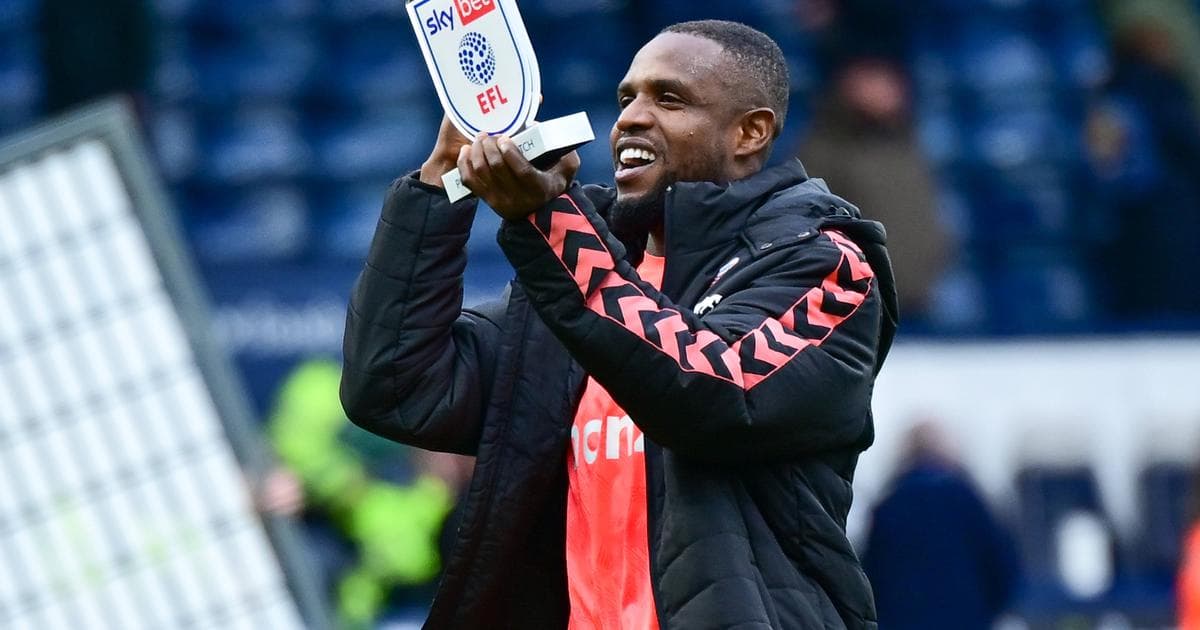
Frank Onyeka Signs Permanent Coventry City Deal After Helping Club Win Championship Title and Promotion
Football · Jun 30


The 2026 FIFA World Cup is underway and the race for the tournament’s best player award is already taking shape, with Julián Quiñones and Lee Kang-in setting the early pace ahead of the sport’s biggest names.
As the 2026 FIFA World Cup enters its opening stages, attention has turned not only to which nation will lift the trophy but also to which individual will claim the Golden Ball — the award presented to the tournament’s outstanding player.
Leading the early live rankings, according to Pulse Sports, are Julián Quiñones and Lee Kang-in, whose performances proved decisive in the opening round of fixtures. Quiñones starred as Mexico secured victory against South Africa, while Lee Kang-in played a key role in South Korea’s win over Czechia. Hwang In-Beom and Raul Jimenez are also said to feature in the current top five.
Despite those early front-runners, the names generating the most attention ahead of the tournament remain Kylian Mbappe, Lamine Yamal, Bruno Fernandes, Harry Kane, and Lionel Messi. For Mbappe, a Golden Ball would be a first. For Messi, it would be a remarkable third — having previously won the award at the 2014 and 2022 editions of the tournament.
Messi’s previous winners include the 2022 edition in Qatar, where Argentina claimed the title. Other Golden Ball recipients this millennium include Luka Modric (2018), Diego Forlan (2010), Zinedine Zidane (2006), and Oliver Kahn (2002), a list that underlines the award’s tendency to go to elite, established figures rather than surprise contenders.
In the nearly 100-year history of the FIFA Men’s World Cup, the Golden Ball has rarely been claimed by an unexpected candidate. The last notable exception came in 1990, when Italy’s Salvatore Schillaci edged out Lothar Matthäus and Diego Maradona to take the prize — a result that remains an outlier in the award’s history.
The pattern holds true in the broader tournament context as well. Unlike club football, which has produced shock title winners such as Leicester City in the 2015-16 Premier League, or international competition, where Greece’s triumph at Euro 2004 stands as a landmark upset, the FIFA World Cup has never produced a comparable “Cinderella” champion. The Golden Ball tends to follow a similar logic.
With the group stage still in its infancy, the rankings remain fluid. Several matches are yet to be played, and performances across the coming days and weeks will significantly alter the standings. Players such as Mbappe, who enters the tournament as one of the most scrutinised forwards in world football, and Yamal, the young Barcelona winger who has rapidly established himself as one of Europe’s most dangerous attackers, are expected to feature more prominently as their respective campaigns develop.
Bruno Fernandes and Harry Kane — Portugal’s captain and creative hub and England’s all-time leading scorer respectively — will also be central figures should their sides progress deep into the knockout rounds, where Golden Ball races are typically decided.
The 2026 FIFA World Cup is being co-hosted by the United States, Canada, and Mexico, marking the first edition to feature 48 nations. The expanded format means more matches and more opportunities for players outside the traditional elite to stake a claim, though historical precedent suggests the Golden Ball will once again come down to a familiar shortlist of names.
FootballFootball · Jun 30
 Football
 · Jun 30
 Football
 · Jun 30
 Football
 · Jun 30