 Formula 1
Verstappen Laughed Out Loud in Simulator After Silverstone’s 2026 Energy Management Demands Became Clear
Formula 1 · Jun 29

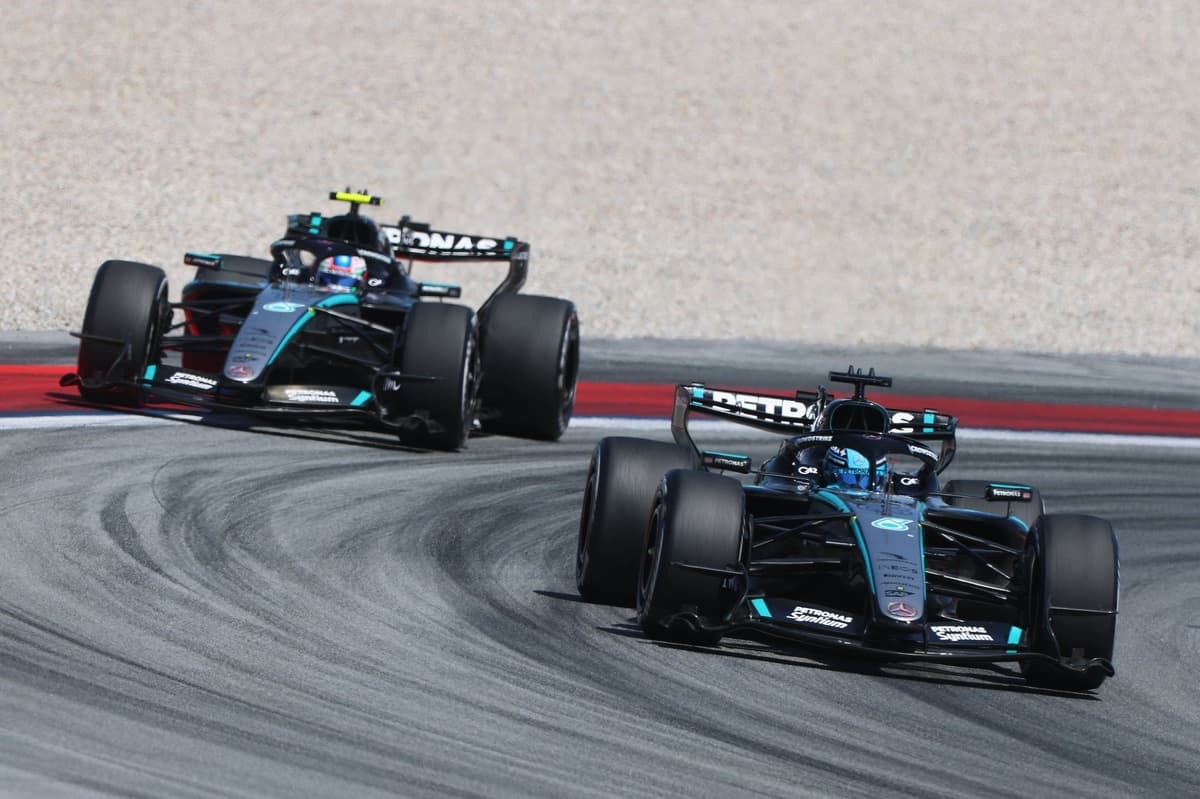
Mercedes technical director James Allison has confirmed the team has traced its recent race retirements to a battery module fault, with a permanent fix currently in development ahead of a demanding five-week, four-race stretch.
Mercedes has pinpointed a recurring battery fault as the root cause of the retirements that have plagued both George Russell and Kimi Antonelli in recent Formula 1 races, with the team now working toward a permanent technical resolution.
Technical director James Allison provided the clearest explanation yet of the issue in an appearance on Mercedes’ Nu Silver Arrows Radio Show, confirming that the failures across the team’s cars share a common origin. “I think anyone who’s a keen watcher of the sport will have seen that this has laid a few Mercedes engine cars low over the season so far,” Allison said. “They’re not all identical, but they do sort of originate in the same broad part of the battery.”
The two most damaging incidents occurred at the Canadian Grand Prix, where Russell retired from the lead, and at the Barcelona GP the following race weekend, where Antonelli was forced out while running in second place. Both failures have been attributed to the power unit’s battery — which Allison referred to internally as “the module.” The combined cost of those two DNFs, setting aside subsequent position changes for the sister car, amounts to an estimated 43 points.
That points haul has proven costly in the constructors’ championship standings. Mercedes, who had built a commanding lead, now hold a margin of just 72 points over Ferrari — a significant reduction that underlines how consequential the reliability failures have been at a critical stage of the season.
Allison outlined the team’s standard approach to managing reliability risk, explaining that the development process is designed to expose weaknesses during testing or on engine rigs before they manifest in race conditions. “You accept that there will be failure. We try to make sure that failure happens in testing or on rigs and that it happens as little as possible when you’re out there trying to earn championship points,” he said. “Now, clearly it doesn’t always work because occasionally the car will DNF and that is definitely a failure of our process.”
When a failure does occur during a race weekend, Allison described a two-stage response: an immediate conservative adjustment to reduce stress on the affected components, followed by a deeper engineering investigation to design out the root cause. “You do a first intervention that is just to try to sort of give the vulnerable thing an easier life while then working on a proper cure that lets you really cane it,” he said.
Allison added that the team is confident the main areas of risk have now been identified. “I think that most of the areas of risk have been understood. And with a bit of luck, when we start to sort of phase in the new modules into the racing season, then our fortunes as a fleet should pick up. Obviously for us, that’s an important thing. These DNFs are very, very painful.”
The battery troubles have not been confined to the Mercedes works team. Customer squad McLaren has also encountered a series of electrical difficulties this season. Lando Norris required a battery change during the Monaco GP weekend before retiring from the race, with power unit settings cited as the cause. At the Chinese GP, both Norris and Oscar Piastri failed to start due to separate electrical faults. Mercedes has not formally linked McLaren’s issues to its own factory problems, and the incidents are not described as identical.
Team principal Toto Wolff addressed the situation publicly following the Barcelona race, stating that Mercedes could not afford to continue losing points through mechanical failures in the championship fight and that the team would “leave no stone unturned to understand” the source of the unreliability.
No timeline has been provided for when the permanent fix will be introduced into the race fleet. Mercedes now faces four race weekends across five weeks, beginning with the Austrian Grand Prix, as the team works to stabilise its reliability and arrest Ferrari’s momentum in the constructors’ standings.
Formula 1Formula 1 · Jun 29
 Formula 1
 · Jun 28
 Formula 1
 · Jun 28
 Formula 1
 · Jun 28