 Formula 1
Verstappen Laughed Out Loud in Simulator After Silverstone’s 2026 Energy Management Demands Became Clear
Formula 1 · Jun 29

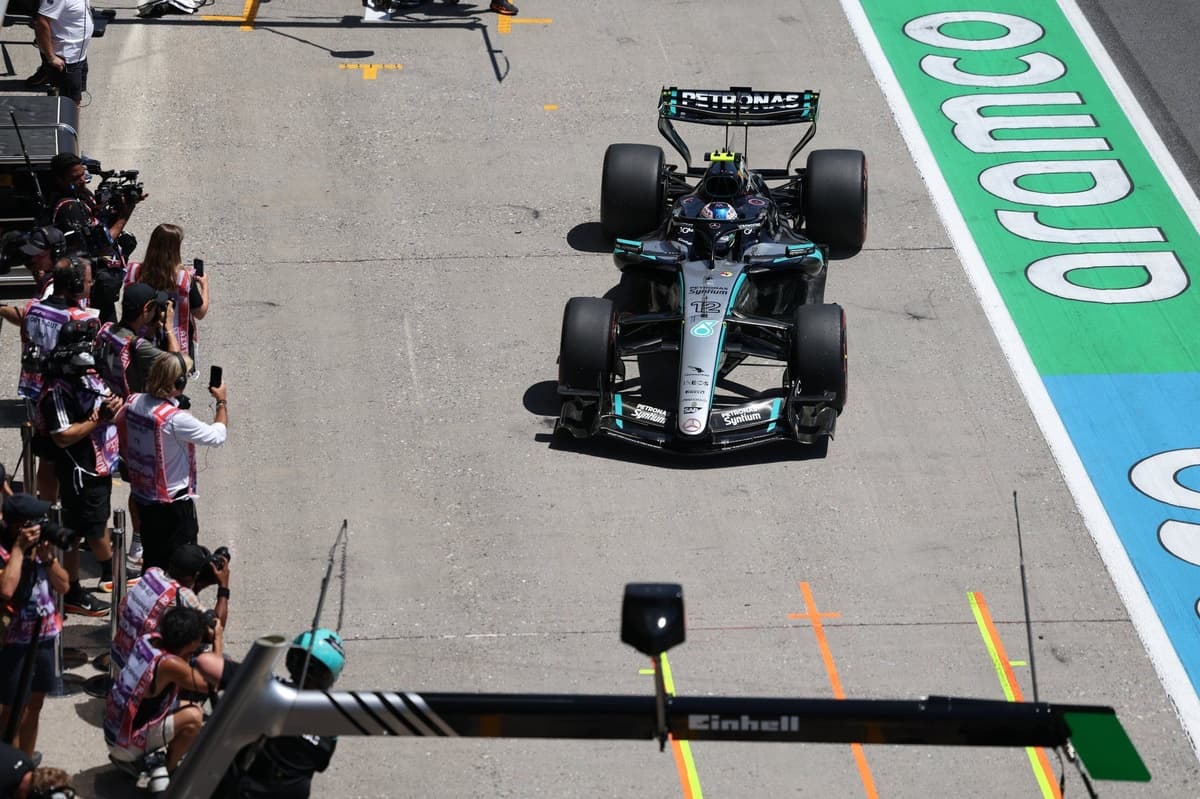
Championship leader Kimi Antonelli was left fourth on the grid at the Austrian Grand Prix after mistaking a single waved yellow flag for a double during qualifying, a costly error that ultimately handed his Mercedes team-mate George Russell pole position.
Kimi Antonelli has revealed how a combination of poor visibility and a misreading of trackside signals led him to abort what was shaping up to be a potentially quicker lap during qualifying for the Austrian Grand Prix, leaving the Formula 1 championship leader fourth on the grid.
The confusion arose after Max Verstappen crashed his Red Bull at the high-speed Turn 9 on his final push lap, triggering yellow flags in that sector. Antonelli, who had held provisional pole following his first qualifying run, was mid-lap when the incident occurred. Hearing his engineer Peter Bonnington call “yellow yellow” over the radio, he looked to the marshal post for guidance — but with the sun directly in his face, he incorrectly identified a single waved yellow flag as a double.
“I saw double yellow, so it probably was my mistake,” Antonelli said after qualifying. “I aborted the lap and that was it, so my mistake in execution. I heard ‘yellow yellow’ from my engineer, but I was looking at the marshal and probably I saw wrong and I just saw two flags instead of one and I aborted. Also it was hard to see because there was the sun in my face. I just looked at the marshal because the panel on the steering wheel went yellow — but of course, you don’t know if it’s a single or double, so I looked at the marshal and it was hard to see. I just saw double yellow instead of one.”
Under F1’s regulatory framework, the distinction between the two flag types carries significant consequences. Single waved yellows require drivers to demonstrably reduce speed, while double waved yellows indicate a more serious hazard, demanding drivers be prepared to stop immediately — and any lap time set under double yellows is automatically deleted.
Data from Antonelli’s laps underlines just how costly the abort proved to be. His first two sectors on the aborted lap read 16.477s and 29.666s, compared to 16.564s and 29.852s on his previous push lap. He was clearly on an improved trajectory before lifting off. His first run’s final sector of 19.998s remained the quickest through that part of the circuit at that point, with new provisional polesitter Charles Leclerc having managed only 20.232s through the same section.
Meanwhile, team-mate George Russell, running approximately 15 seconds behind Antonelli on track, navigated the yellow flag zone with a throttle lift and completed his lap. Crucially, timing data — broken into granular sector segments — showed Russell had sufficiently reduced speed in the relevant marshalling sector, satisfying the requirements set out in Article B1.8.4 of the 2026 sporting regulations, which states that drivers “must reduce their speed and be prepared to change direction” and are “expected to have braked earlier and/or discernibly reduced speed in the relevant marshalling sector.” Russell’s final sector time of 20.069s was slower than his previous effort of 19.968s through the same section, confirming compliance. His first two sectors — 16.424s and 29.620s — were sufficient to secure pole regardless.
F1 TV footage confirmed that the marshal post activated a single waved yellow flag the moment Verstappen’s car entered the gravel trap. However, the authority to escalate to double waved yellows rests with race control, not the marshal post itself — and that upgrade did not come until after Russell had already passed through the area, some 15 seconds after Antonelli.
Antonelli acknowledged he was unlikely to have taken pole even without the abort, but raised broader safety concerns about the delay in declaring double yellows at such a demanding section of the circuit. “I was one tenth behind him, so it would have been front row, but still not enough for pole,” he said. “There was a car in the wall in a fast corner, so I think in this situation I don’t know why they didn’t go double yellow straight away because it’s a super quick corner and if you go off at the same time it can end up very badly. So, yeah, it was a bit confusing, but it is what it is.”
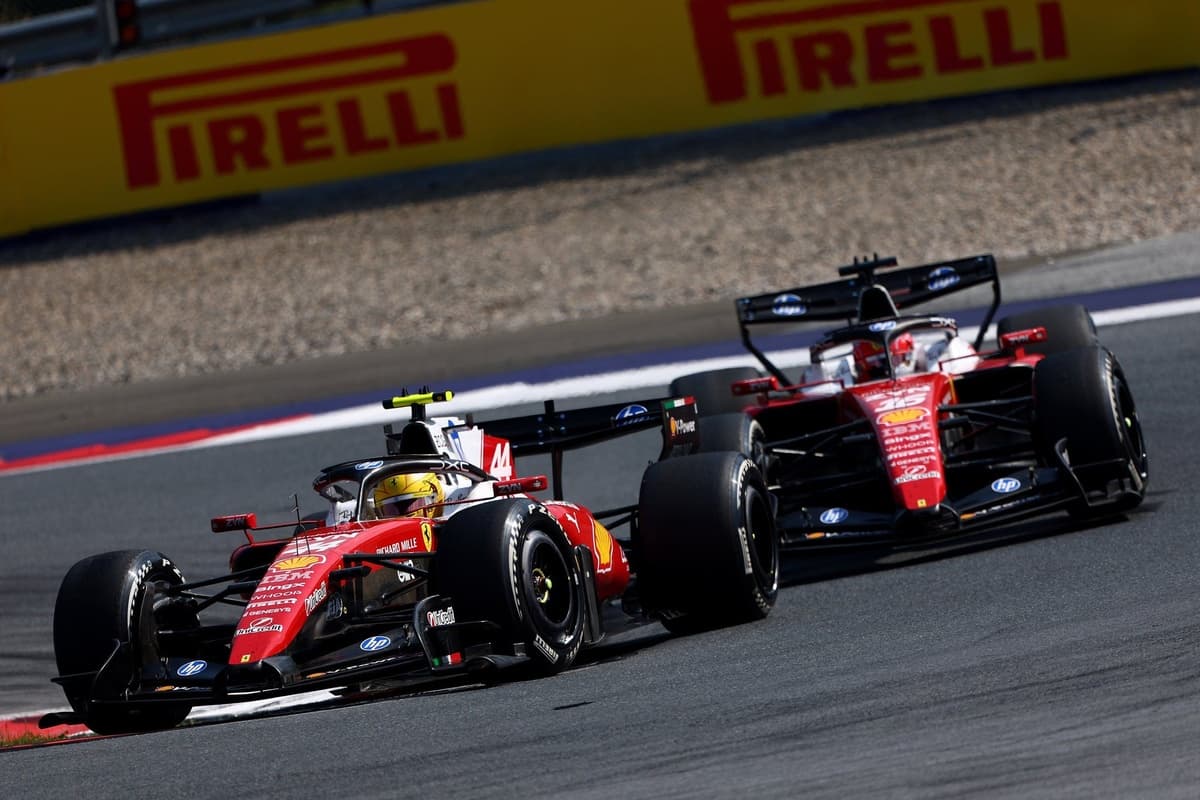
Antonelli’s fourth-place grid slot means he starts the Austrian Grand Prix behind Russell, Leclerc, and Lewis Hamilton — the two Ferraris having separated the two Mercedes drivers on the grid. As the championship leader, any ground lost to his closest rivals at the Red Bull Ring will carry added significance in the context of the 2026 title race.
Formula 1Formula 1 · Jun 29
 Formula 1
 · Jun 28
 Formula 1
 · Jun 28
 Formula 1
 · Jun 28