 Tennis
Rick Macci: Serena Williams Is ‘In It To Win’ At Wimbledon 2026, Not To Silence Critics
Tennis · Jun 29

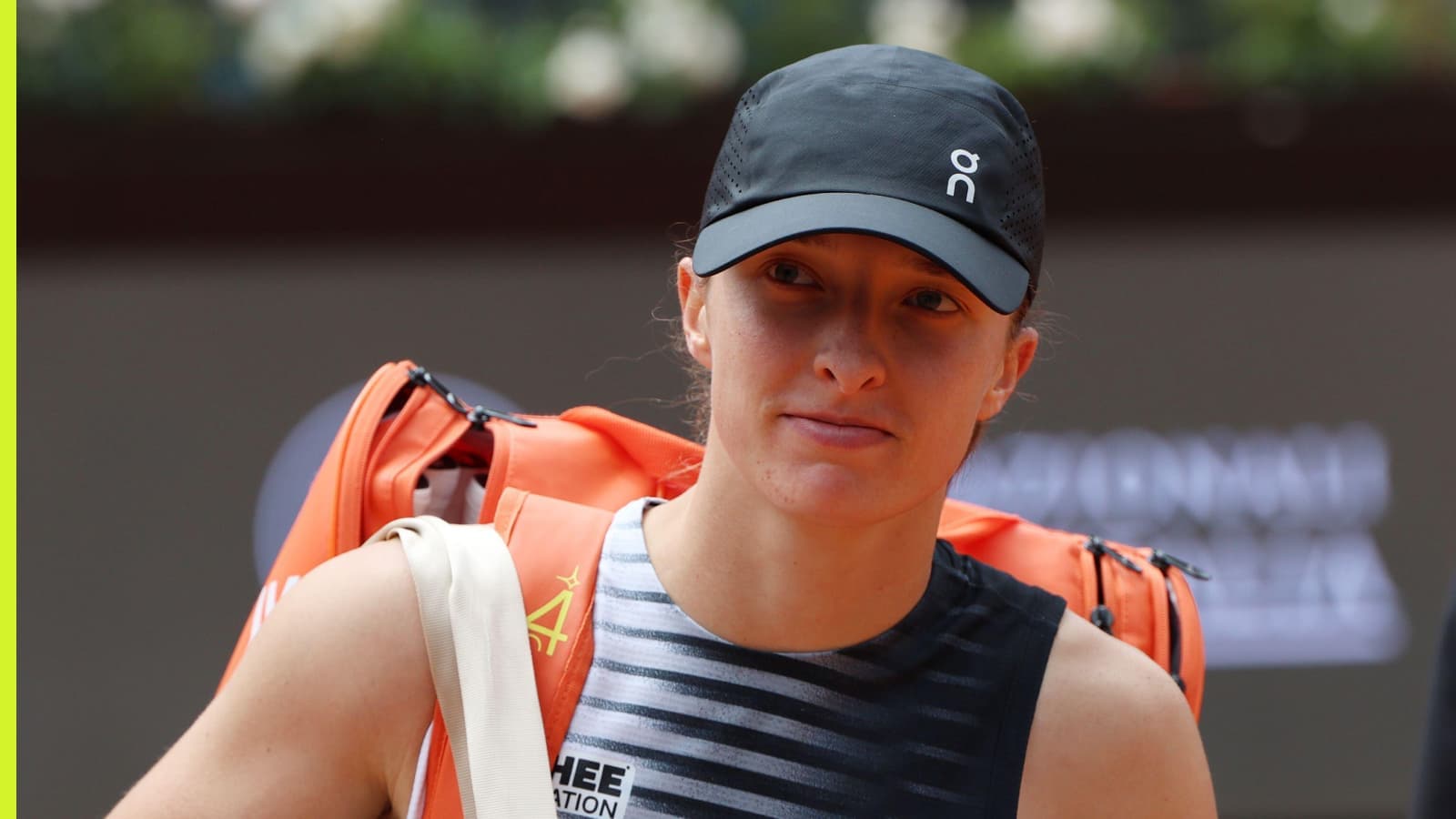
World No. 3 Iga Swiatek delivered a commanding quarter-final display in Rome, dropping just three games against Jessica Pegula to advance to her first semi-final of the 2026 season.
Iga Swiatek advanced to the semi-finals of the 2026 Italian Open on Wednesday after defeating world No. 5 Jessica Pegula 6-1, 6-2 in the quarter-finals of the WTA 1000 event in Rome — a result that marks a significant turnaround in the Polish player’s clay-court campaign.
The victory ends a difficult run for Swiatek, who had suffered quarter-final exits at four tournaments earlier in the season, retired in the third round in Madrid, and lost her opening match in Miami. The win in Rome is her first semi-final appearance of 2026.
Swiatek, 24, is now targeting a fourth Italian Open title, having previously won the tournament in 2021, 2022, and 2024. She will face either Elena Rybakina or Elina Svitolina in the last four, with Roland Garros — where Swiatek is a four-time champion — looming later this month.
In her post-match press conference, Swiatek attributed the performance to a tactical shift in her approach. “From the beginning I felt like I can dictate. Tactically, everything made sense as well. I was feeling the ball really well. I just used my chance and was pretty confident,” she said.
On adjustments to her forehand — a weapon she deployed effectively against the flat-hitting Pegula — Swiatek indicated she has returned to a more familiar style of play. “I’ve been playing a bit differently, I would say. More similar to how I played a couple years ago, more like a clay court player. I guess all the things that we practised really clicked during the last few matches,” she explained.
Swiatek did not face a single break point throughout the match. Asked about her serve on clay, she downplayed its significance on the surface compared to others. “On clay there is not so much pressure on the serve because it’s not so easy to get free points. The placement is more important than the speed here because the ball will bounce pretty high anyway, even when you serve like 180,” she said. “It’s good to open up the court if you can with the serve. But I don’t feel like it matters that much as on other surfaces.”
Following comments she made after Miami — where she described feeling “a little lost on court” — Swiatek was asked whether she is rediscovering her enjoyment of competing. “Yeah, if you play well, if you feel the ball right, if you are doing the right things, it’s all clicking, it’s easy to enjoy,” she said. “There are tournaments that you enjoy; there are tournaments where you feel you play terrible. You need to kind of accept it can happen and kind of move on. For sure, I feel good here.”
The topic of artificial intelligence in tennis also arose during the press conference, with Swiatek confirming she uses professional analytics services rather than consumer AI tools for match preparation. “I buy stats. I would rather use the pro tools because I’m working with analytics — I get the service from them,” she said. “I’m pretty sure top players are using the same brand as I use or other firms that are specialising in this.” She added that she does use ChatGPT, but for a different purpose: “He’s writing emails for me sometimes.”
With Roland Garros approaching, Swiatek was measured about the confidence this run is providing. “You can practice as much as possible, but if you don’t test it out on the court, play matches and face pressure, you’re going to still feel a little bit rusty when it comes. Now I’m happy I played a couple of matches. I’ll play hopefully two more here,” she said.
When asked why she does not compete in doubles, Swiatek offered a straightforward explanation: “For the last three seasons, I played the most singles matches of all players, so there’s no space for doubles for me.”
TennisTennis · Jun 29
 Tennis
 · Jun 28
 Tennis
 · Jun 27
 Tennis
 · Jun 26