 Other Sports
Easywin Nigeria and OPay Launch Weekly ₦5 Million World Cup Leaderboard Competition for 2026 FIFA World Cup
Other Sports · Jun 29

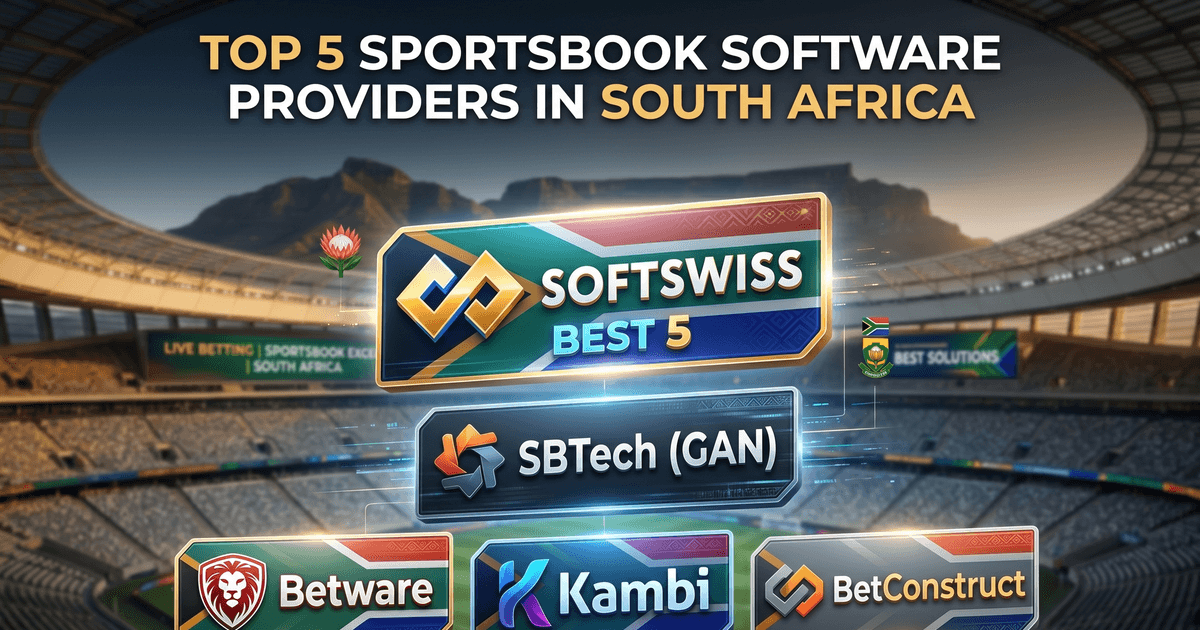
South Africa’s regulated sports betting market generated over R34 billion in gross revenue in 2023, and operators entering the space in 2026 face a critical technology decision. Here is what the leading sportsbook software providers bring to one of Africa’s most sophisticated betting environments.
South Africa’s sports betting industry is among the most advanced on the continent, and the technology infrastructure supporting it is evolving rapidly. According to the National Gambling Board, gross sports betting revenue exceeded R34 billion in 2023, representing a 19% year-on-year increase. Fixed-odds betting operates within a tightly regulated legal framework, mobile penetration sits above 90%, and a young demographic with deep roots in football and cricket is increasingly wagering on everything from Premier Soccer League fixtures to esports tournaments held in Johannesburg.
For operators planning market entry in 2026, the choice of sportsbook software provider is arguably the most consequential decision in the business plan. Five providers stand out as most relevant to the South African context: SOFTSWISS, SBTech (GAN), Betware, Kambi, and BetConstruct. What separates these platforms from the broader field is not feature volume alone — in this market, suitability is defined by readiness for National Gambling Board and Provincial Licensing Authority compliance, native ZAR and cryptocurrency payment support, English and Afrikaans localisation, and mobile-first architecture.
Understanding what a modern sportsbook technology stack actually requires is essential before evaluating any individual provider. The odds feed and calculation engine sits at the commercial core of any sportsbook operation — it processes market data, adjusts pricing for liability exposure, and delivers results in real time. For the South African market, where Premier Soccer League and rugby union fixtures generate significant wagering volumes, an odds provider with strong local sport coverage is non-negotiable. Betradar remains the global standard in this area, while Oddin.gg offers esports coverage with a specificity that most generalist feeds do not match. Any provider under consideration should either integrate one of these or offer a compelling case for the quality of their proprietary engine.
Player Account Management, commonly referred to as PAM, governs registration flows, KYC and AML verification, wallet infrastructure, session controls, and responsible gambling enforcement. South African operators are bound by the Financial Intelligence Centre Act (FICA), which imposes strict KYC and AML requirements on iGaming platforms — including identity verification, proof of address, and source-of-funds checks beyond defined thresholds. A PAM system that automates these processes without introducing friction at the point of registration directly determines operator approval rates and regulatory standing.
Risk management is another layer where provider differences become commercially significant. The tools required include bet pattern monitoring, suspicious activity flagging, and automated limit adjustments when a market is being moved. South Africa has a growing community of professional punters, particularly in rugby and football, which means fraud prevention capabilities — velocity checks, matched betting detection, and multi-account identification — are operational necessities rather than theoretical safeguards. The leading providers either build these systems in-house or offer access to managed trading services staffed around the clock.
On the payments side, South African players transact across EFT, Ozow, 1Voucher, and an expanding range of cryptocurrency wallets. Platforms that support this full spread, process withdrawals without significant delay, and handle ZAR as a native base currency offer a structural advantage. Currency conversion costs erode player lifetime value in ways that compound over time and are difficult to recover through other means.
Retention tools are equally important in a market where players have no shortage of alternatives. Standard offerings include free bets, cashback promotions, combination boosts, and tournament formats. Providers that extend beyond these basics — incorporating jackpot aggregator functionality, gamification mechanics, and granular player segmentation — give operators a retention edge that does not depend solely on competing through odds pricing.
Back-office analytics capability varies considerably across the five shortlisted platforms. Operators should test whether a given system can segment performance data by sport, market type, acquisition channel, and device — the depth of that answer reflects how seriously the provider engages with operator profitability as distinct from their own commercial interests.
Affiliate management is also a relevant consideration. South Africa has a mature sports media ecosystem — SuperSport, Kick-Off, and a wide range of dedicated football publications all operate affiliate programmes. Whether affiliate management software is bundled within the platform or requires third-party integration should be factored into total cost of ownership from the outset.
Finally, responsible gambling compliance is a legal condition of licensing and renewal, not a discretionary product feature. Deposit limits, session timers, self-exclusion mechanisms, and integration with the National Responsible Gambling Programme are statutory requirements for licensed South African operators. Any provider that does not support these tools at a technical level is not a viable option for the regulated market.
Other SportsOther Sports · Jun 29
 Other Sports
 · Jun 27
 Other Sports
 · Jun 16
 Other Sports
 · Jun 12