 Football
Frank Onyeka Signs Permanent Coventry City Deal After Helping Club Win Championship Title and Promotion
Football · Jun 30

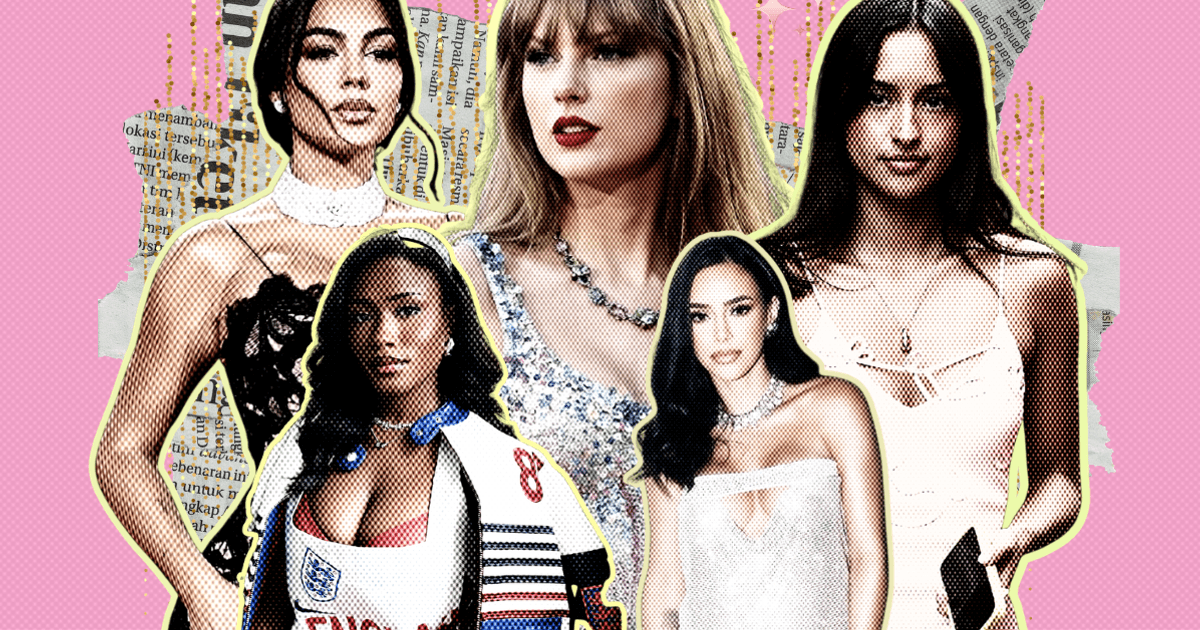
From the Achraf Hakimi divorce rumour to the online backlash against Travis Hunter’s wife, a pattern of algorithmically amplified misogyny continues to define how sports fans engage with the partners of elite athletes.
The term “WAG” — an acronym for Wives and Girlfriends of Athletes — was first introduced by the British tabloid press in the early 2000s, most prominently during the high-profile careers of Victoria Beckham and Coleen Rooney. Far from celebratory, the label was a deliberate editorial construct designed to reduce the partners of professional athletes to a single, shallow archetype: women defined entirely by proximity to wealth and fame.
Two decades on, the context has shifted dramatically. The WAG phenomenon now extends across global football, the NFL, the NBA, and Formula 1, and many of the women grouped under that label have built independent platforms, business ventures, and public profiles. The language used to describe them online, however, has not kept pace with that evolution. According to observers who have tracked the space closely, the digital hostility directed at athletes’ partners has become more targeted and more sophisticated over time.
No single episode illustrates this more clearly than the Achraf Hakimi divorce story. In 2023, a French blog reported that Hakimi’s wife, Hiba Abouk, had filed for divorce, and that the settlement process revealed the majority of his assets were registered in his mother’s name. The story spread rapidly across social media platforms, and was quickly adopted by communities within the so-called “Manosphere” as evidence that women in relationships with wealthy men are engaged in systematic financial predation. The resulting meme — widely referred to as the “Hakimi Rule” — became a recurring fixture in sports comment sections.
What the viral narrative consistently omitted, according to analysts of the case, was the legal complexity of French matrimonial law, the fact that asset structuring for tax and estate planning purposes is standard practice among high-net-worth athletes, and that the final details of any divorce settlement were never confirmed in publicly accessible court records. Platform algorithms, which prioritise engagement over accuracy, accelerated the spread of the simplified version. A comment invoking the “Hakimi Rule” generates interaction; a nuanced explanation of French community property law does not.
The pattern repeated itself in the United States ahead of NFL Draft sensation Travis Hunter’s marriage to Leanna Lenee. According to reports, fans flooded social media timelines with unsolicited financial warnings directed at Hunter before the couple had even married — framing the athlete as a potential victim despite the fact that professional athletes of his standing typically operate with legal and financial advisory teams. The behaviour reflects what some commentators describe as a form of parasocial ownership, in which fans position themselves as protectors of athletes they have never met.
The gold-digger narrative that underpins much of this commentary carries a well-documented double standard. Male athletes are routinely celebrated for accumulating wealth, pursuing high-status lifestyles, and exercising selective standards in their personal lives. When women openly seek partners who are high achievers, the same logic is reframed as exploitation.
The relationship between Cristiano Ronaldo and Georgina Rodríguez has been a focal point of this dynamic for nearly a decade. Rodríguez met Ronaldo while working at a Gucci store in Madrid. Their relationship, which has produced multiple children and preceded Ronaldo’s public marriage proposal, has been subjected to sustained scrutiny online — with commentary ranging from questions about the relationship’s origins to criticism of the timeline of their engagement. Both the framing of Rodríguez as opportunistic and the separate criticism of Ronaldo for the length of the relationship before a formal proposal reflect the contradictory standards applied to the same set of facts depending on gender.
The broader context matters here. The mid-2000s tabloid era that produced the WAG label was itself a product of editorial choices that prioritised spectacle over substance in coverage of women connected to professional sport. What has changed in the social media era is not the underlying attitude but the infrastructure through which it is expressed — and the scale at which it can be amplified. Recommendation algorithms on platforms such as X and Instagram are structurally incentivised to surface content that generates strong emotional responses, which means that reductive, hostile commentary about athletes’ partners consistently outperforms more measured takes in terms of reach.
As the 2026 FIFA World Cup places elite footballers and their families back in the global spotlight, the dynamics described above are likely to intensify. The commercial and cultural visibility of athletes’ partners during major tournaments has historically corresponded with spikes in online commentary about their relationships — commentary that, based on recent trends, will continue to blend financial anxiety, gender resentment, and sports fandom into a format that is difficult to moderate and easy to share.
FootballFootball · Jun 30
 Football
 · Jun 30
 Football
 · Jun 30
 Football
 · Jun 30