 Basketball
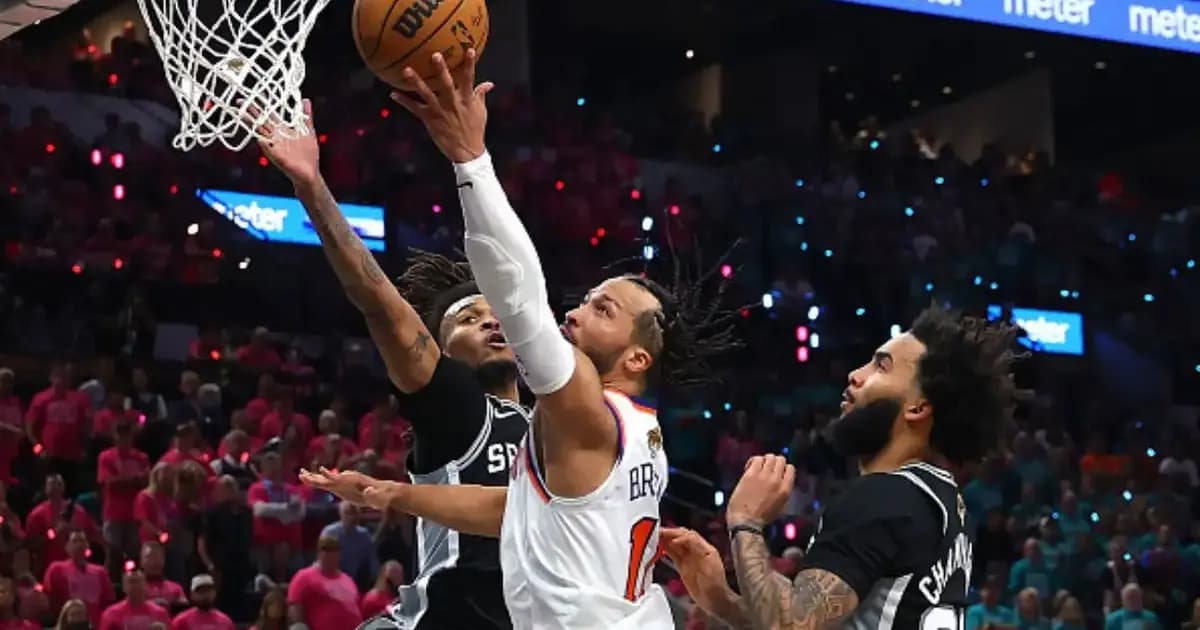
Victor Wembanyama Delivers 32-Point Masterclass at MSG as San Antonio Spurs Claw Back in 2026 NBA Finals
Basketball · Jun 9

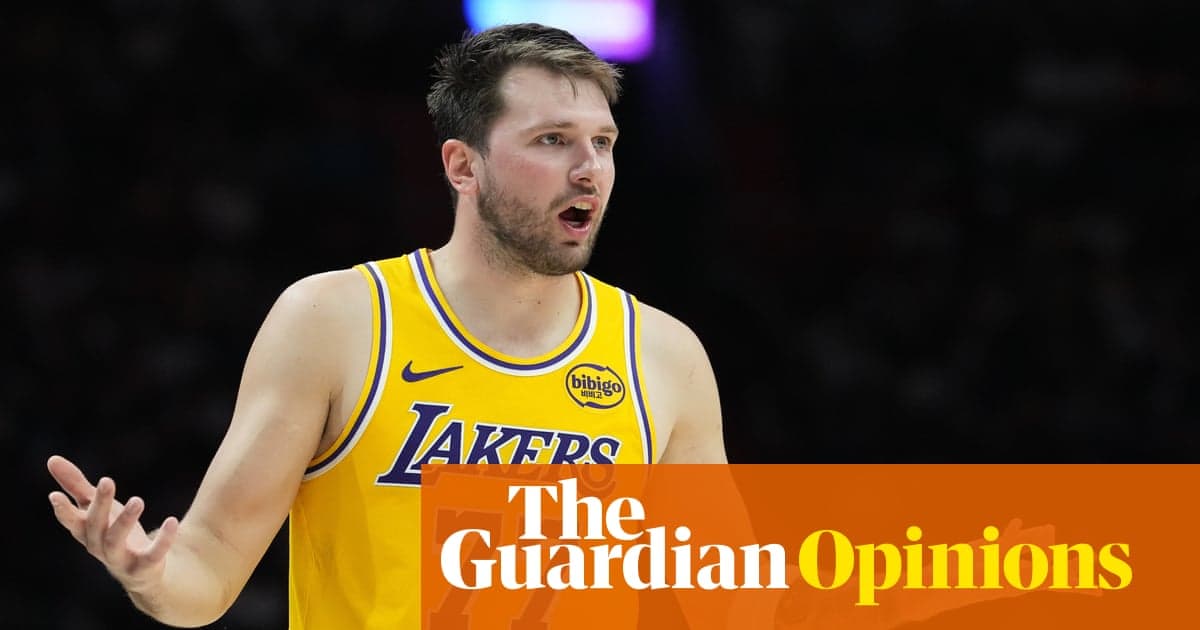
Despite leading the NBA in scoring and guiding the Los Angeles Lakers through a landmark season, Luka Dončić continues to face persistent criticism rooted less in performance and more in how his body looks — a dynamic with striking parallels to the value systems promoted by online manosphere figures.
When Luka Dončić appeared on the cover of Men’s Health at the start of the 2024-25 NBA season, it was treated as a milestone — proof, finally, that the Slovenian superstar had the physique his critics had long demanded. He responded by leading the NBA in points per game. It was not enough.
The scrutiny of Dončić’s body has followed him since he entered the league in 2018. A generational talent by any statistical measure, the Lakers guard helped carry the Dallas Mavericks to the 2024 NBA Finals. Yet even as he produced at an elite level, questions about his “conditioning” and “durability” circulated persistently — fuelled partly by reported concerns over his weight fluctuations and his noted fondness for hookah during his time in Dallas. Those concerns were subsequently cited as part of the rationale behind then-Mavericks general manager Nico Harrison’s decision to trade Dončić to the Los Angeles Lakers — a move that Harrison has since been fired over.
This is the central tension explored in a recent piece by Lee Escobedo in The Guardian: that the framework used to evaluate Dončić’s worth as an athlete bears a structural resemblance to the value systems promoted within the online manosphere. In Louis Theroux’s Netflix documentary *Inside the Manosphere*, one subject — a Latino man in his 20s from Miami — describes how figures like Andrew Tate helped him through homelessness by promoting a core idea: men begin with no inherent value and must build it through discipline, performance, and visible results. The outward markers of success in that world include physical transformation, material wealth, and romantic conquest.
In sports, particularly basketball, a version of that same logic plays out in how athletes are discussed publicly. Dončić — who has never carried the conventionally sculpted physique associated with elite sport — has become one of its most prominent subjects. His body, rather than his production, has repeatedly become the story.
The criticism is not without some basis in observable fact. Dončić has had a pattern of minor injuries, has been described as “suspect on defense”, and has shown tendencies toward hero-ball and confrontation with referees and opponents. These are legitimate areas of analysis. But the leap from those observations to broader claims about his character or internal discipline — framed through the lens of what he looks like — reflects something beyond standard athletic evaluation.
On ESPN’s *The Hoop Collective* podcast in February, analyst Tim MacMahon assessed the Lakers’ difficult season, noting: “If there’s a ‘blame pie’, [Dončić] can have a slice of it, but there’s plenty to go around.” Co-host Brian Windhorst responded with: “Luka likes pie.” The joke landed as commentary on his body, not his basketball. Around the same time, reports emerged of a custody dispute with his former partner over their children.
When Dončić strained his hamstring as the playoffs approached — he has yet to feature in the postseason — and reportedly travelled across Europe seeking treatment, the narrative shifted. Where once the criticism was that he lacked motivation, suddenly the line became that he was too obsessive. As the original Guardian analysis notes: if he returns early and underperforms, the focus will fall on his conditioning; if he sits out to recover properly, questions about his commitment will follow.
This dynamic — where no outcome fully satisfies the standard being applied — mirrors what Escobedo identifies as the unwinnable logic of Red Pill ideology. In both the manosphere and mainstream sports discourse, value must be constantly demonstrated and remains perpetually vulnerable to challenge.
For women in professional sport, this kind of body-focused scrutiny has existed for decades, with athletes routinely evaluated as much on appearance as on achievement. The suggestion now is that male athletes, particularly those whose physiques fall outside a narrow archetype, are increasingly subject to a comparable mechanism — one that conflates physical presentation with moral character.
Dončić, who turned 26 in February, remains one of the most gifted players in the NBA. Whether he returns for the Lakers’ playoff campaign or not, the conversation around him is likely to remain as much about what he looks like as what he does on the court.
BasketballBasketball · Jun 9
 Basketball
 · Jun 5
 Basketball
 · Jun 4
 Basketball
 · May 17