 Football
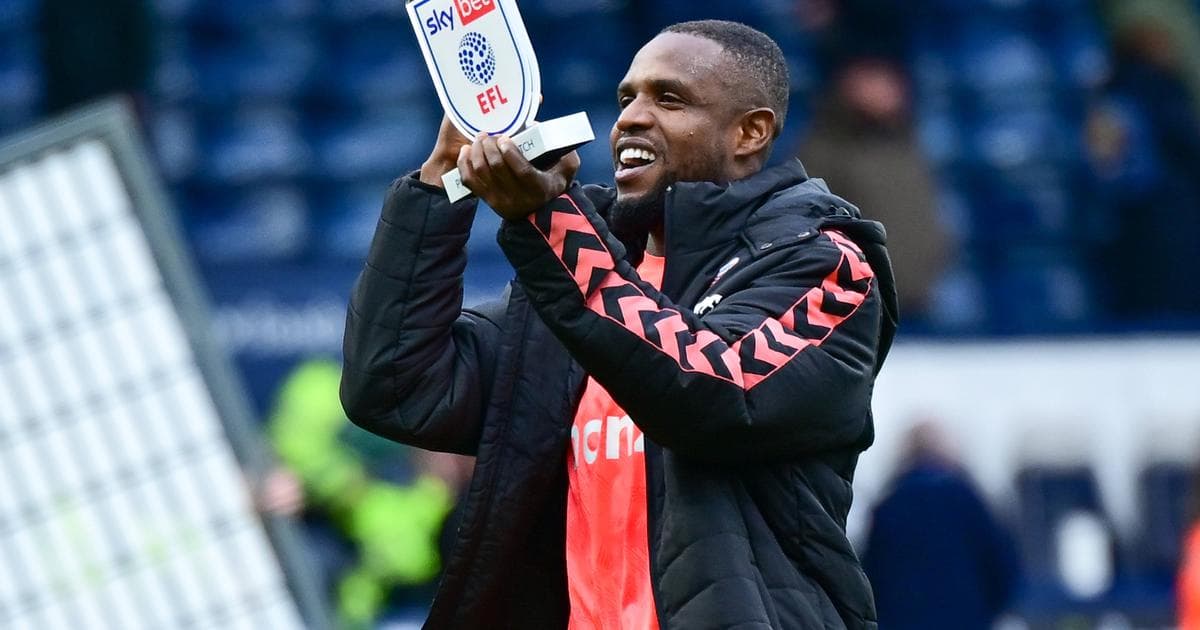
Frank Onyeka Signs Permanent Coventry City Deal After Helping Club Win Championship Title and Promotion
Football · Jun 30


The National Sports Commission has unveiled a sweeping reform package for the Nigeria Premier Football League, including a proposed N2.5 billion prize fund, a minimum player salary of N2 million, stricter club licensing, and a return to television — but the announcements have been met with widespread public scepticism over how the plans will be financed.
A high-level strategic meeting between the National Sports Commission (NSC) and the Nigeria Football Federation (NFF) in Abuja has produced a series of ambitious proposals aimed at transforming the Nigeria Premier Football League (NPFL), with a proposed N2.5 billion prize fund sitting at the heart of the reform agenda. The gathering was attended by NSC Chairman Mallam Shehu Dikko, NFF President Alhaji Ibrahim Gusau, NFF General Secretary Mohammed Sanusi, league representative Nasiru Saidu, and former NFF General Secretary Bar. Musa Amadu.
According to the National Sports Commission’s official announcement on June 25, 2026, the proposed financial restructuring would see NPFL champions receive at least N1 billion for the 2026/27 season, with second-place clubs earning N500 million and third-place finishers taking home N300 million. A graduated prize money system extending across the league table is also part of the framework, with officials arguing it would drive professionalism and raise competitive standards throughout the division.
Beyond prize money, the NSC has proposed a minimum player wage of N2 million per month — a figure that would represent a significant baseline shift in a league where delayed and unpaid salaries have historically been a persistent problem. “We have agreed to put structures in place that will ensure that the least a player will earn in the league going forward is N2 million,” Dikko said. He acknowledged, however, that full implementation may not be immediate, adding: “This salary cap may not happen this coming season but in subsequent seasons, that should be the target.”
Dikko framed the reforms within the broader political context of President Bola Ahmed Tinubu’s administration, stating that the government is prepared to intervene directly to reset the league. “What we are doing is in tandem with the Renewed Hope and Shared Prosperity disposition of President Bola Ahmed Tinubu GCFR,” he said. “We are only his foot soldiers.”
Club licensing standards are also set to be tightened under the proposed framework. Dikko indicated that fewer clubs could compete in the league if necessary, prioritising compliance over participation numbers. “The league is the foundation of our football,” he said. “If there are only ten clubs that are qualified to play in the league, so be it.” The NSC additionally committed budgetary support to return the NPFL to television, with Dikko arguing that improved broadcast visibility is essential to attracting sponsors and generating sustainable commercial revenue — an area in which the league has long underperformed relative to other African top-flight competitions.
Public reaction to the announcement was swift and largely cautious. Social media users responded with a mixture of cautious optimism and sharp cynicism, with several questioning the funding mechanisms behind the proposals. “Where will the money come from abi na another lamba?” one user wrote, while another commented: “I love this but I hope say no be audio money.” Concerns about historical payment failures were also prominent, with one post reading: “Not to put up the prizes, the main concern is will they pay them or end up owing as usual.”
The scepticism is not without basis. Nigerian football has seen several high-profile reform initiatives fall short of delivery in recent years, with issues ranging from unpaid prize money to inadequate broadcasting infrastructure consistently undermining progress. Enugu Rangers claimed the 2025/26 NPFL title, but the league’s commercial profile remains limited compared to top divisions elsewhere on the continent.
The coming months will be critical in determining whether the NSC’s proposals progress beyond the announcement phase. Key markers to watch include the release of a formal funding framework, NFF ratification of the prize money structure, and progress on broadcast rights negotiations ahead of the 2026/27 season.
FootballFootball · Jun 30
 Football
 · Jun 30
 Football
 · Jun 30
 Football
 · Jun 30