 Football
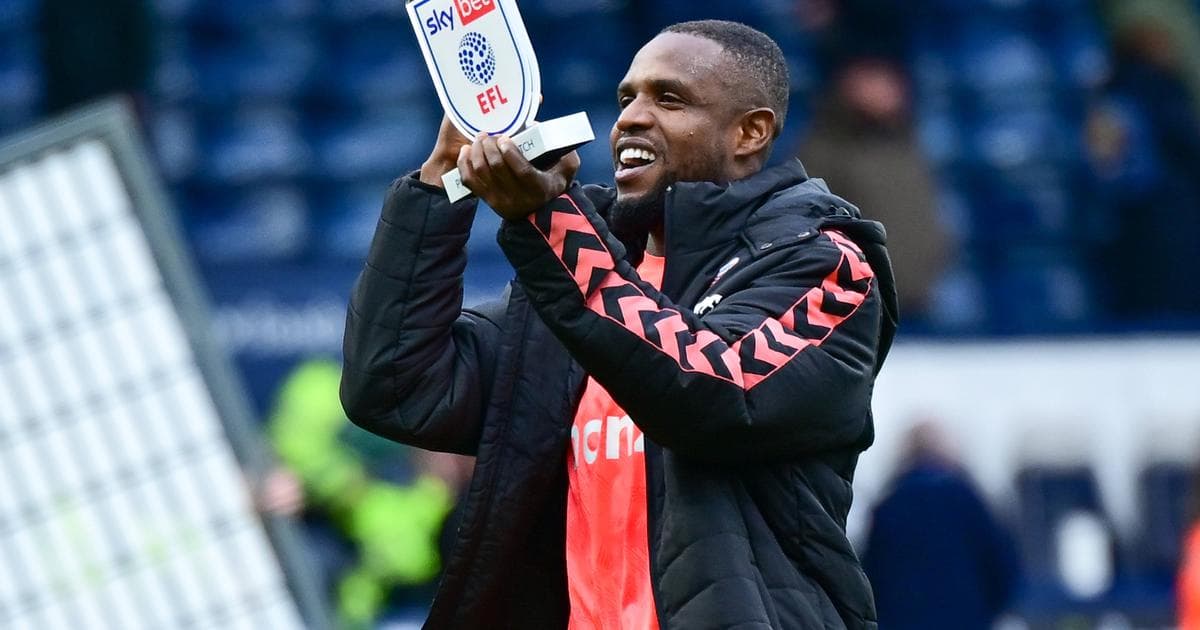
Frank Onyeka Signs Permanent Coventry City Deal After Helping Club Win Championship Title and Promotion
Football · Jun 30

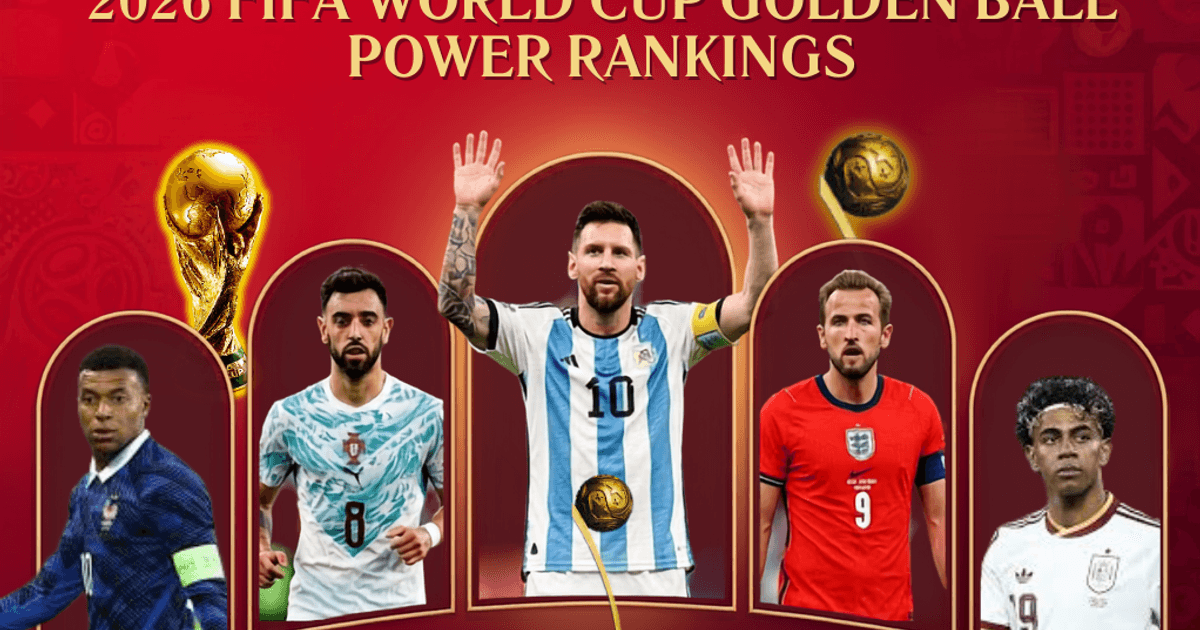
Kylian Mbappe has moved to the top of the 2026 FIFA World Cup Golden Ball standings following a decisive playmaking display against Norway, while Ousmane Dembele’s hat-trick and Ismael Saibari’s historic achievement have reshuffled the rankings significantly.
The race for the 2026 FIFA World Cup Golden Ball has entered a compelling phase, with Kylian Mbappe displacing Lionel Messi at the summit of the live power rankings after a commanding performance in France’s final group stage match against Norway, where he contributed two assists.
Mbappe’s ascent to first place caps a consistent group stage campaign. He opened his tournament account with a celebrated brace in France’s 3-1 victory over Senegal, the second of which saw him surpass Thierry Henry to become France’s all-time leading scorer while drawing level with Thomas Müller as the third-highest scorer in World Cup history. He followed that with another brace against Iraq — assisted by Ousmane Dembele and Michael Olise respectively — before capping the group stage with two assists against Norway.
Lionel Messi, who had previously held the top position, now sits second. The Argentine entered this tournament having equalled Miroslav Klose’s all-time World Cup scoring record with a hat-trick against Algeria — his 14th, 15th and 16th goals in the competition. He then surpassed Klose entirely, adding his 17th and 18th World Cup goals against Germany. Messi currently leads the Golden Boot standings with five goals, ahead of Vinicius, Mbappe, Erling Haaland, and now Dembele, who each have four.
Vinicius Jr. drops to third after Mbappe’s latest showing. The Real Madrid forward had previously matched a historic Brazilian benchmark by scoring in each of Brazil’s three group stage matches — a feat that placed him alongside Jairzinho, Ronaldo, and Romario as the only Seleção players to have done so in a single World Cup group stage. He opened his account in Brazil’s draw against Morocco and added further goals in the 4-0 defeat of Haiti and the 3-0 victory over Scotland.
Erling Haaland retains fourth position. The Manchester City striker, making his World Cup debut this tournament, contributed braces in both Norway’s opener against Iraq and their second group game against Senegal — results that defied pre-tournament expectations and secured Norway’s passage to the knockout rounds ahead of the African champions.
The most dramatic movement in the latest update belongs to Ousmane Dembele, whose hat-trick propelled him into the top 10 from outside the rankings entirely. His tally of four goals now places him level with Mbappe, Vinicius, and Haaland, and firmly in contention for both the Golden Boot and the Golden Ball.
Among the African contingent, Morocco’s Yan Diomande remains a notable absentee from the rankings despite a series of accomplished performances. The absence of direct goal contributions has kept him out of contention in a tournament that has already seen more than ten players score at least two goals — a reflection of the exceptionally high-scoring nature of the 2026 edition.
Ismail Saibari, however, has made his mark. The Moroccan midfielder climbed into the top 10 after becoming the first African player to score in three consecutive World Cup group stage matches — a record that adds a significant historical footnote to Morocco’s campaign. Young Johan Manzambi also continues his upward trajectory, having now scored three goals in the tournament.
Denis Undav, meanwhile, continues to be penalised in the rankings by his substitute appearances in Germany’s opening group games, despite having been decisive when introduced. Brian Brobbey, Matheus Cunha, and Jonathan David each also sit on three goals for the tournament.
New Zealand’s Elijah Just scored again in the group stage but exits the rankings following his nation’s elimination from the competition. His departure underlines how tournament progression remains a critical, if informal, factor in the Golden Ball equation — a prize that, in the near 100-year history of the FIFA World Cup, has almost exclusively been awarded to players whose nations advanced deep into the competition. The last truly unexpected Golden Ball winner was Salvatore Schillaci at Italia 1990, who edged out Lothar Matthäus and Diego Maradona for the honour.
With the knockout rounds now imminent, the standings among the leading contenders — Mbappe, Messi, Vinicius, Haaland, and Dembele — are likely to shift further. Messi, notably, stands on the cusp of an unprecedented third Golden Ball award, having previously won the prize at the 2014 and 2022 World Cups.
FootballFootball · Jun 30
 Football
 · Jun 30
 Football
 · Jun 30
 Football
 · Jun 30